1000+ Top Resume Skills for 2026
Browse through our collection of 1000+ resume skills, learn how to list a specific skill on your resume and land your next job offer.

Browse through our collection of 1000+ resume skills, learn how to list a specific skill on your resume and land your next job offer.
Discover our extensive collection of 1000+ resume skills to learn how you should list a specific skill on your resume to get the attention of hiring managers and recruiters, and land many more job interviews and offers in the process.
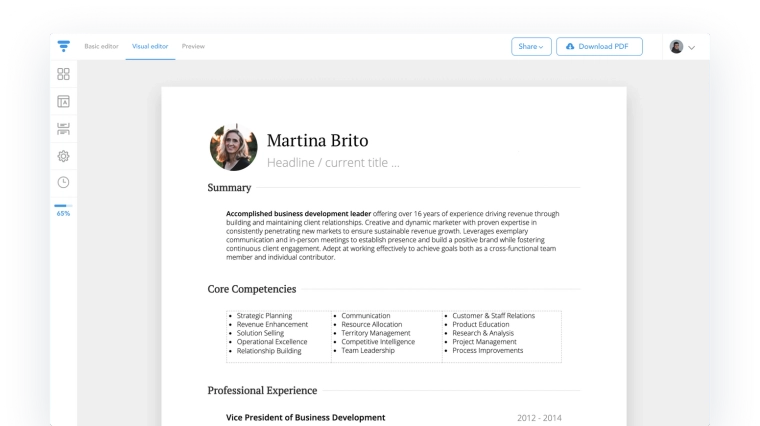
Administration skills are abilities that help professionals organize, coordinate, and manage business operations efficiently. These skills support workplace productivity by ensuring that schedules, documentation, resources, and communication processes run smoothly.
Strong administrative skills are valuable across many roles, including administrative assistants, office managers, executive assistants, and operations coordinators. Employers often look for candidates who can handle organizational tasks, manage records, coordinate teams, and maintain compliance with company procedures.
Below are common administrative skills you can include on your resume:
Art, architecture, and design skills highlight your ability to create visual concepts, develop design solutions, and communicate ideas through creative work. These skills are commonly used in roles such as graphic design, product design, architecture, UX/UI design, and multimedia production.
Employers value candidates who can combine creativity with technical tools to produce visual assets, design systems, and functional experiences. Including relevant art, architecture, and design skills on your resume helps demonstrate your creative expertise, technical proficiency, and ability to translate ideas into practical design outcomes.
Below are common art, architecture, and design skills you can include on your resume:
Business skills reflect your ability to manage operations, make strategic decisions, and contribute to organizational growth. These skills are important for professionals working in management, consulting, finance, operations, and leadership roles across many industries.
Employers look for candidates who can analyze problems, manage resources, improve processes, and support business objectives. Including relevant business skills on your resume demonstrates your ability to drive results, support strategic planning, and contribute to overall business performance.
Below are common business skills you can include on your resume:
Communication skills reflect your ability to clearly share ideas, collaborate with others, and present information effectively in the workplace. These skills are essential in nearly every profession, as strong communication helps teams coordinate work, solve problems, and build productive relationships.
Employers value candidates who can communicate complex ideas clearly, listen actively, and adapt their messaging for different audiences. Highlighting communication skills on your resume shows that you can work effectively with colleagues, stakeholders, and clients.
Below are common communication skills you can include on your resume:
Data skills demonstrate your ability to collect, analyze, interpret, and present data to support informed decision-making. These skills are increasingly important across industries, including business, technology, finance, marketing, and operations.
Employers value candidates who can work with data to identify trends, generate insights, and help organizations make smarter strategic decisions. Highlighting relevant data skills on your resume shows that you can transform raw data into meaningful information that drives results.
Below are common data skills you can include on your resume:
Language and academic skills highlight your ability to communicate across different languages and demonstrate knowledge gained through education or specialized study. These skills are valuable in roles that require research, analysis, global communication, or subject-matter expertise.
Employers often value candidates who can work in multiple languages, translate information accurately, or apply academic knowledge to real-world challenges. Including relevant language and academic skills on your resume can help show your communication abilities, cultural awareness, and educational background.
Below are common language and academic skills you can include on your resume:
Engineering skills demonstrate your ability to design, develop, and maintain systems, technologies, and infrastructure. These skills combine technical knowledge, problem-solving ability, and practical experience to build solutions that improve products, processes, and operations.
Employers look for engineers who can apply technical expertise, troubleshoot complex issues, and work with modern tools and technologies. Highlighting relevant engineering skills on your resume helps show your ability to develop solutions, optimize systems, and contribute to technical projects.
Below are common engineering skills you can include on your resume to showcase your technical knowledge, analytical thinking, and hands-on experience.
Human resources and recruitment skills demonstrate your ability to manage talent, support employees, and build effective teams within an organization. These skills are essential for professionals involved in hiring, employee relations, payroll administration, and workforce development.
Employers value candidates who can identify qualified talent, manage HR processes, and support a positive workplace culture. Highlighting HR and recruitment skills on your resume shows that you understand how to attract, evaluate, and retain employees while supporting organizational goals.
Below are common human resources and recruitment skills you can include on your resume to showcase your ability to manage hiring processes, support employees, and contribute to effective workforce management.
IT skills demonstrate your ability to work with computer systems, software, networks, and digital technologies to support business operations and solve technical problems. These skills are essential in roles such as software development, system administration, cybersecurity, data engineering, and technical support.
Employers look for candidates who can manage technology infrastructure, troubleshoot issues, and work with modern tools and programming languages. Highlighting relevant IT skills on your resume shows your technical expertise and ability to support digital systems and technology-driven environments.
Below are common IT skills you can include on your resume to showcase your technical knowledge, problem-solving ability, and experience working with information technology systems.
Marketing skills demonstrate your ability to promote products or services, understand customer behavior, and create strategies that drive brand awareness and business growth. These skills are important in roles such as digital marketing, content marketing, brand management, and market research.
Employers look for candidates who can analyze audiences, develop marketing campaigns, and measure performance to improve results. Highlighting marketing skills on your resume shows that you understand how to attract customers, communicate value, and support business objectives.
Below are common marketing skills you can include on your resume to showcase your ability to develop campaigns, analyze market trends, and drive customer engagement.
MS Office skills demonstrate your ability to use common workplace productivity tools such as Microsoft Excel, Word, PowerPoint, Outlook, and other Microsoft Office applications. These tools are widely used for tasks like document creation, data analysis, presentations, and communication.
Employers often expect candidates to be comfortable using MS Office to organize information, manage data, and collaborate with teams. Highlighting relevant MS Office skills on your resume shows that you can work efficiently with the software tools commonly used in professional environments.
Below are common MS Office skills you can include on your resume to showcase your proficiency with Microsoft Office applications.
Organization skills demonstrate your ability to plan tasks, manage time effectively, and keep work processes structured and efficient. These skills are essential in many roles where professionals must handle multiple responsibilities, prioritize tasks, and ensure projects stay on track.
Employers value candidates who can stay organized, maintain attention to detail, and coordinate activities across teams or projects. Highlighting organization skills on your resume shows that you can manage workloads efficiently, meet deadlines, and maintain structured workflows.
Below are common organization skills you can include on your resume to demonstrate your ability to plan, prioritize, and execute tasks effectively.
Personal skills reflect the qualities and behaviors that influence how you work, interact with others, and approach challenges in the workplace. These skills often include traits such as reliability, adaptability, motivation, and a strong work ethic.
Employers value candidates who demonstrate positive personal qualities because they contribute to teamwork, productivity, and a healthy work environment. Highlighting personal skills on your resume can help show that you are dependable, proactive, and able to work well with others.
Below are common personal skills you can include on your resume to showcase your work ethic, attitude, and professional character.
Project management skills demonstrate your ability to plan, coordinate, and deliver projects successfully from start to finish. These skills involve organizing resources, managing timelines, communicating with stakeholders, and ensuring that project goals are met.
Employers value candidates who can lead teams, manage priorities, and keep projects on schedule while adapting to challenges along the way. Highlighting project management skills on your resume shows that you can oversee complex tasks, coordinate teams, and deliver results in fast-paced environments.
Below are common project management skills you can include on your resume to showcase your ability to organize projects, manage resources, and drive successful outcomes.
Sales skills demonstrate your ability to build relationships with customers, understand their needs, and convert opportunities into revenue. These skills are essential for professionals working in sales, business development, account management, and client relations.
Employers look for candidates who can communicate value, negotiate effectively, and consistently meet or exceed sales targets. Highlighting relevant sales skills on your resume shows that you can generate leads, close deals, and contribute to business growth.
Below are common sales skills you can include on your resume to showcase your ability to manage accounts, influence buying decisions, and drive sales performance.
Team management skills demonstrate your ability to lead, support, and coordinate a group of people to achieve shared goals. These skills involve guiding team members, organizing responsibilities, resolving conflicts, and maintaining productivity within a team environment.
Employers value candidates who can motivate others, communicate effectively, and ensure that teams work collaboratively toward project or business objectives. Highlighting team management skills on your resume shows that you can lead teams, manage performance, and create a positive and productive work environment.
Below are common team management skills you can include on your resume to showcase your leadership ability and experience managing teams.
Aerospace and drone skills demonstrate your ability to work with aircraft systems, unmanned aerial vehicles (UAVs), and related technologies used in aviation, defense, research, and commercial applications. These skills often involve technical knowledge, operational expertise, and an understanding of safety and regulatory standards.
Employers look for candidates who can operate, maintain, design, or support aerospace and drone technologies. Highlighting aerospace and drone skills on your resume shows that you have the technical capability to work with advanced aviation systems and emerging aerial technologies.
Below are common aerospace and drone skills you can include on your resume to showcase your experience with aviation systems, drone operations, and aerospace technologies.
Agriculture and environmental skills demonstrate your ability to work with natural resources, agricultural systems, and environmental management practices. These skills are important in industries such as farming, sustainability, environmental science, conservation, and land management.
Employers value candidates who understand agricultural processes, environmental stewardship, and sustainable practices that support productivity while protecting natural ecosystems. Highlighting agriculture and environmental skills on your resume shows that you can contribute to responsible resource management and environmental initiatives.
Below are common agriculture and environmental skills you can include on your resume to showcase your experience with farming practices, environmental management, and sustainable resource use.
Bioinformatics and genomics skills demonstrate your ability to analyze biological data using computational tools and scientific methods. These skills are commonly used in fields such as biotechnology, genomics research, healthcare, pharmaceuticals, and life sciences.
Employers value candidates who can work with genetic data, perform sequence analysis, and apply computational techniques to understand biological systems. Highlighting bioinformatics and genomics skills on your resume shows that you can combine biology, data analysis, and programming to support research and scientific discovery.
Below are common bioinformatics and genomics skills you can include on your resume to showcase your experience working with biological data, genomic analysis, and computational biology tools.
Building and construction skills demonstrate your ability to work with tools, materials, and construction processes to develop, repair, and maintain structures. These skills are essential in industries such as construction, infrastructure development, building maintenance, and skilled trades.
Employers look for candidates who understand construction methods, safety practices, and project coordination on job sites. Highlighting building and construction skills on your resume shows that you have the practical knowledge and hands-on experience needed to contribute to construction projects and maintain high-quality standards.
Below are common building and construction skills you can include on your resume to showcase your experience with construction techniques, tools, and site operations.
Chemical engineering and science skills demonstrate your ability to apply scientific principles, laboratory techniques, and engineering processes to develop materials, products, and industrial solutions. These skills are commonly used in industries such as pharmaceuticals, manufacturing, energy, biotechnology, and research.
Employers look for candidates who can analyze chemical processes, conduct experiments, and optimize production systems while maintaining safety and quality standards. Highlighting chemical engineering and science skills on your resume shows that you can apply scientific knowledge to solve technical challenges and support research or industrial operations.
Cleaning and maintenance skills demonstrate your ability to maintain clean, safe, and well-organized environments in workplaces, residential properties, and commercial facilities. These skills are essential in roles related to housekeeping, facility maintenance, janitorial services, and property management.
Employers value candidates who can perform cleaning tasks efficiently, maintain equipment and facilities, and follow safety and sanitation standards. Highlighting cleaning and maintenance skills on your resume shows that you are dependable, detail-oriented, and capable of maintaining high standards of cleanliness and upkeep.
Below are common cleaning and maintenance skills you can include on your resume to showcase your experience with sanitation, facility care, and property maintenance.
Healthcare skills demonstrate your ability to provide medical support, patient care, and clinical assistance in healthcare environments. These skills are essential for professionals working in hospitals, clinics, long-term care facilities, and other healthcare settings.
Employers look for candidates who can deliver quality patient care, follow medical protocols, and work effectively in fast-paced healthcare environments. Highlighting healthcare skills on your resume shows that you understand clinical procedures, patient safety standards, and the responsibilities involved in supporting healthcare teams.
Below are common healthcare skills you can include on your resume to showcase your experience with patient care, medical procedures, and healthcare operations.
Your instincts would push you to list every skill you have on your resume. Listing all skills has it’s pros and cons. From our analysis of reviewing thousands of successful resumes, we noticed a trend. When resume skills were tailored to a specific job, a candidate was more likely to be shortlisted for the job.
So, customizing your resume (and your skills) to a job description is the key to a successful job application. But there’s another thing to note here - your resume skills shouldn’t only be listed in the resume skills section.
You can also tactically place them throughout the resume - for example, in your work experience section or company work history. Doing that will help an employer map your skills to situations and projects you’ve applied those skills to.
Question is, how can you do that?
To help you list skills on your resume, we suggest you follow the STAR methodology.
STAR method stands for:
Now let’s try to use the STAR method to list Account-based Sales skills on a resume. You are a SDR who was tasked to generate more sales from existing customers. To highlight your account based sales skills, here’s a breakdown using the STAR methodology:
The following top resume skills are in high demand in 2021:
There are a couple of places where you can put skills on your resume. They include:
Unfortunately there are no general good skills that you can add to your resume. With that being said, you can always leverage the job description to find good skills and add them to your resume.
Every resume should have two types of skills in it: hard skills and soft skills. In today’s world both of these skills are extremely important when it comes to standing out in a job application.
To list and emphasize your skills on resume you can do the following: Include your most important skills within your resume summary or objective to catch a hiring manager’s attention right from the start.
Next, put these skills in context to achievements and responsibilities by placing them within your work history section. Putting them closer to quantifiable accomplishments makes it very easy for a hiring manager to understand your skill level.
Lastly, create a resume skill section and put your top skills there too.
Generally, you can put your skills on your resume summary, work experience and a resume skills section. But depending upon your resume format, you may or may not have those sections within your resume. In context to the resume formats here’s where you can put your skills:
The number of skills you can list on a resume skills section is 10-12, anything more than that would look cluttered and be ignored. But you can list skills in other parts of your resume and can probably reiterate these top 10-12 skills you listed in your resume skills section.
You can use a range of visuals or a rating system (e.g. 6/10) to rate your skills on a resume. The example below shows how you can rate skills on a resume using VisualCV.

Generally, no. Adding a resume skills section at the top isn’t advisable for a reverse chronological resume layout. But, for functional resumes you can add resume skills below the resume objective section.
Even when you feel you lack technical skills, you most likely have soft skills that you can place. Most often then not, you have skills that you can put on your resume. Analyze whatever you have done so far and try to summarize it using one word. At the end you will end up discovering relevant skills that you can add to your resume.