When applying for jobs in Switzerland, your CV must follow local hiring standards that differ significantly from those in the US, UK, and many parts of Europe.
Swiss employers expect CVs to be precise, structured, and factual. Personal details such as nationality, work permit status, and a professional photo are often required. Formatting, language choice, and even date conventions are closely evaluated, especially in German speaking cantons and regulated industries.
This guide explains how to write a Switzerland CV that aligns with real employer expectations, including formatting rules, regional differences, language requirements, and required documentation. You will also find Swiss CV examples and templates that reflect current hiring practices across different cantons and industries.
Browse our gallery of resume examples here.
How to Format Your Switzerland CV for Local Expectations
A Swiss CV should use a conservative one-column layout, consistent Swiss date formats, and clean typography so recruiters can quickly verify your history across cantons and industries.
Formatting is one of the most important aspects of a Switzerland CV. Swiss employers expect documents that are structured, conservative, and easy to verify. CVs that appear overly creative or loosely organized are often viewed as unprofessional.
Standard Switzerland CV Formatting Rules
Across Switzerland, the following formatting standards are widely accepted:
- Length of one to two pages
- One column layout with clearly separated sections
- Sans serif fonts such as Arial, Calibri, or Helvetica
- Font size between 10 and 12 points
- Page margins of approximately 2 to 2.5 cm
- Date format written as month.year or day.month.year, depending on context
These conventions apply regardless of industry and are especially important for roles in finance, engineering, healthcare, and public sector organizations.
Layout and Structure Expectations
Swiss CVs prioritize clarity over visual design.
- Avoid graphics, icons, charts, and decorative elements
- Use consistent spacing and alignment throughout the document
- Section titles should be clear and easy to scan
- Information should be presented in a logical, predictable order
A simple layout helps recruiters quickly verify experience, education, and employment history.
Regional Formatting Differences in Switzerland
While the core structure of a Switzerland CV is consistent nationwide, regional preferences do exist.
In German speaking cantons such as Zurich, Bern, and Basel, structure and precision are critical. CVs should follow a strict logical order with clearly defined sections and restrained language.
In French speaking regions such as Geneva and Vaud, slightly more visual flexibility is tolerated, but clarity and formality remain essential.
In Ticino, CVs may appear marginally more personal, but formatting should still remain professional and well spaced.
Regardless of region, excessive creativity or unconventional layouts are discouraged.
File Format and Presentation
PDF is the preferred file format for Switzerland CVs.
- Use a text based PDF, not a scanned document
- Ensure all text can be selected and read digitally
- Follow the file format requested in the job posting if specified
Using the correct file format ensures compatibility with recruiter systems and internal review processes.
Swiss CV Tips and Rules
Swiss applications prioritize accuracy and consistency: include a tailored one-page cover letter, use the job ad’s language, provide verifiable detail, and keep the CV usually to 1–2 pages.
While expectations vary slightly by region and employer, the rules below apply in most hiring situations.
Cover Letter Expectations in Switzerland
A cover letter is considered an essential part of a Swiss job application and often carries significant weight in the hiring decision.
- Cover letters should be one page in length
- The language must match the job advertisement
- The tone should be formal and factual
- Each letter should be tailored to the specific role and employer
Handwritten letters are no longer required in modern Swiss hiring and are generally not expected for digital applications.
Length and Detail Level
Swiss CVs are expected to provide sufficient detail for employers to verify qualifications and experience.
- Two pages is standard for most candidates
- One page may be acceptable for recent graduates
- Three pages may be acceptable for senior professionals if all content is relevant
Concise but complete information is preferred over minimal summaries.
Language Requirements
Switzerland has four official languages, and CV language selection is not optional.
- The CV must be written in the same language as the job advertisement
- Dialects such as Swiss German should never be used in written applications
- English is acceptable only when the job posting is written in English
Using the wrong language is a common reason for early rejection.
Resume Templates and Structure
Using a Switzerland specific CV template helps ensure compliance with local expectations.
- Templates should be conservative and structured
- Decorative designs should be avoided
- Section order and formatting should remain consistent throughout
A well structured template supports both recruiter review and internal verification processes.
How to Write the Work Experience Section in a Swiss CV
Swiss work experience should be reverse chronological with exact dates, locations (city + canton), and factual bullet points that match your certificates and avoid exaggerated claims.
Work experience is the most closely reviewed section of a Switzerland CV. Swiss employers expect a reverse chronological structure, precise formatting, and conservative language that reflects accuracy rather than self promotion.
Vague descriptions or exaggerated claims are viewed negatively and can undermine credibility.
Required Structure for Swiss CV Work Experience
Each role listed in a Swiss CV should follow a consistent and verifiable structure:
- Job title
- Employer name
- Location including city and canton
- Dates of employment written as month.year to month.year
- Three to six concise bullet points outlining responsibilities and results
Consistency across all roles is critical, especially for employers who verify employment history.
Formatting and Language Rules
Swiss employers expect clarity and restraint in how experience is presented.
- Use Swiss date formatting consistently
- Avoid passive language and generic phrases such as responsible for
- Use action verbs that describe responsibility and execution, not promotion
- Quantify results where possible, but avoid overstating impact
Clear, factual language is preferred over marketing style descriptions.
Swiss Specific Expectations
Hiring practices differ slightly by region, but several expectations apply broadly across Switzerland.
- In German speaking cantons, employers may compare your CV directly with your Arbeitszeugnis
- Job titles and dates should match official certificates where applicable
- Local terminology should be used when relevant to the role or education system
- Overstatement of scope or results can raise concerns during reference checks
Accuracy and consistency are valued more highly than dramatic achievements.
Example of a Swiss Aligned Work Experience Entry
Example (Swiss-aligned):
Projektleiter IT Swisscom AG, Zürich 03.2019 – 06.2024
- Verantwortlich für die Einführung eines neuen ERP-Systems (SAP S/4HANA) mit einem Budget von CHF 2,4 Mio
- Koordination von 12 Teammitgliedern über drei Standorte in der Deutschschweiz
- Durchführung von Stakeholder-Workshops und Schulungen für 150+ Mitarbeitende
- Erstellung aller Projektdokumentationen gemäß ISO 9001
Swiss Style CV Template Example
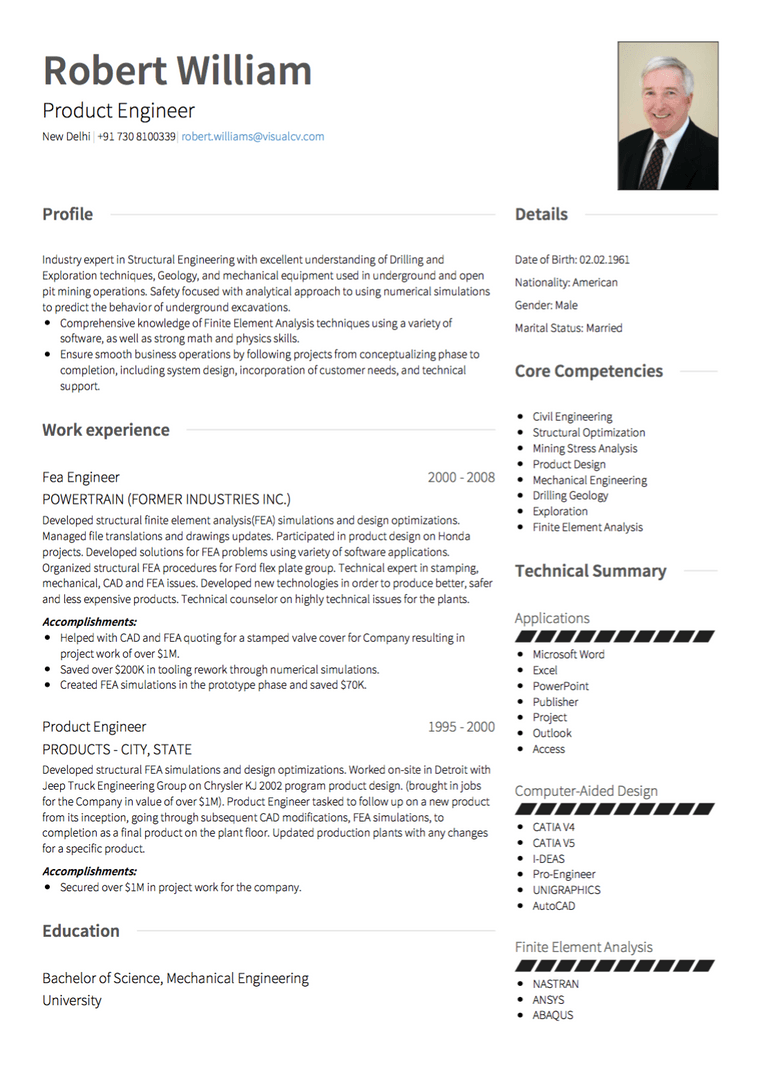
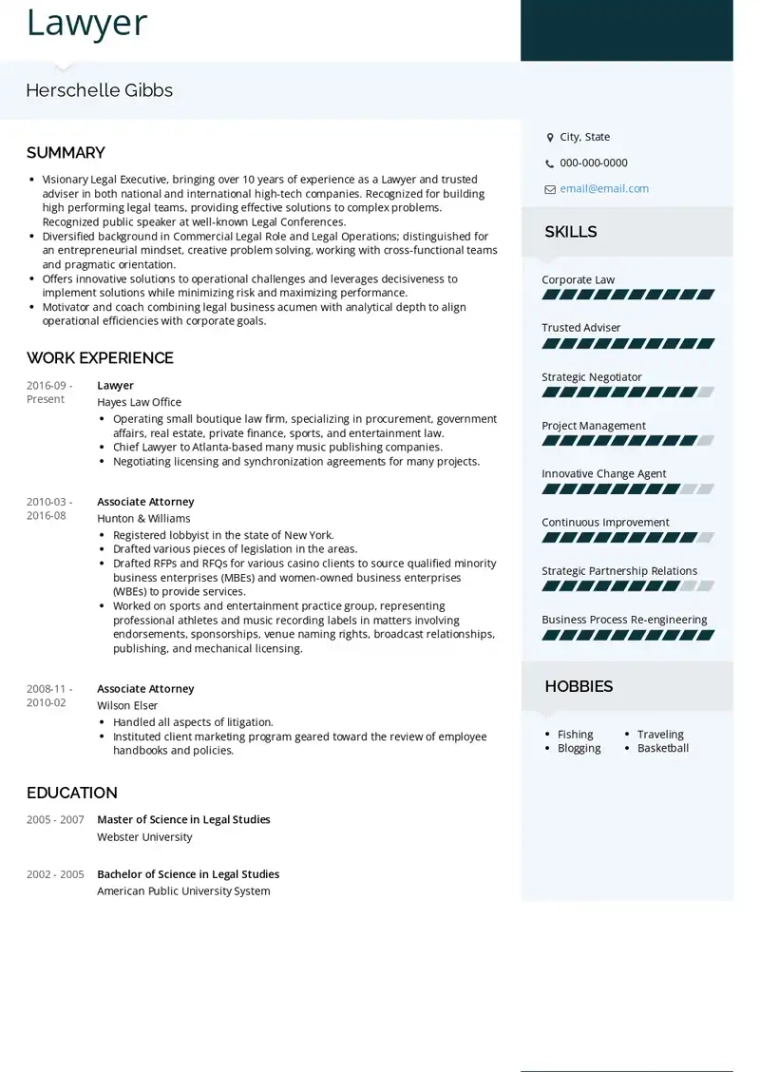
A Swiss-style CV template demonstrates the expected structure—clear personal details, structured work history, and restrained formatting designed for verification rather than visual flair.
Swiss CV Format, Order and Layout
Swiss CVs follow a predictable structure that emphasizes transparency, completeness, and ease of verification. Recruiters expect information to appear in a logical order and to be presented consistently throughout the document.
Photo
A professional photo is commonly expected on a Switzerland CV.
- Place the photo in the top corner of the first page
- Use a neutral background and formal attire
- Ensure the image is high quality and recent
Photos that appear casual or heavily edited may negatively affect credibility.
Personal Information
Swiss CVs typically include more personal information than CVs in many other countries.
Include the following details:
- Full name
- Full address including postal code and canton
- Phone number with country code
- Professional email address
- Date of birth
- Nationality or place of origin
- Marital status if commonly expected in the region
- Work permit status if applicable
Providing complete personal information helps employers assess eligibility early in the process.
Work Experience
Work experience should be presented in a clear and verifiable format.
According to Eurograduate, the order of work experience may be chronological, reverse chronological, or functional. In practice, reverse chronological order is the most common and preferred format in Switzerland.
Each role should include:
- Dates of employment
- Employer name and location
- Job title
- Responsibilities and relevant achievements
Education
Education should be listed in chronological order and include:
- Dates attended
- Institution name
- Location
- Certificates or diplomas obtained
Swiss employers are attentive to formal qualifications and expect accurate documentation.
Other Sections
Additional sections may be included where relevant.
Skills A dedicated skills section may include technical skills, computer skills, and language abilities.
Languages Language proficiency is particularly important in Switzerland and should be clearly stated, including proficiency levels if possible.
References Swiss employers often expect references during the hiring process. Including two or three references on the CV is common, especially in German speaking regions. References do not need to be limited to former employers.
How Do I Write a CV for Switzerland?
To write a Swiss CV, start with a brief professional summary, add complete personal details including permit status, list verifiable experience and education with Swiss date conventions, and match the job ad’s language.
Follow these steps in order.
- Start with a clear CV summary that briefly describes your profession, years of experience, and area of specialization
- Add complete personal and contact details, including location and work permit status if applicable
- List your work experience in reverse chronological order using precise dates and verified job titles
- Describe responsibilities and achievements using factual, modest language
- Include your education and formal qualifications with exact degree titles
- Add a structured skills section covering technical skills and languages
- Review the CV carefully to ensure consistency in dates, formatting, and terminology
- Include a professional photo that meets Swiss standards
- Keep the CV to one or two pages unless additional length is clearly justified
- Write the CV in the same language as the job advertisement
A Switzerland CV should prioritize accuracy, structure, and completeness over creativity or self promotion.
What Personal Details to Include in a Switzerland CV
Personal information is a core component of a Switzerland CV and is evaluated more strictly than in many other countries. Swiss employers expect complete and accurate personal details to assess eligibility, availability, and legal status early in the hiring process.
Personal Details Commonly Required in Switzerland
The following details are standard across most regions and industries in Switzerland:
- Full name
- Professional title or role focus
- Full address including postal code and canton
- Phone number with international country code
- Professional email address
- Nationality or place of origin
- Date of birth
- Work permit or residency status, such as B permit, C permit, G permit, or Swiss citizen
Omitting key personal details can delay screening or result in early rejection, particularly for non EU applicants.
Optional Personal Details by Region
Some personal details are optional but still commonly included depending on canton and employer expectations:
- Marital status, more common in German speaking regions
- Availability or notice period, often included in Geneva and Basel
- Willingness to relocate within Switzerland
When included, these details should be factual and concise.
Photo Inclusion on a Switzerland CV
Including a professional photo is widely expected on a Switzerland CV.
- Photos are standard in German and French speaking regions
- In Ticino, photos are common but slightly less formal
- Photos should be recent, professionally taken, and neutral in presentation
Casual photos or heavily edited images can negatively impact credibility.
Regional Considerations
Local hiring practices can affect how personal information is evaluated.
- In Zurich and Basel, permit status is often reviewed before qualifications for non EU candidates
- In Geneva, international employers may also look for relocation readiness and language flexibility
Providing accurate personal information helps employers assess suitability without additional follow up.
What Skills Should You Include in a Switzerland CV?
Skills sections in a Switzerland CV are expected to be precise, verifiable, and directly relevant to the role. Swiss recruiters generally place greater emphasis on hard skills, certifications, and language proficiency than on broad personal attributes.
How to Structure the Skills Section
Skills should be grouped into clear categories rather than presented as a single list.
Common skill categories in a Switzerland CV include:
- Technical or professional skills
- Language skills
- Certifications or standards
- Optional personal or organizational skills
Avoid paragraphs and keep formatting consistent and easy to scan.
Hard Skills and Technical Competencies
Hard skills are the most important part of the skills section.
- Prioritize tools, systems, methodologies, and certifications
- Use the exact terminology commonly used in Switzerland or the relevant language region
- Include industry standards and regulatory frameworks where applicable
Swiss employers are skeptical of vague skill descriptions. Each listed skill should be defensible through work experience or certification.
Language Skills in a Switzerland CV
Language proficiency is critical in Swiss hiring decisions and should be clearly documented.
- List languages separately from other skills
- Use standardized proficiency levels such as CEFR when possible
- Indicate whether proficiency is active or passive if relevant
Language skills are often used as screening criteria before technical qualifications.
Soft Skills and Cultural Fit
Soft skills are secondary in a Switzerland CV and should be used selectively.
- Include soft skills only when they are directly relevant to the role
- Use neutral, culturally appropriate wording
- Avoid subjective or exaggerated traits
In many cases, soft skills are evaluated during interviews rather than through the CV.
ATS and Regional Considerations
Applicant tracking systems used in Switzerland often prioritize:
- Exact tool names and certifications
- Language proficiency levels
- Industry specific terminology
In Zurich and Basel, ATS filters frequently focus on technical keywords and standards. In Geneva, language proficiency and international experience are more prominent screening factors.
How to Present Education and Qualifications in a Swiss CV
Education is an important evaluation factor in a Switzerland CV, particularly in credential focused industries and regulated professions. Swiss employers expect education to be listed clearly, accurately, and in a format that allows easy comparison.
Standard Format for the Education Section
Education entries in a Switzerland CV should follow a consistent structure:
- Degree title
- Institution name
- Location including city and country
- Dates of attendance or graduation
- Specialization, thesis title, or focus area if relevant
Entries should be listed in reverse chronological order, starting with the most recent qualification.
Listing Swiss Education
If you completed your education in Switzerland, use the official Swiss degree titles and institutions.
- Specify whether the qualification is EFZ, HF, FH, HES, Uni, or ETH
- Use the exact name of the institution as it appears on official documents
- Avoid translating Swiss degree titles into foreign equivalents
Swiss employers are familiar with local qualifications and expect precise terminology.
Listing International Education
For degrees obtained outside Switzerland, additional context is often required.
- Translate degree titles into the language of the CV where appropriate
- Include the country of the institution
- Consider adding an equivalency note for clarity
- Avoid GPA conversions unless explicitly requested
Descriptive distinctions such as graduated with distinction are generally preferred over numerical grading systems.
Regulated Professions and Recognition
Certain professions in Switzerland require formal recognition of foreign diplomas.
- Include recognition status if applicable
- Mention pending recognition only when relevant to the role
- Be prepared to provide documentation upon request
Providing clear education information reduces follow up and supports eligibility assessment.
How to List Swiss Diplomas and Qualifications in a CV
Switzerland has a highly structured national education framework, and diploma titles carry legal and professional meaning. On a Switzerland CV, qualifications must be listed precisely so employers can immediately assess level, recognition, and comparability.
Using Official Swiss Degree Titles
If you studied in Switzerland, always use the official Swiss diploma title as issued.
Common Swiss qualifications include:
- EFZ, Eidgenössisches Fähigkeitszeugnis
- BM, Berufsmaturität
- FH, Fachhochschule
- HES, Haute école spécialisée
- ETH or EPFL, Federal Institutes of Technology
- Uni, traditional universities
Do not replace Swiss titles with international equivalents. Swiss employers recognize these qualifications and expect exact wording.
Example of a Swiss Education Entry
Bachelor of Science FH in Betriebsökonomie ZHAW – Zürcher Hochschule für Angewandte Wissenschaften, Winterthur 09.2016 – 06.2019
Listing Qualifications Obtained Outside Switzerland
If your education was completed outside Switzerland, additional context helps employers evaluate equivalency.
- Translate degree titles into the CV language where appropriate
- Add a brief equivalency note when relevant
- Use phrasing that reflects comparability rather than direct replacement
For example, stating that a degree is equivalent to a Bachelor FH in Switzerland helps recruiters quickly understand its level.
Regulated Professions and Diploma Recognition
For regulated professions such as healthcare, education, or engineering, diploma recognition may be required.
- Mention recognition status only when relevant to the role
- Include pending recognition where applicable
- Be prepared to provide supporting documentation
Clear and accurate qualification mapping reduces delays and increases trust during screening.
What Are Swiss CV Requirements?
Every Swiss CV requires to have the following:
- An introduction letter.
- Two pages of length (or more).
- Be written in the same language as the job advertisement.
- Include a high quality photo.
- Add your education.
- Add references.
What Language Should Your Swiss CV Be Written In?
The language of a Switzerland CV must match the language used in the job advertisement. This is a strict expectation in Swiss hiring and is often treated as a basic screening requirement.
Writing a CV in the wrong language can result in immediate rejection, even if qualifications are strong.
Language Requirements by Region
Switzerland has four national languages, and hiring expectations follow regional norms.
German speaking cantons such as Zurich, Bern, Lucerne, Aargau, and Basel require CVs written in Standard German. Swiss German dialect should never be used in written applications.
French speaking cantons such as Geneva, Vaud, Neuchâtel, and Jura require CVs written in French.
In Ticino, CVs should be written in Italian.
English Language CVs in Switzerland
English language CVs are acceptable only when the job advertisement is written in English or when applying to international companies where English is the working language.
This is most common in sectors such as pharmaceuticals, finance, and technology. Even in these cases, listing proficiency in German or French is often expected.
Language and Tone Considerations
Beyond language selection, tone and structure matter.
- Use formal and professional phrasing
- Avoid informal expressions or promotional language
- Follow regional business writing conventions
In German speaking regions, factual and reserved language is preferred. In French speaking regions, expression may be slightly more formal and structured.
Choosing the correct language and tone signals cultural competence and attention to detail.
Tips for Structuring a Multilingual Switzerland CV
Multilingual CVs are common in Switzerland due to the country’s linguistic diversity and international workforce. However, multilingual does not mean mixed language. Each Switzerland CV must follow strict language and formatting rules.
Rules for Multilingual CVs in Switzerland
When applying for roles across different cantons or language regions, the following rules apply:
- Submit your CV in the language of the job advertisement
- Do not mix languages within a single CV
- Maintain separate versions for different language regions
- Ensure each version is complete and self contained
Mixing languages within one document is a frequent reason for rejection.
Maintaining Multiple CV Versions
If you apply to roles in multiple regions, it is acceptable and often recommended to maintain parallel CV versions.
- Content should remain consistent across all versions
- Dates, formatting, and structure should match exactly
- Only the language should change between versions
This consistency helps employers verify information across applications.
File Naming and Presentation
Clear file naming is important when submitting multiple CV versions.
Recommended file naming conventions include:
- CV_Name_German.pdf
- CV_Name_French.pdf
- CV_Name_Italian.pdf
- CV_Name_English.pdf
Use English versions only when the job advertisement or employer explicitly allows it.
Section Titles Across Languages
Use standard section titles appropriate to each language.
Examples include:
- Berufserfahrung for German
- Expérience professionnelle for French
- Esperienza professionale for Italian
Using standardized section titles improves readability and ATS compatibility.
Are References Required in a Swiss CV?
References are not always included on the CV itself, but Swiss employers will expect them during the process. The phrase “References available upon request” is still acceptable but becoming less common.
Swiss norms for references:
- Most employers will eventually request contact details of 1–2 referees
- In German-speaking regions, it is common to provide referees from previous Swiss roles, ideally with Swiss phone numbers and titles
- In French- and Italian-speaking regions, listing referees directly is more common than waiting for a request
If you include referees, format them like this:
Dr. Petra Müller HR Director, UBS Group AG petra.mueller@ubs.com +41 44 234 56 78
Best practice:
- Use referees who can speak the language of the hiring region
- Always inform your referees in advance
What is an Arbeitszeugnis and How to Mention It in a Swiss CV?
The Arbeitszeugnis is a formal employment certificate, legally required in Switzerland when a job ends. It is a cornerstone of hiring in the German-speaking part of the country.
Types of Arbeitszeugnis:
- Vollzeugnis (Full Certificate): Includes role, duration, responsibilities, and performance/appraisal
- Zwischenzeugnis (Interim Certificate): Issued during employment, often used during job search
- Einfaches Zeugnis: States only role and duration (used in sensitive terminations or legal cases)
Why it matters:
- Employers will often request your Arbeitszeugnisse in PDF format along with the CV
- Hiring managers may cross-check the language of your CV against the tone of the certificate
- A positive Arbeitszeugnis must include phrases like “stets zu unserer vollsten Zufriedenheit” to be considered good
Tips:
- Mention in the CV or cover letter that Arbeitszeugnisse are available
- Avoid listing job titles or achievements on your CV that do not match your Arbeitszeugnis wording
- If you do not have one, proactively explain why (e.g., international role, startup)
Suggested line for your CV or cover letter:
“Arbeitszeugnisse für bisherige Positionen sind vorhanden und können auf Wunsch vorgelegt werden.”
Should You Include a Cover Letter in Switzerland?
Yes, a cover letter is considered essential in the Swiss job market and often carries more weight than in other countries.
Swiss cover letter expectations:
- Language must match the job ad and CV
- Use the formal greeting style: "Sehr geehrte Frau..." or "Madame, Monsieur"
- One page only
- Tailored to the company and job description, especially in German-speaking cantons
- Mention your permit status if you are a non-Swiss or non-EU citizen
Regional emphasis:
- In Romandy (French-speaking Switzerland), cover letters tend to be slightly more expressive and rhetorical
- In German-speaking regions, tone is more reserved and fact-focused
- Avoid repeating your CV; use the letter to explain motivation, permit status, and availability
Conclusion:
To improve your prospects of finding employment in Switzerland, ensure that your Swiss CV follows the expected format and has all the right content. Switzerland has a particular work culture and set of CV expectations, so customizing your CV to suit this reality is an important part of seeking a position there.
Do I need to include a work permit on a Swiss CV?
Yes. Swiss recruiters often screen eligibility early, so listing your work authorization (e.g., Swiss citizen, Permit B/C/G/L, EU/EFTA, or “requires sponsorship”) helps avoid delays and mismatched applications.
What’s the best way to list Swiss work permits (B, C, G) on a CV?
Put it in the personal details section in one line, kept factual. Example: “Work permit: B (valid until 05.2027)” or “Work permit: G (cross-border).” Avoid long explanations—save context for the cover letter if needed.
Should non-EU candidates include relocation or sponsorship info?
Yes, but keep it neutral and practical. Swiss hiring is risk-sensitive, so stating “Available to relocate to Zurich within 4 weeks” or “Requires permit sponsorship” sets expectations without sounding promotional.
Do Swiss employers expect a full application “dossier” (Bewerbungsdossier)?
Often, yes—especially in German-speaking Switzerland. Many employers expect a bundle: CV + cover letter + diplomas/certificates + Arbeitszeugnisse. Having a clean, consistent dossier can be as important as the CV itself.
What supporting documents are commonly requested with a Swiss application?
Depending on role and canton: Arbeitszeugnisse, diplomas, training certificates, and sometimes reference contacts. In regulated fields, recognition/registration documents may be requested during screening.
Is it okay to use an “achievements-first” style CV in Switzerland?
Usually not. Swiss employers prefer verifiable facts over bold claims. You can include results, but they should be modest, specific, and easy to validate (scope, budget, team size, standards, outcomes).
How do I make my Swiss CV easy to verify?
Use consistent job titles, exact dates, and locations (city + canton). Keep terminology aligned with certificates where possible (e.g., Arbeitszeugnis wording, official degree titles).
What date format should I use on a Swiss CV?
Use Swiss conventions consistently (commonly MM.YYYY or DD.MM.YYYY). Mixing formats across roles can look sloppy and raises verification friction.
Can I use a two-column or “designed” resume for Switzerland?
In most cases, avoid it. Swiss recruiters value structure and readability over visual design, and many ATS/recruiter workflows work best with simple, text-first layouts.
What language level format is best for Switzerland (especially for ATS)?
Use standardized levels (CEFR: A1–C2) and clarify “written/spoken” if relevant. Language is a screening filter in Switzerland, so be precise and conservative.
Should I translate job titles into German/French/Italian?
If the CV is in a local language, translating can help—but don’t distort official titles. A common approach is: local title + original title in parentheses if needed for accuracy.
How do I handle employment gaps on a Swiss CV?
Be factual and brief. If you took a sabbatical, studied, relocated, or cared for family, label it neutrally with dates. Swiss recruiters prefer clean timelines over vague omissions.
What’s the best file name for a Swiss CV submission?
Use a predictable, professional format like: CV_Firstname_Lastname_CH_DE.pdf or Lebenslauf_Vorname_Nachname_ZH.pdf (language/canton optional). It signals professionalism and reduces admin friction.
Do Swiss employers expect a “Place of origin” (Heimatort) or just nationality?
Nationality is common; “place of origin” can appear on Swiss-format profiles. If you’re not Swiss, don’t force it—stick to nationality and permit status.
Should I include a driving license on my Swiss CV?
Only if it matters for the role (field service, logistics, healthcare home visits). If relevant, add “Driving license: Cat. B” in personal details.
How do I tailor a Swiss CV for German-speaking vs French-speaking cantons?
Keep the same structure, but adapt language tone and conventions: German regions prefer stricter structure and restrained phrasing; French regions tolerate slightly more narrative structure, but still formal and precise.
Is an ATS-friendly CV important in Switzerland?
Yes for many large employers (finance, pharma, tech). A simple PDF with selectable text, standard headings, and consistent formatting is usually the safest choice.
What’s the biggest reason Swiss CVs get rejected early?
Mismatch on basics: wrong language vs job ad, missing permit status, inconsistent dates/titles, or a CV that feels “marketing-heavy” instead of factual and verifiable.