What Sections are Important to Include In a Spanish Resume?
Most Spanish resumes are expected to have the following sections in it:
- Work history
- Education section
- A photo
- Contact information
- Date of birth
It is integral to your Spanish job search that your CV doesn’t stand out for the wrong reasons - it should be eye catching because it is a great CV, not because it is missing key information.
If you are trying to write a Spanish resume and wish to list your Spanish resume sections with a Spanish title, here's how you can do it:
- Encabezado in place of Header
- Objetivo instead of Objective
- Experiencia Laboral instead of Work History
- Habilidades instead of Skills
- Formación Académica instead of Education
Browse our gallery of resume examples here.
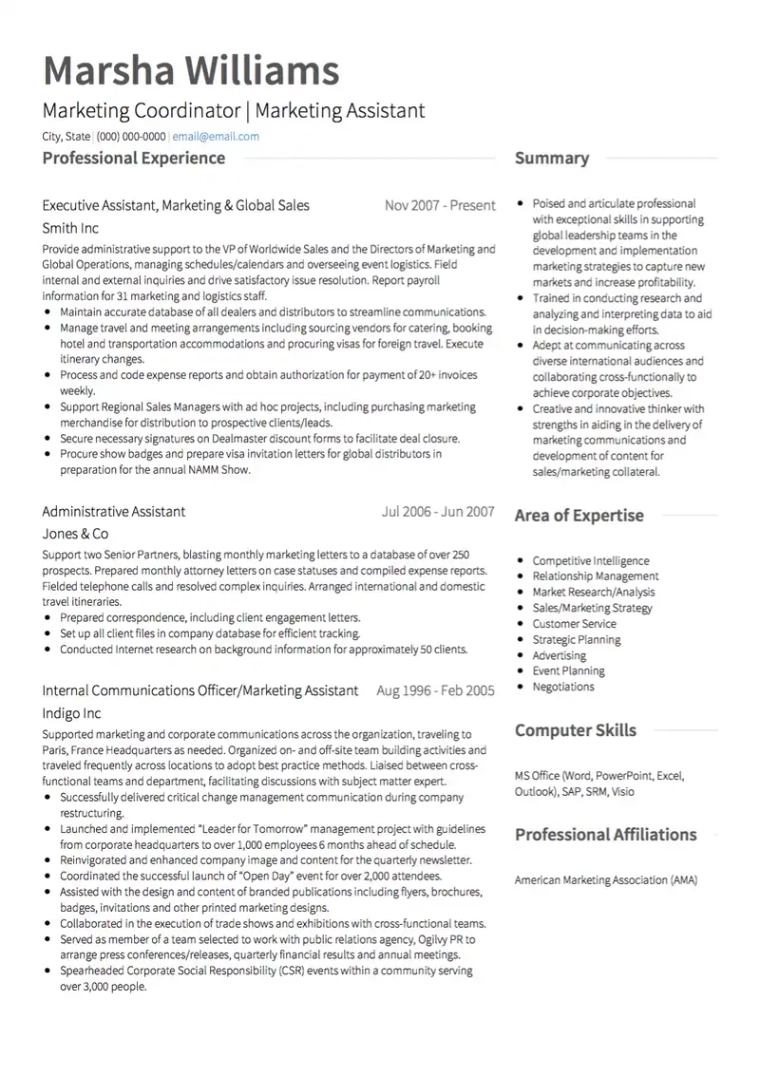
Spanish CV Example
Spanish CV Tips and rules:
Length: No more than two pages are necessary in your CV for Spain.
Layout: Use clear headings and sections - you want employers and recruiters to be able to scan your cv quickly and efficiently.
To format a Spanish resume:
- Start with a layout for your resume in mind. Your choices are: Reverse chronological, functional or a hybrid resume layout.
- Use a margin of 1 inches on all side to ensure that when anyone holds your resume, it won't hide any content on it.
- Use bullet points instead of a paragraph to describe your work experience.
- Use a maximum of two fonts. If you are using two fonts, use one for heading of each section and the other for descriptions.
- If you are planning to use Spanish words, ensure that you have everything right - including the specific characters and the punctuation.
10 Spanish Resume Examples and Templates
Reverse Chronological Spanish Resume Example
Functional Spanish Resume Example
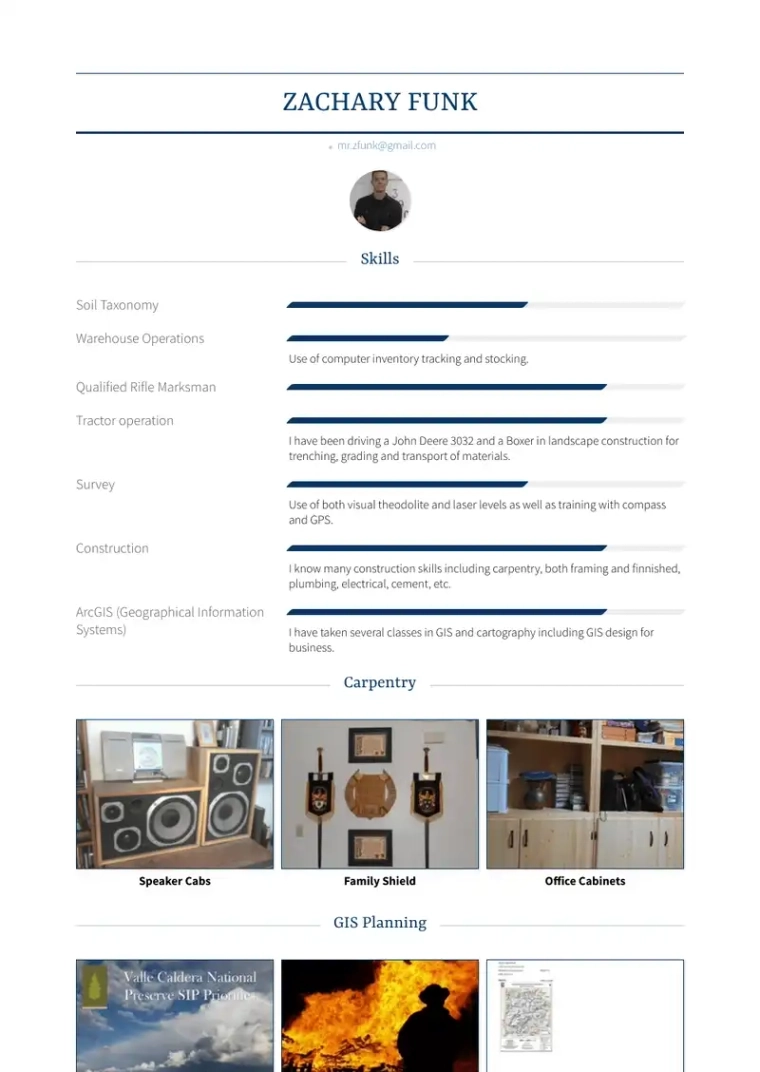
Combination Spanish Resume Example
Administration Spanish Resume Example
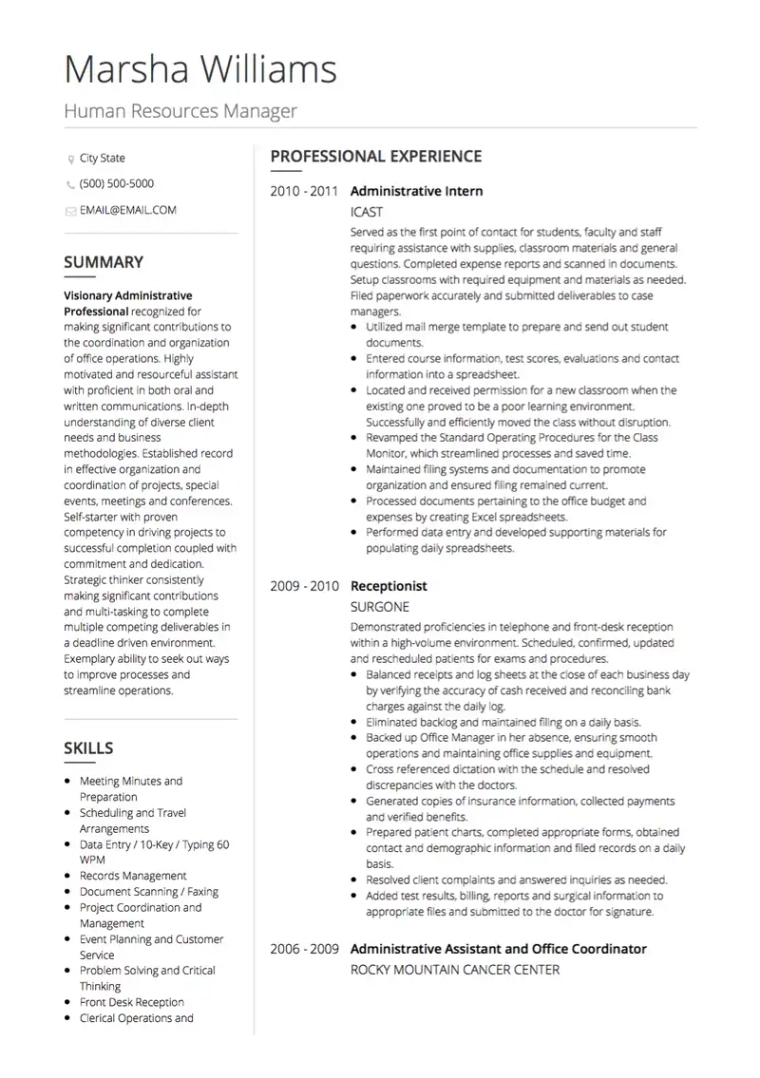
Retail and Customer Service Spanish Resume Example
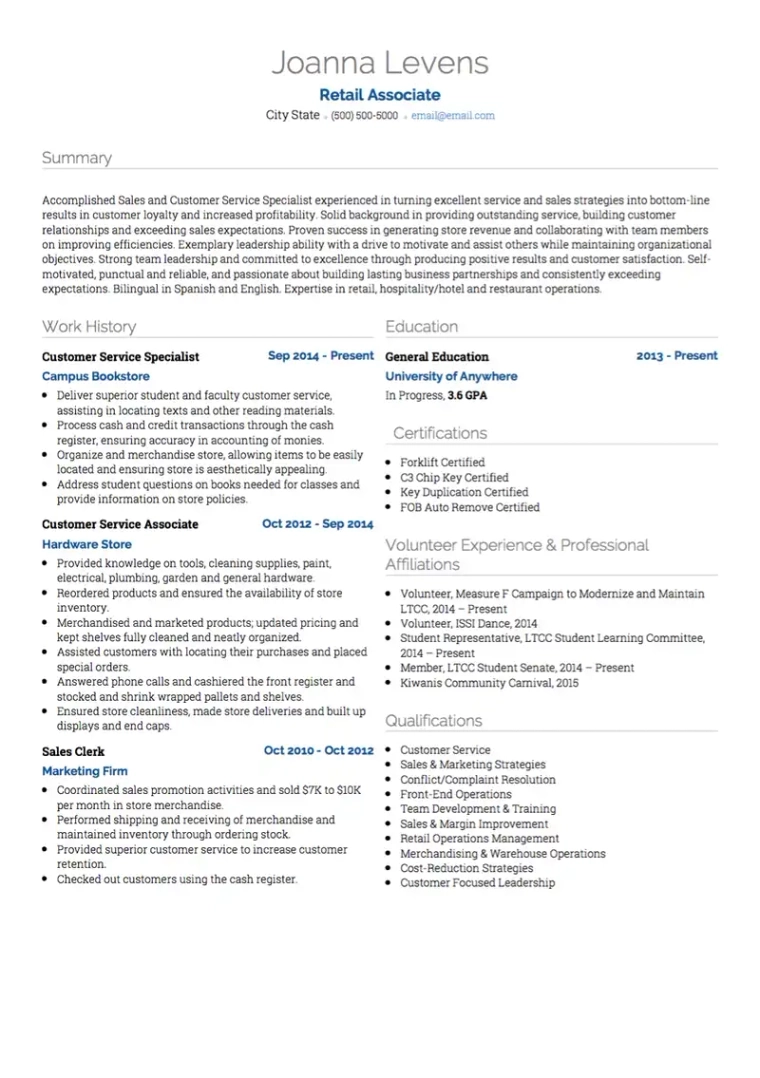
Professional Spanish Resume Example
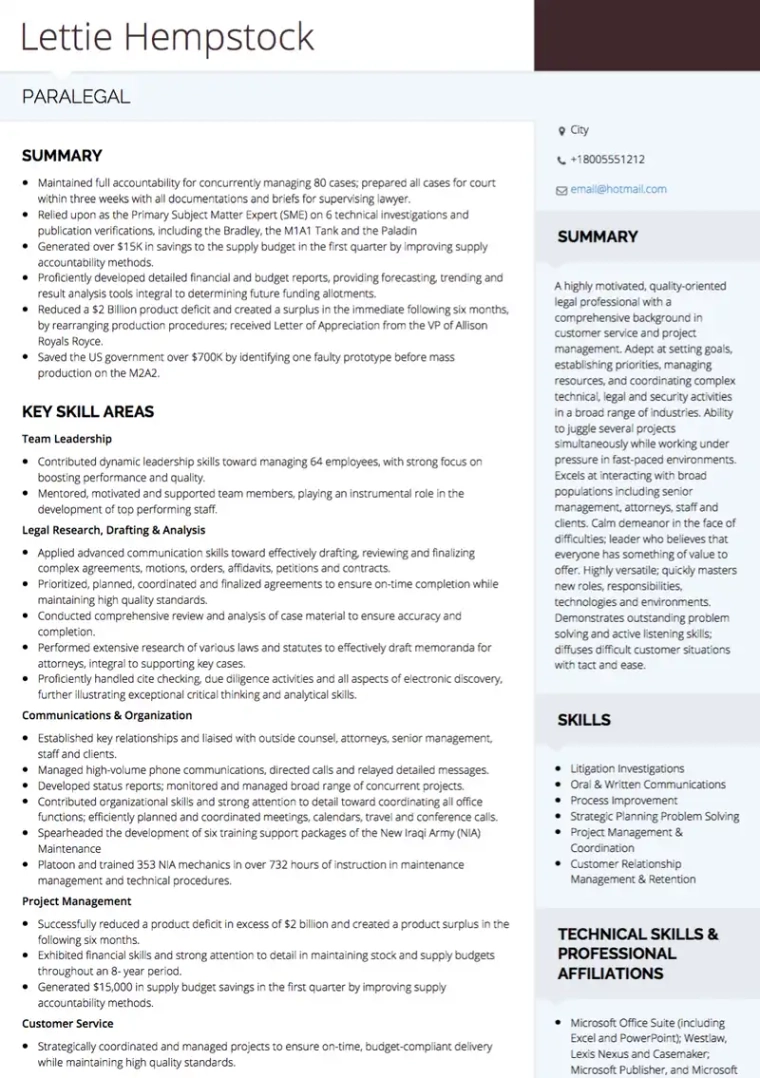
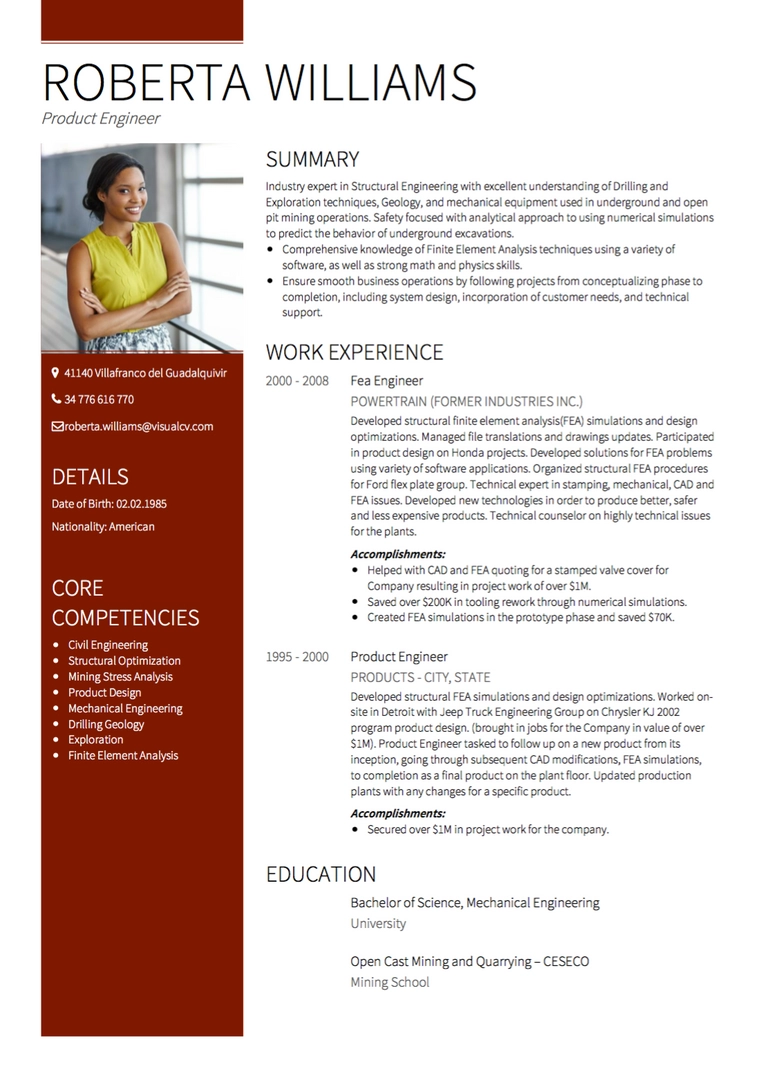
Engineering Spanish Resume Example
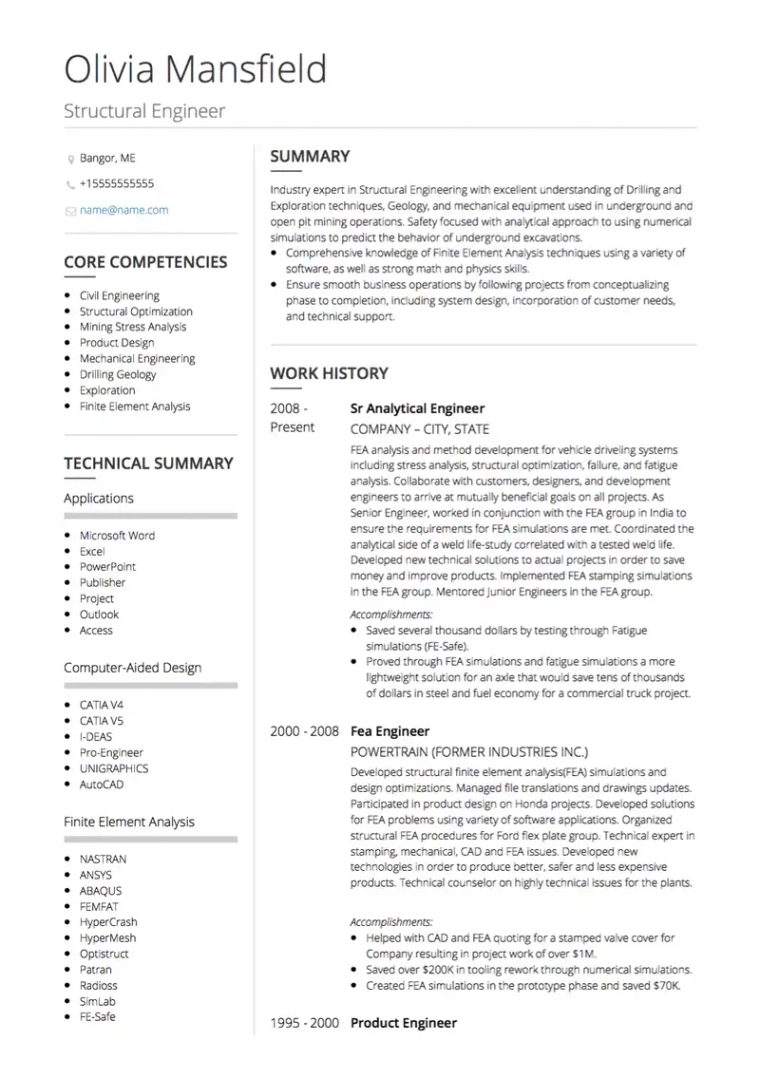
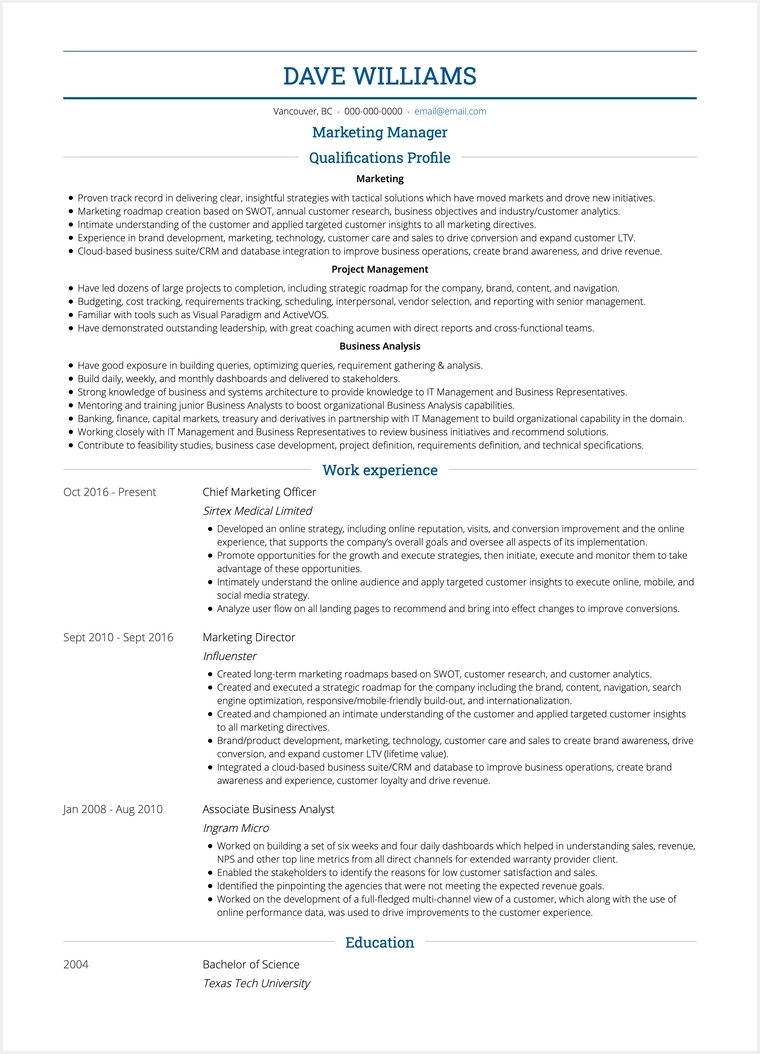
Marketing Spanish Resume Example
Management Spanish Resume Example
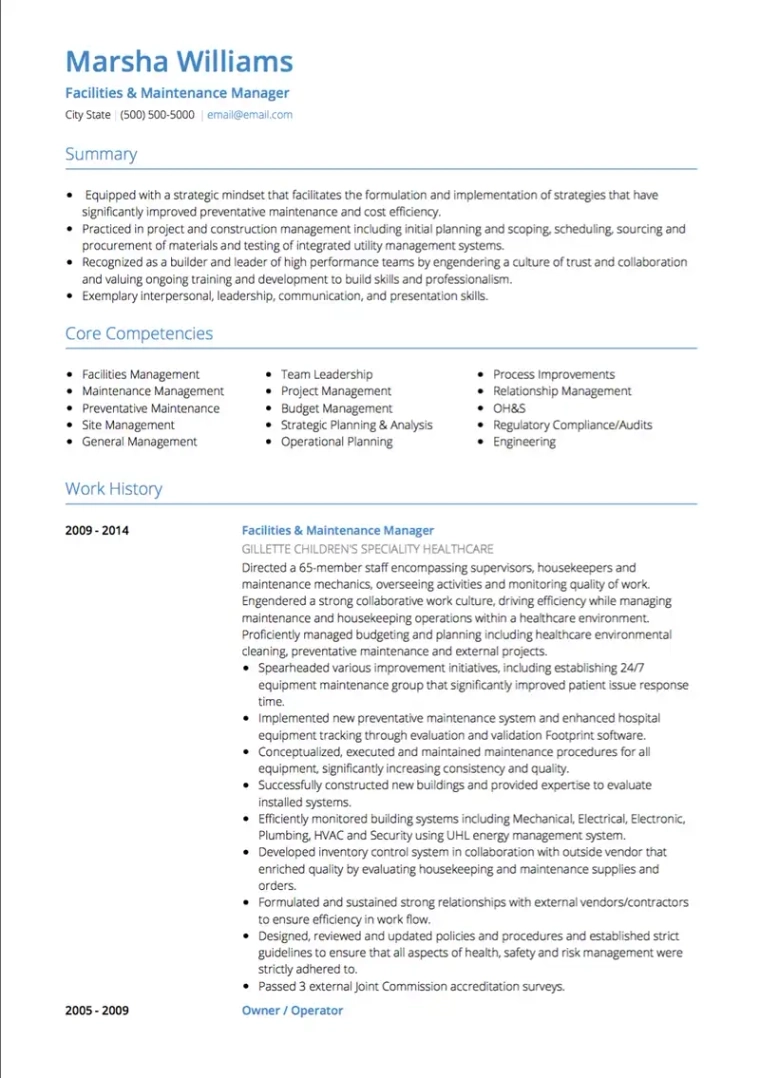
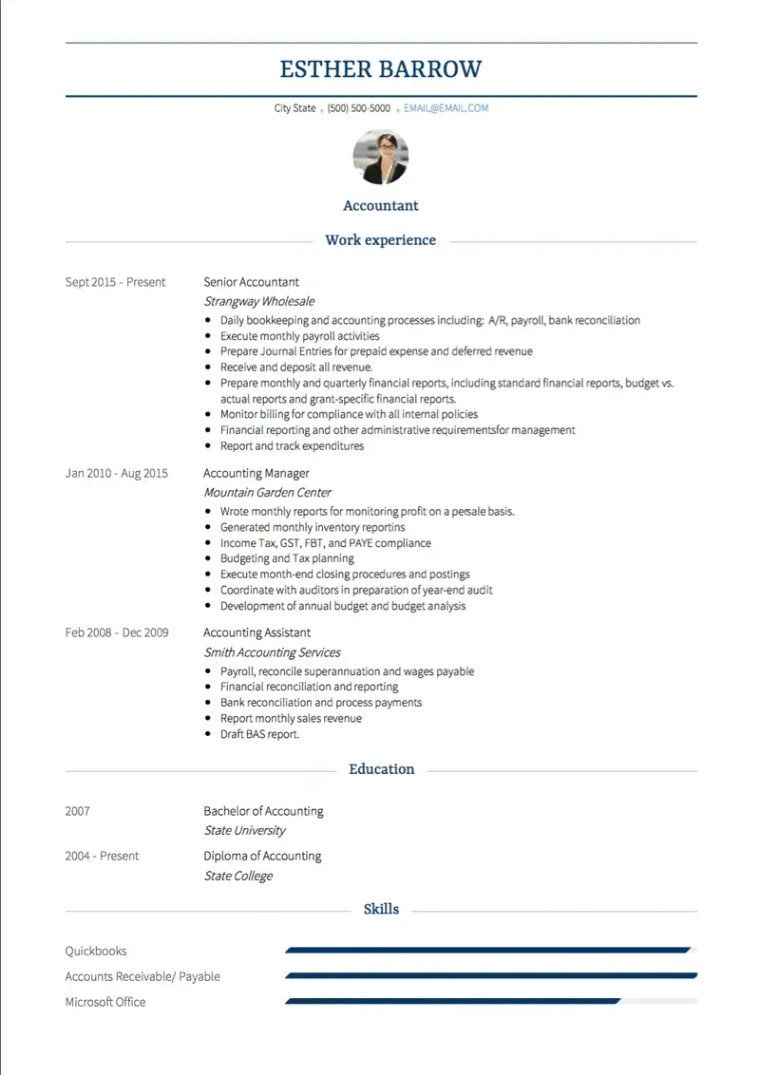
Finance and Accounting Spanish Resume Example
Photo: “In Spain it is very normal to include a photo on your CV”, according to Spanish Town Guides. An image directly on the CV is ideal, but you can include a picture separately if necessary.
Personal Information: Near the top of your CV, include your name, date of birth, nationality, full address, phone number, and email address.
Personal Summary: A personal summary is not required, but if you would like to include a few lines briefly describing your career history or career objective, that is acceptable.
Work experience: Write your Work Experience in reverse-chronological order. Use this section to sell yourself and your experience - focus on your achievements, but be sure to include your responsibilities as well. Use bullet points so that your work history is organized and easy to read.
Education: Showcase your education, including university name, area of study, and any certifications or degrees you earned. Unless you are a recent graduate, make sure this section does not overshadow your work history - according to cvrite, “If you have worked for more than three years it is usually better to include ‘Career History’ first, followed by ‘Education’.
Resume template: Browse through our gallery of Spanish resume templates.
Other Sections to Add in a Spain CV:
Skills: A Skills section where you provide a brief list of activities you are experienced with is a good addition to any CV. This section can efficiently show what your strengths are.
Volunteer experience: A volunteer section can be a great asset to your resume. It shows that you are well-rounded and have interest and experience in different areas.
Languages: As long as there is space on your resume, list all languages that you are fluent in.
References: It is acceptable to include a few references on your CV. The more impressive they are, the more impressive their inclusion will be. If you prefer, it is also acceptable to leave this out, providing references only when asked.
How to Write a CV for Spain
A Spanish CV must follow a clear, formal structure and reflect local conventions in formatting, length, and content.
- Choose a professional CV template
designed for Spain. Keep the length to a maximum of two pages.
- Include your full name, email, Spanish phone number, and (if relevant) a link to your portfolio in the header.
- Write a concise CV summary (3–4 lines) that highlights your core qualifications and career goals.
- List your work experience in reverse chronological order. Focus on measurable achievements, responsibilities, and the impact you made in each role.
- Add relevant certifications under a separate "Certifications" section, especially for technical or regulated professions.
- Include a detailed skills section with both hard and soft skills tailored to the job description.
- List your education with degree name, institution, and graduation year. Include honors or coursework if relevant to the role.
Optional sections may include languages, publications, projects, or volunteer work—depending on the job or sector. Always tailor your CV to the role and industry.
How to Write a CV Summary for Jobs in Spain
Your CV summary should be short, technical, and tailored to the Spanish job market.
- Write 3–4 lines summarizing your title, years of experience, core strengths, and industry focus.
- Avoid generic or overly promotional phrases; employers in Spain prefer facts over adjectives.
- Mention specific tools, credentials, or sector keywords relevant to the role.
- If applying in Catalonia, Valencia, or the Basque Country, briefly mention language proficiency if it's relevant.
- Do not list soft skills unless they are quantifiable or certified.
Example (Engineering):
Ingeniero industrial con 6 años de experiencia en automatización de procesos y control de calidad en el sector alimentario. Experto en PLC, SCADA y normativas ISO 22000.
How to List Certifications on a Spanish CV
Certifications are critical in regulated and technical fields, and should be clearly listed in a dedicated section.
- Use the section title “Certificaciones” or “Certifications” depending on the application language.
- Include official Spanish credentials when possible (e.g., “Certificado de Profesionalidad,” “Homologación”).
- Add the issuing body, country (if international), and date of completion.
- For legal, medical, education, or engineering roles, mention registration numbers if applicable.
- If you are applying in Catalonia, check if your certification also requires Catalan validation for public roles.
Example:
Certificado de Profesionalidad: Gestión contable y auditoría – SEPE, 2023
How to Add Skills on a Spanish CV
Skills must be aligned with the job requirements and formatted for quick scanning by HR software.
- Create a dedicated “Habilidades” or “Skills” section near the top or side column of your CV.
- Use bullet points or a grid layout to separate hard and soft skills.
- Prioritize hard skills, especially technical tools, software, or certifications required in the job posting.
- Match your terminology to Spanish usage (e.g., “Gestión de proyectos” instead of “Project management”).
- For bilingual roles, include languages in a separate section, not under skills.
Example of hard skills list (IT):
- Python, SQL, Tableau
- Administración de sistemas Linux
- Análisis de datos financieros
- Scrum, Jira, Confluence
How to List Education on a CV in Spain
Education should be listed in reverse chronological order, with a focus on official degrees and formal training.
- Use official Spanish degree names if you studied locally: “Grado,” “Máster,” “Ciclo Formativo de Grado Superior.”
- If your degree is international, indicate equivalence (e.g., “equivalente a Grado en Psicología en España”).
- Include the institution name, city, and graduation year.
- If applying for public sector jobs, list full qualification codes and homologation details if relevant.
- You may include relevant coursework or academic projects, but avoid listing secondary school if you hold a degree.
Example:
Grado en Administración y Dirección de Empresas (ADE)
Universidad Complutense de Madrid – 2020
Should You Include DNI or NIE on a CV in Spain?
Including your national ID (DNI for citizens, NIE for foreign residents) is optional but still standard in many formal sectors in Spain.
- Public sector, finance, legal, and education roles may expect to see a DNI or NIE listed.
- It is less common in startup or creative industries, especially in international companies.
- Place it in the personal details section at the top of the resume.
- Format it as: DNI: 12345678-A or NIE: X1234567-B.
- Do not include a passport number unless specifically requested.
When to List Work Authorization on a CV for Jobs in Spain
If you are not a Spanish citizen, or your name does not indicate nationality, listing your work authorization is recommended.
- Employers in regulated fields (healthcare, education, government) often require proof of work eligibility.
- Use a line like “Authorized to work in Spain” or “Permiso de trabajo en vigor.”
- This avoids screening delays in ATS filters or HR checks.
- Add it near your contact details or at the end of your summary section.
- Do not attach official documents unless requested.
Catalan Language Requirements for CVs in Barcelona and Catalonia
Catalan proficiency is expected or required in many roles across Catalonia, especially in public-sector and client-facing positions.
- Catalan is a co-official language and legally mandated in education, government, and healthcare.
- Job applications in Barcelona, Girona, Lleida, or Tarragona often require explicit mention of Catalan skills.
- Use CEFR levels when listing Catalan (e.g., Catalan – B2).
- In private-sector roles, Catalan may not be required but improves competitiveness.
- Do not assume Spanish is sufficient for roles in Catalonia.
How to List Regional Languages on a CV Resume
In multilingual regions of Spain, you should list all relevant co-official languages using standardized proficiency levels.
- Include Catalan, Basque (Euskara), or Galician if applying in those autonomous communities.
- Many public-sector jobs require proficiency in the regional language.
- List languages using CEFR format: “Galician – C1” or “Basque – B2.”
- If you lack fluency but can understand or read, indicate that accurately.
- Do not assume Spanish alone is sufficient in all parts of Spain.
CV Photo Requirements in Spain by Region and Industry
Most resumes in Spain include a photo, but formatting and style expectations vary based on industry and location.
- A photo is standard and often expected in most Spanish job applications.
- Use a high-resolution, passport-style headshot with neutral background.
- For Madrid, legal, and finance roles, wear formal attire and use a neutral expression.
- In Barcelona, Valencia, and tourism sectors, a slightly more relaxed style is acceptable but should still be professional.
- Do not use selfies, cropped group photos, or filters.
How long is a CV in Spain?
A CV for Spain is usually no longer than 2 pages. Any CV more than two pages is considered too long in Spain.
Conclusion:
In Spain, as in many countries across Europe, a photo and date of birth are expected on your CV. The specific requirements of a CV varies from country to country - observing the rules and tips above is a great way to ensure that your CV suits the expectations of Spanish employers.