Canada Resume: 10+ Examples, Formats, Templates & 2024 Resume Writing Tips
Applying for a job in Canada? This Canada resume guide has the templates, tips, examples, & format requirements needed to write the perfect resume.
“Software developer looking to work for prestigious software companies…”
Vs
“Software developer with 10+ years of experience scaling data-intensive software companies…”
The difference between those two lines while appears to be small creates a big difference when you use them on your Canadian resume.
Read further.
This Canadian resume writing guide will help you if:
- You are someone outside of Canada creating a resume for Canadian jobs
- Or, someone within Canada trying to best adapt an existing resume
We will go over the following details in this article:
- Popular Canadian resume formats and how to select the right one for you
- How to write a Canadian resume
- 10 Canadian resume examples to inspire you
- How to convert your current resume to a Canadian-style resume
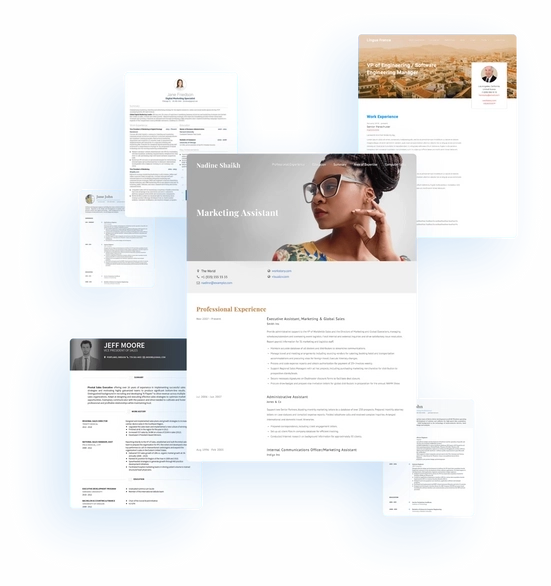
Before we get into that, try out VisualCV’s resume-building platform - built with love out of Vancouver, Canada - the best way to build a Canadian resume.

What is the Canadian Resume Format?
A Canadian resume format is a structured way of showcasing your contact information, past work experience, skills, education and important information that will help a hiring manager assess your suitability for the job. A typical Canadian resume uses either of these formats: reverse chronological, function, or combination.
The 3 Popular Canadian Resume Formats
The top 3 Canadian resume formats are:
- Reverse chronological resume format
- Functional resume format
- Combination resume format
These are the resume formats that are popular across Canada. We saw chronological and functional resumes top the choice while combination resume format was the third choice.
Surprisingly, job seekers in Toronto preferred a reverse chronological resume over any other resume format.
Let’s now take a look at these Canadian resume format examples.
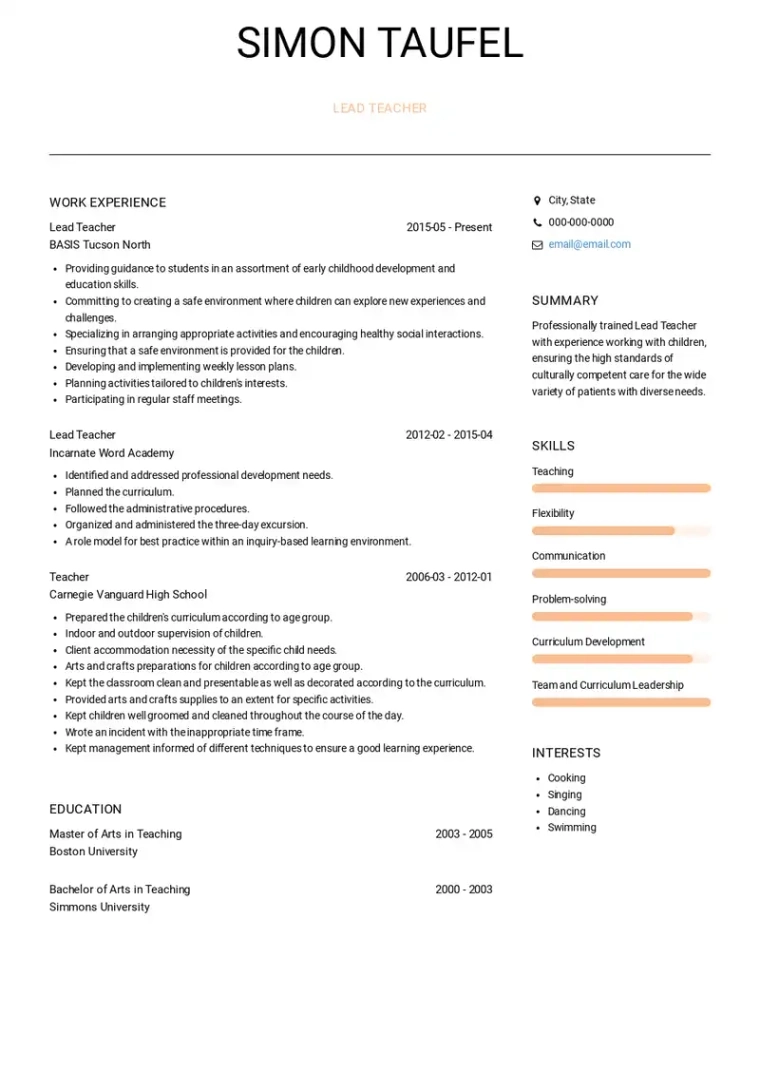
Chronological Canadian Resume Format Example
Here’s what a Canadian resume built using the chronological resume format would look like:

Is a Reverse Chronological Format Right for Your Canadian Resume?
Reverse chronological resume right for you if:
- You have relevant work experience to highlight.
- You aren’t changing careers (e.g. software engineer applying for a marketing position)
- Your total work experience is less than 20 years.
Functional Canadian Resume Format Example
Here’s what a Canadian resume built using the functional resume format would look like:


Is a Functional Format Right for Your Canadian Resume?
Functional resume right for you if:
- You have to explain how your skills are relevant to the advertised position
- You wish to highlight your outstanding skills and achievements
- If you wish to lead with your skills instead of experience
Combination Canadian Resume Format Example
Here’s what a Canadian resume built using the combination resume format would look like:


Is a Combination Format Right for Your Canadian Resume?
Combination resume right for you if:
- If you are right a resume with more than 15 years of experience
- You’ve worked across a range of companies, industries of jobs
- You wish to highlight your overall qualifications in terms of skills and expertise over work experience
Combination resumes are not that popular across Canada though, so if you are planning on using one - exercise caution. Make sure to revisit your resume to ensure it conveys your skills in a meaningful way.
Let's now address the next item on our list - a good Canadian resume template.
Canadian Resume Template


If you are looking for a few more format specific resume templates, here are a few that are just perfect for the popular Canadian resume formats.
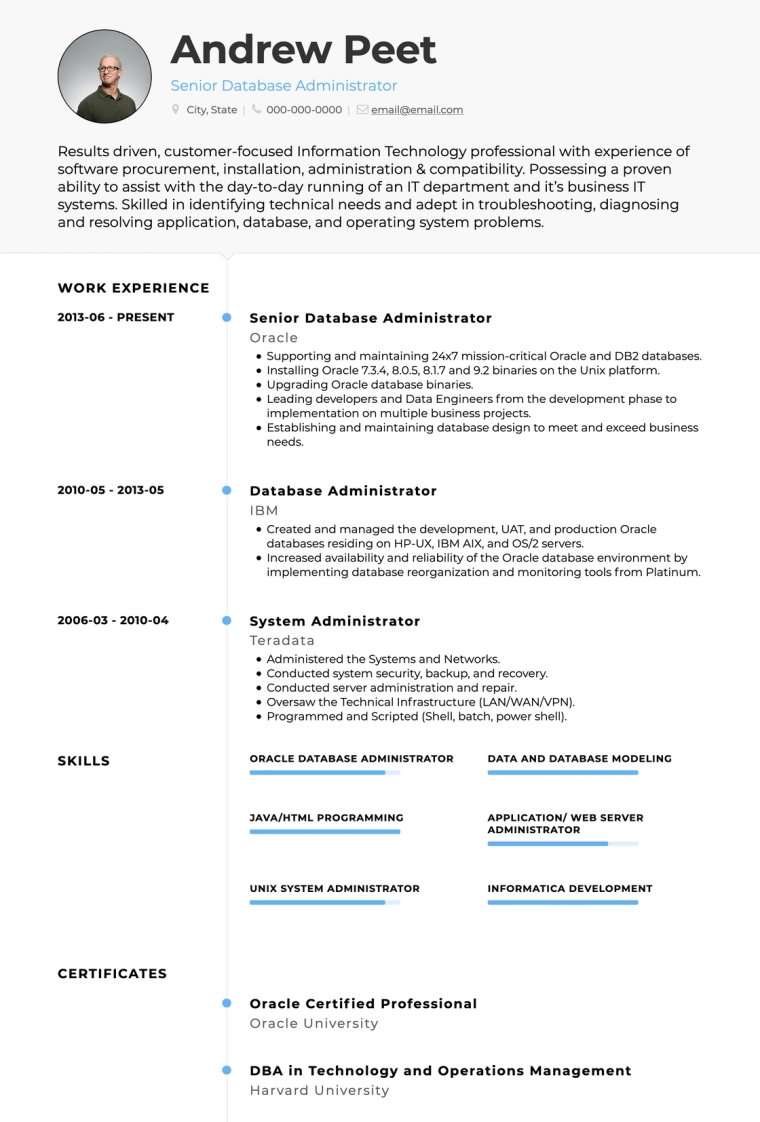
Reverse Chronological Canadian Resume Template

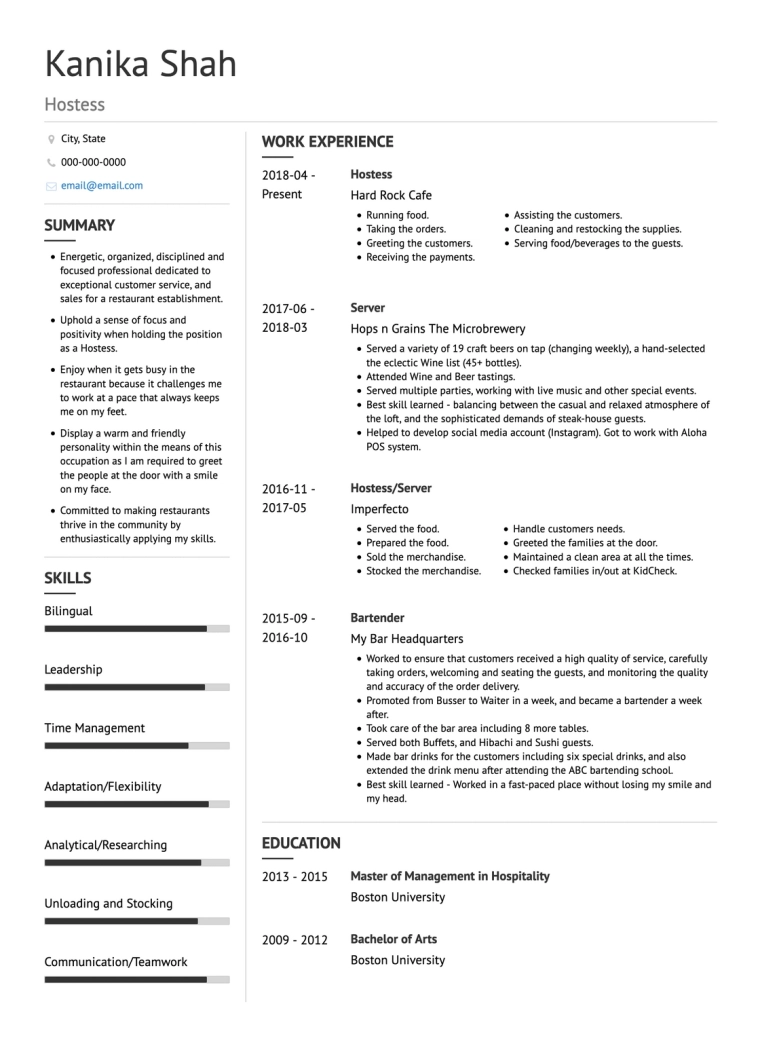
Canadian Resume Template with Functional Resume Format

Canadian Resume Template with Combination Resume Format

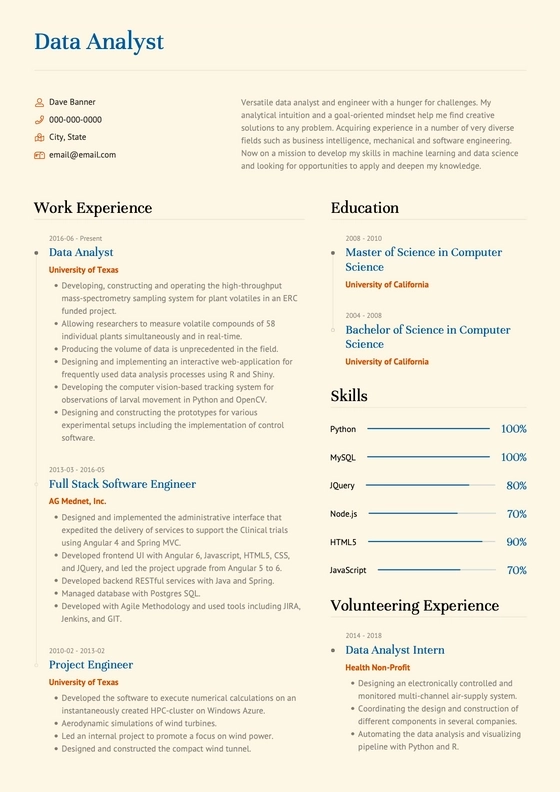
Alright, you now know what a typical Canadian-style resume looks like and what templates to use. But, what should you add to it? Let’s cover that now.
How to Write a Canadian Resume?
After helping hundreds of thousands of job seekers optimize their Canadian resumes, we can assure you that the best way to write a Canadian resume is:
- Based on your experience and skills, select the right resume format.
- Pick a resume template that supports your important resume sections.
- Add your full name, contact information, and link out to Linkedin or relevant portfolio
- Write a resume summary/objective of two lines.
- Write your work, volunteer, or project experience following the STAR method.
- List your top skills - make sure to customize them based on the job ad.
- List your education in a separate section.
If you follow these 7 points listed above, you can easily beat 9/10 applicants for the job.
But, let’s not leave it here. Let’s show you how you can go from the top 10% to the top 1% of applicants.
To be the best, you’ll have to write each section of your Canadian resume with care. This is where the top 1% of applicants differentiate themselves.
To help you craft your resume’s section with ease, we created these templates that you can use and write those sections. You can find them below.
Work Experience Format for a Canadian Resume
[Job title] [Company name, City, Province] [Date started] - [Date ended]
- [Task 1] [Situatuation faced and the solution used]
- [Task 2] [Situatuation faced and the solution used]
- [Task 3] [Situatuation faced and the solution used]
- [Task 4] [Situatuation faced and the solution used]
Example of Listing Canadian Work Experience on Resume


Important things to keep in mind when using this Canadian resume’s work experience template:
- Ideal to keep each task/achievement to one line
- Using simpler words would help as it improves readability
- Customize your work experience based on the job ad
Canadian Resume Summary Format
"[Job title] with [number of years] experience of [top 2-3 skills] across [industries]. Achieved [top achievement]. Expert at [X], [Y], and [Z]."
You can additionally list the following within your resume summary too:
- Any awards that you’ve received
- Any passions you have
A simple glance by a Canadian hiring manager would provide them with all the right information they need to continue reading further.
You can also adapt this Canadian resume summary format to write an objective too.
Note: If you are writing your Canadian resume for a career transition or your first job - write an objective instead of a summary.
Objectives help connect your skills and experience to the job that you are applying for.
Format to List Skills on Your Canadian Resume
To list skills on your Canadian resume, try the format provided below: Technical Skills
- [Skill #1]
- [Skill #2]
- [Skill #3]
Example of How to List Skills on a Canadian Resume


Make sure to list skills that are relevant to the role that you are applying for and are impactful.
Let’s now look at 10 Canadian Resume Examples. If you wish to access resume examples specific to your job title, click the button below and sign-up.
10 Canadian Resume Examples
Canadian Resume Example for Data Engineering


Sales Canadian Resume Example


Canadian Resume Example for Accountants


Writer Resume Example for Canada


Canadian Resume Example for Executives


Canadian Software Engineering Resume Example


Canadian Designer Resume Example

Project Management Resume for Canada


Retail Canadian Resume Example


Canadian Resume Example for Teachers


Now that you understand how to create a Canadian resume, let’s clear some frequently asked questions.
Canadian Resume Format For International Students
To effectively enter the Canadian job market as an international student, it's essential to format your resume according to Canadian standards. Here are key points to include:
- Contact Information: Full name, phone number, professional email, and LinkedIn profile.
- Professional Summary: A brief, tailored overview of your qualifications and career goals.
- Education: List your most recent education first, highlighting relevant courses or projects.
- Work Experience: Detail relevant roles in reverse chronological order with bullet points emphasizing achievements.
- Skills: Include both hard and soft skills pertinent to the job.
- Certifications and Awards: Mention any additional qualifications that enhance your candidacy.
- Avoid Personal Details: Do not include age, marital status, or photos.
- Use Canadian English: Ensure spelling and grammar align with Canadian standards.
- Customize Each Application: Tailor your resume to match the job requirements.
- Include Canadian Experience: Highlight any local work, internships, or volunteer activities.
By adhering to the Canadian resume format and focusing on relevant experiences, you'll improve your chances of standing out to potential employers.


Resume vs CV in Canada
Understanding the Differences In Canada, a resume is a one- to two-page document focusing on skills, experience, and relevant achievements tailored to specific job roles. A CV (Curriculum Vitae) is more detailed, covering academic background, research, publications, and professional history in multiple pages.
Usage Scenarios: When to Use a Resume vs. a CV Use a resume for most private-sector roles, trades, customer service, and general job applications, where concise and targeted information is required. A CV is suitable for academic, research, healthcare, and scientific roles that require comprehensive documentation of qualifications, research work, and publications.
By selecting the appropriate document based on the role, you align your application with industry standards in Canada.
Ideal Resume Length for a Canadian Resume
Resume Length for Entry-Level Professionals in Canada
For individuals with less than three years of experience, a one-page resume is the recommended standard in Canada. Focus on showcasing relevant skills, internships, education, and any volunteer experience pertinent to the role.
Resume Length for Mid-Level Professionals in Canada
For candidates with three to ten years of experience, a two-page resume is optimal. Highlight key professional achievements, technical skills, and relevant projects, while ensuring alignment with the job’s requirements.
Resume Length for Senior-Level and Executives in Canada
For those with over ten years of experience or in executive roles, a two-page resume is still ideal, but can extend to three pages if necessary. Emphasize leadership accomplishments, strategic contributions, and advanced expertise relevant to the role. Brevity and clarity should still be prioritized to maintain focus.
International Resumes vs Canadian Resumes
- Format and Layout of International Resumes vs Canadian Resumes:
- Canadian Resumes: Follow a simple, clear, and concise format, typically using a reverse-chronological structure. Personal information like photos, date of birth, or marital status is not included, adhering to Canadian privacy and anti-bias standards.
- International Resumes: In some countries, resumes may include personal details like photographs, nationality, and additional demographic information, which is not the norm in Canada.
- Content and Focus of International Resumes vs Canadian Resumes:
- Canadian Resumes: Emphasize measurable achievements, job-specific skills, and results-oriented language. Focus on aligning qualifications with the job description to demonstrate immediate value to employers.
- International Resumes: In other markets, resumes may have comprehensive sections detailing responsibilities, job summaries, and expanded descriptions of duties, especially in regions like Europe or Asia.
- Length and Detail of International Resumes vs Canadian Resumes:
- Canadian Resumes: Typically limited to one to two pages, depending on experience level, focusing on relevant professional experience and core competencies.
- International Resumes: Length can vary, with some regions accepting longer resumes, particularly when including comprehensive career summaries, educational achievements, and personal details.
- Cultural and Legal Considerations of International Resumes vs Canadian Resumes:
- Canadian Resumes: Reflect Canadian work culture values, emphasizing equality, privacy, and merit-based assessments, which is why personal details are often excluded.
- International Resumes: May vary in the inclusion of personal information, which can be culturally appropriate or legally required in some countries.
Adapting to these differences helps align resumes with Canadian employer expectations, increasing the likelihood of success in the local job market.
How to Show International Education on a Canadian Resume
- Use Canadian Equivalencies: Translate your international education credentials to Canadian standards using services like World Education Services (WES). Mention the Canadian equivalent alongside the original qualification for clarity.
- Highlight Relevant Coursework and Certifications: Focus on coursework, projects, or certifications that are directly relevant to the job you’re applying for. This helps employers connect your expertise with Canadian job requirements.
- Avoid Abbreviations and Translate Terms: Spell out degree names and avoid using country-specific abbreviations. Translate titles into equivalent Canadian terms, such as “Bachelor of Commerce” instead of a localized title.
- Include Accredited Institutions Only: List only accredited institutions and mention their recognition by international accrediting bodies to assure employers of the legitimacy of your qualifications.
- Provide Context in the Education Section: For lesser-known institutions, provide brief details about the location and accreditation. For example, “Bachelor of Science in Computer Engineering, XYZ University, accredited by [accrediting body], located in [country].”
By following these guidelines, you can effectively present your international education on a Canadian resume, making it relevant and recognizable to employers.
Translating Foreign Work Experience on a Canadian Resume
- Use Canadian Job Titles: Translate foreign job titles into their Canadian equivalents. Research common Canadian job titles that best match your previous positions to make them recognizable to local employers.
- Quantify Achievements: Highlight key accomplishments using quantifiable metrics such as percentages, revenue growth, or project timelines. Employers in Canada value concrete, measurable results that demonstrate your impact.
- Emphasize Transferable Skills: Focus on the skills and experiences that are relevant to the Canadian job market. Highlight transferable skills like project management, technical expertise, or client relations that align with Canadian industry standards.
- Explain Company Context Briefly: If you worked at a lesser-known company, provide a brief description of the company’s size, industry, and market position. For example, “ABC Corp – a leading retail chain with over 100 locations in Southeast Asia.”
- Translate Terminology and Metrics: Avoid using industry-specific jargon from your home country. Use Canadian equivalents or standardized terminology to communicate clearly with Canadian employers.
- Show Adaptability to Canadian Culture: Include examples of where you adapted to new work environments or collaborated with diverse teams. This demonstrates cultural sensitivity and readiness to work in Canada.
Following these strategies will help you effectively present your foreign work experience on a Canadian resume, ensuring that local employers understand and value your professional background.
Should I List my Visa Status On Resume
In Canada, do not include your visa or work permit status on your resume. Employers should focus on your qualifications, not your immigration status. Address eligibility questions during the interview if asked.
Cultural Adaptation in Resumes for Canada
Understanding Canadian Workplace Culture Canadian workplace culture values professionalism, inclusivity, and respect for diverse perspectives. Resumes should reflect this by focusing on collaborative achievements, leadership in team settings, and contributions to inclusive work environments. For instance, highlighting experience in leading a cross-functional team or participating in company diversity initiatives aligns well with Canadian expectations.
Adjusting Communication Style Canadian resumes prioritize clear and concise language, using action-oriented verbs and avoiding overly technical jargon unless relevant to the industry. For example, instead of saying "Executed advanced marketing strategies to enhance revenue generation," simplify it to "Led marketing campaigns, increasing sales by 20%." This approach emphasizes results and ensures that the content is easy to understand for recruiters.
Specific Examples of Cultural Adaptation
- Professional Achievements: Rather than listing duties, focus on outcomes. For example, say "Increased client retention by 15% through improved customer service processes," instead of "Handled customer service."
- Inclusivity in Language: Avoid using gendered language like "Salesman" or "Chairman," and instead use inclusive terms like "Sales Representative" or "Chairperson."
- Team Collaboration: If you managed teams internationally, phrase it in a way that highlights collaboration, like "Led a team of 10 across three countries to deliver a project ahead of schedule."
By understanding and applying these cultural adaptations, job seekers can create resumes that align with Canadian workplace norms and increase their appeal to employers.
ATS Resume Optimization Tips for Canada
- Use Simple and Standard Formatting: Avoid using intricate layouts, graphics, or columns, as ATS systems may not read them correctly. Stick to a clean, standard format with clear headings like “Professional Experience” and “Education.” For example, instead of a multi-column layout, use a single-column structure with bullet points for achievements.`
- Include Relevant Keywords: Tailor your resume to each job by using specific keywords from the job description. If the job posting mentions "project management" or "budget analysis," ensure these terms appear in your resume naturally. For instance, replace “Handled finances” with “Managed project budgets” to match the job's terminology.
- Use Standard Section Headings: ATS systems are programmed to identify conventional headings such as “Work Experience,” “Skills,” and “Education.” Avoid creative labels like “Career Journey” or “My Toolbox,” as they might not be recognized. Stick to headings that are easy for the ATS to interpret.
- Focus on Relevant Achievements: Tailor your resume to the specific job by emphasizing achievements and skills that align with the role. For example, if applying for a sales role, list quantifiable accomplishments such as “Increased sales by 25% in Q3 by implementing targeted marketing strategies.”
- Avoid Graphics and Special Characters: ATS systems often fail to parse graphics, icons, or special characters correctly. Instead of using graphical representations for skill ratings or proficiency, use text-based descriptions like “Advanced in Excel and Data Analysis Tools” or “Fluent in French and Spanish.”
Is a Canadian Resume Format Different from An American Resume Format?
No, Canadian resumes are extremely similar to American resumes.
Applying for Jobs, but Getting no responses? Maybe, it’s your resume!
How to Convert my Indian Resume to a Canadian Resume?
To convert your Indian resume to a Canadian resume, follow these steps:
- Customize your resume to ensure it is relevant to the job you’re trying to land.
- Remove any hard English words (e.g. esteemed), instead, use easy-to-read words.
- Remove photo, nationality, race, gender, and your full address. Those aren’t required in Canada.
- Follow the STAR method while writing your work experience.
- While listing your certifications, make sure they are recognized by Canadian employers.
- Add a short summary or objective at the top of your resume. Make sure it isn’t more than two lines and is very impactful.
- While listing your education be careful not to list CGPA, instead standardize your scores to a GPA scale and list it. GPAs greater than 3.7 look good, else it is better to not list them.
- While listing your contact information, make sure to list the Canadian city and province along with a Canadian phone number. +91 numbers won’t help here.
- Finally, resumes in India generally appear to be more than two pages. Make sure yours isn’t more than two pages. Ideal to have a relevant resume of one page.
Once you follow these additional instructions and follow our general guidelines at the top - it should be easy to transform your Indian resume into a Canadian resume.
How to Convert my European CV to Canadian Resume?
To change your European CV to a Canadian resume, follow these steps:
- While European CVs differ from country to country, some common things to remove from your resume - birthdate, citizenship, photo, etc.
- Hobbies constantly surface in entry-level EU CVs, we recommend that you remove them when applying for Canadian jobs.
- Select one of the following Canadian resume formats: chronological, functional, or combination.
- Make sure you have a summary/objective, work history, skills, education, and certifications section (if any).
- Follow the STAR method while writing your resume. It is a must!
- Avoid adding paragraphs as it would reduce the readability of your resume.
- Scan your resume for grammatical errors.
Checkout our other international resume guides here.
How Long Should my Canadian Resume be?
A rule of thumb - for students and professionals with less than 15 years of experience the resume should be one page or a maximum of two pages. For Canadian job seekers with more than 15 years of relevant experience, more than two pages is acceptable.
Should I Add a Photo to my Canadian Resume?
No, avoid adding a Photo while creating a Canadian resume.
Is it a Good Idea to List Marital Status on a Resume for Canada?
No Canadian employer would ever ask for this information as a part of their recruitment process. So, we would recommend that you don’t list marital status on your resume.
Should I List My Nationality on a Canadian Resume?
Legally, no Canadian employer can ask you about your nationality. So, we would not recommend that you list it on your resume.
Can I Lie on My Canadian Resume?
Don’t lie on your Canadian resume. With background checks, reference checks, etc being so common, you’ll be caught. Even a small-innocent lie like a difference of month or days in starting dates of your employment could lead to rejection.
How to Write a Canadian Resume with No Canadian Experience?
- Focus on Transferable Skills: Highlight skills from your previous jobs that are relevant to the position you're applying for.
- Canadianize Your Resume: Use Canadian terminology and metrics where applicable.
- Include Volunteer Work and Internships: These can showcase your commitment and experience.
- Emphasize Education: Highlight your academic achievements and any relevant coursework.
- Tailor Your Resume: Customize your resume for each job application to match the job requirements.
Do I need a Cover Letter With my Canadian Resume?
Yes, including a cover letter with your Canadian resume is highly recommended because it allows you to introduce yourself, highlight key qualifications, and demonstrate your enthusiasm for the role and company. A cover letter also provides an opportunity to personalize your application by tailoring it to the specific job and employer, making you stand out among other applicants.
Should I Save my Canadian Resume as .Docx or .PDF Format?
You should save your Canadian resume as a PDF format because it ensures that the formatting remains consistent across different devices and software, presents a more polished and professional appearance, and is the preferred format for most employers due to its ease of use and compatibility.
Copyright ©2025 Workstory Inc.