Top Ssrs Skills For Resume
Learn how to effectively list ssrs skills on your resume with real-world examples. Includes top ssrs skills, sample resume phrases, and related skills.
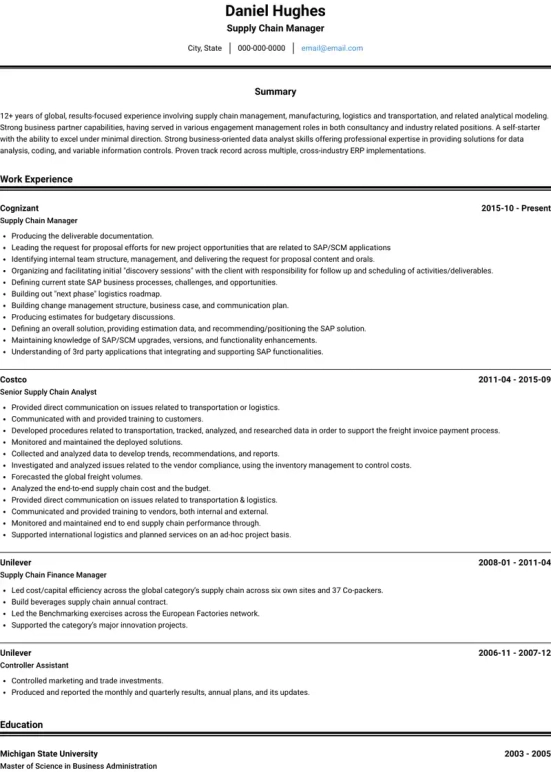
Learn how to effectively list ssrs skills on your resume with real-world examples. Includes top ssrs skills, sample resume phrases, and related skills.
SSRS Reporting Services: Proficiency in designing, developing, and managing Business Intelligence Reports using SQL Server Reporting Services.
T-SQL Querying: Expertise in writing complex T-SQL queries to extract data from SQL Server databases.
Data Visualization: Ability to present complex data in an easily understandable format using charts, graphs, and tables.
Subscriptions Management: Skill in setting up and managing report subscriptions for users and distribution channels.
Parameterized Reports: Experience in creating parameterized reports that allow users to filter data based on specific criteria.
Data Integration: Ability to integrate data from various sources, such as databases, spreadsheets, and web services, into SSRS reports.
Report History: Familiarity with reporting history features, including the ability to view past report versions and compare them side by side.
Data Alerts: Skill in setting up data alerts to notify users of significant changes or events in the data.
Scalability: Ability to design reports that can scale efficiently as the volume of data increases.
Security: Knowledge of securing SSRS reports and managing user access to sensitive data.
SSRS Web Portal: Experience in developing and customizing the SSRS web portal for various business needs.
Report Part Sharing: Ability to share report parts across multiple reports for reusability and efficiency.
SSRS Shared Datasets: Skill in creating and managing shared datasets that can be used across multiple reports.
Embedding Reports: Experience in embedding SSRS reports into other applications, such as SharePoint or .NET applications.
Performance Optimization: Ability to optimize the performance of SSRS reports by using best practices and techniques.
Cascading Parameters: Knowledge of cascading parameters, which allow users to filter data in a hierarchical manner.
SSRS Expression Building: Experience in building expressions for various report objects, such as text boxes and charts.
Data-driven Subscriptions: Skill in setting up data-driven subscriptions, which automatically send reports based on specific data conditions.
Report Formatting: Ability to design visually appealing reports using various formatting options available in SSRS.
SSRS Mobile Reports: Experience in creating mobile-friendly reports that can be accessed from various devices and platforms.
Organize by Skill Category: Group related skills together, such as Development, Design, and Administration, for easy understanding.
Use Action Verbs: Use strong action verbs when describing your skills, like "Developed", "Designed", "Implemented", or "Managed".
Provide Specific Examples: Give specific examples of projects or tasks where you utilized your SSRS skills.
Quantify Achievements: When possible, quantify your achievements by providing numbers, percentages, or timeframes to demonstrate the impact of your work.
Tailor to Job Description: Align your SSRS skills with the job description, emphasizing the most relevant skills for the position you're applying for.
Designed and developed performance-optimized SSRS reports using T-SQL queries, data visualization, and report formatting techniques.
Created parameterized reports for users to filter data based on specific criteria.
Established data alerts to notify stakeholders of significant changes in the data.
Integrated data from various sources, such as databases and web services, into SSRS reports.
As a Business Intelligence Developer, I have extensive experience in designing, developing, and maintaining SQL Server Reporting Services (SSRS) reports. I have created parameterized reports that allow users to filter data based on specific criteria, as well as integrated data from various sources for efficient analysis. I also set up data alerts to notify stakeholders of significant changes in the data and optimize report performance using best practices and techniques.
Development:
Created over 20 SSRS reports, including mobile-friendly versions for easy access on various devices.
Integrated data from databases, spreadsheets, and web services into SSRS reports for comprehensive analysis.
Utilized T-SQL queries to extract complex data from SQL Server databases.
Design:
Designed visually appealing reports using various formatting options available in SSRS.
Created parameterized reports that allow users to filter data based on specific criteria.
Developed performance-optimized reports for efficient analysis and access.
Business Intelligence Analyst: Analyzes and interprets complex data using various tools, including SQL Server Reporting Services.
Data Scientist: Uses data visualization tools like SSRS to present findings in an easily understandable format.
Database Administrator: Sets up, manages, and optimizes SQL Server databases, often involving the creation of reports using SSRS.
Business Analyst: Analyzes business processes, data trends, and performance metrics using tools like SSRS.
Data Architect: Designs and implements data solutions, including reporting systems using SSRS.
SQL Server Developer: Develops, maintains, and enhances SQL Server databases and reports using SSRS.
Business Intelligence Consultant: Advises clients on best practices for collecting, analyzing, and visualizing business data using tools like SSRS.
Data Warehouse Administrator: Manages data warehouses, often involving the creation of reports and dashboards using SSRS.
Power BI: Proficiency in Microsoft's business analytics tool for creating interactive, visual reports.
Tableau: Expertise in data visualization software for creating and sharing interactive reports.
Excel: Strong skills in Microsoft Excel for data manipulation and analysis.
SQL Server Integration Services (SSIS): Experience in ETL processes, data warehousing, and data integration using SSIS.
Analysis Services (SSAS): Knowledge of building and managing analytical solutions using SSAS.
Power Query: Skill in data preparation for analysis using Power Query.
Python or R: Programming skills for data manipulation, analysis, and visualization using Python or R.
JavaScript or jQuery: Web development skills for creating dynamic, interactive reports using JavaScript or jQuery.
HTML/CSS: Web design skills for creating responsive, visually appealing web pages.
Project Management: Skills in planning, organizing, and managing resources to successfully complete projects involving SSRS.
Agile Methodologies: Knowledge of Agile methodologies for efficient and adaptable project management.
Scrum Master: Experience in Scrum framework, including facilitating daily stand-ups, sprint planning, and sprint retrospectives.
Mention relevant activities, projects, or accomplishments that occurred during the gap period to demonstrate continued growth and dedication to the SSRS field. Provide context for the break, such as furthering education, handling personal matters, or pursuing new opportunities related to SSRS.
Highlight practical experience by providing specific examples of projects completed using self-taught skillset. Emphasize results and impact of these projects, as well as any relevant certifications or online coursework that validate your proficiency in SSRS.
If the skill is still relevant to the position, list it and provide evidence of recent use or maintenance. For skills no longer applicable, consider removing them entirely or mentioning them in a brief footnote. Alternatively, focus on showcasing more up-to-date SSRS skills and proficiencies.
Aim for a one-page resume if you have extensive experience; otherwise, two pages may be appropriate. Ensure each section is concise and relevant to the SSRS role, focusing on key accomplishments, skills, and certifications rather than lengthy explanations or unnecessary details.
List the certification and its expected completion date under a separate "Certifications (In Progress)" section. If possible, provide an update about your current status and any relevant accomplishments related to the certification.
Focus on transferable skills from other roles that can be applied to the SSRS field. Highlight any projects or experiences that demonstrate ability to learn quickly and adapt to new technologies in SSRS. Also, list relevant coursework, certifications, or ongoing training in your area of interest.
Emphasize specific achievements and results from past roles, focusing on quantifiable data and impact. Showcase unique skills or qualifications that set you apart from other candidates. Additionally, research the company's values and culture, and tailor your resume and cover letter to demonstrate how you align with their mission and goals.
Update your resume as often as necessary to ensure accuracy and relevance for each application. Aim to refresh the document at least once every six months or when acquiring new certifications, skills, or achievements.
If the projects or volunteering experiences are directly related to the SSRS field and demonstrate relevant skills, include them in your resume. Offer details about project's scope, technologies used, and any significant accomplishments achieved during the collaboration.
Place certifications in a dedicated section called "Certifications" or "Professional Development." Organize them by relevance to the position, listing current certifications first followed by expired ones. Include certification name, issuing organization, and year of completion for each item. If possible, use visual elements such as logos or icons to make the section more visually appealing and easier to scan.