Top Servers Skills For Resume
Learn how to effectively list servers skills on your resume with real-world examples. Includes top servers skills, sample resume phrases, and related skills.
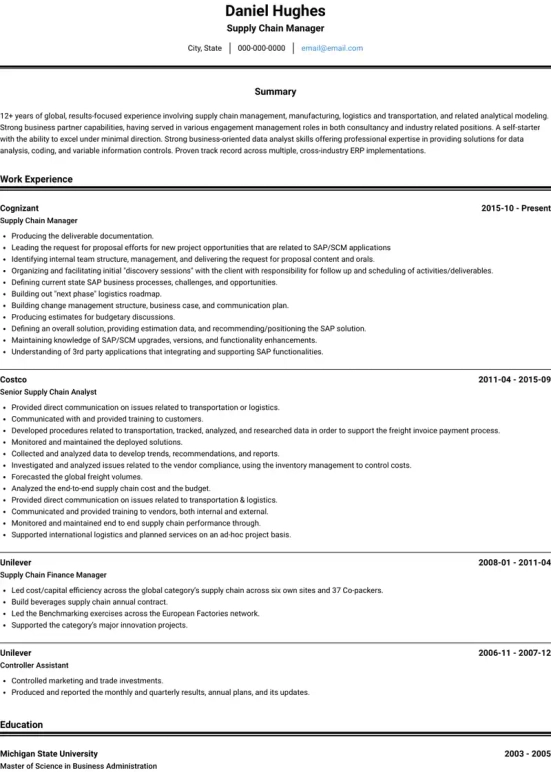
Learn how to effectively list servers skills on your resume with real-world examples. Includes top servers skills, sample resume phrases, and related skills.
Server Administration: Ability to manage and maintain server infrastructure, ensuring optimal performance and uptime.
Networking: Understanding of network protocols, configurations, and troubleshooting techniques.
Virtualization: Experience with virtual machines and cloud services like VMware, Hyper-V, or AWS EC2.
Database Management (SQL Server): Skills in creating, maintaining, and optimizing databases using SQL languages.
Security: Knowledge of server security best practices, firewalls, intrusion detection systems, and encryption techniques.
Backup & Recovery: Ability to perform regular backups and ensure data recovery in case of failures or disasters.
Disk Management: Skills in managing storage space, partitions, and RAID configurations.
Scripting (PowerShell/Bash): Proficiency in writing server-side scripts for automation and streamlining tasks.
Load Balancing: Experience with load balancers to distribute network traffic across multiple servers.
UX/UI: Design and development skills for creating user-friendly server interfaces.
Troubleshooting: Ability to diagnose, isolate, and resolve server issues efficiently.
Linux/Windows Server Administration: Expertise in managing servers running Linux or Windows operating systems.
Project Management: Skills in planning, executing, and monitoring server-related projects effectively.
DNS & DHCP: Knowledge of Domain Name System (DNS) and Dynamic Host Configuration Protocol (DHCP).
APIs: Familiarity with creating, using, and managing APIs for server integrations.
Cloud Services (Azure/Google Cloud/IBM Cloud): Experience with various cloud platforms for scalability and flexibility.
Web Servers (Apache/Nginx): Ability to configure and manage web servers for delivering content efficiently.
Email Server Administration: Skills in managing email services like Exchange or Google Workspace.
Performance Optimization: Knowledge of techniques to improve server performance, such as caching and load optimization.
VPN & Remote Access: Experience with Virtual Private Networks (VPN) and remote access technologies.
Organization: Group related skills together, making it easy for recruiters to quickly identify your expertise.
Phasing: Use action verbs like "managed," "configured," or "optimized" when describing your experiences.
Specificity: Provide specific examples of servers you have worked with (e.g., SQL Server 2019, Windows Server 2022).
Quantification: Use numbers and percentages to show the impact of your work (e.g., "reduced server downtime by 50%").
Relevance: Prioritize skills most relevant to the job you are applying for, tailoring your resume as needed.
Server Administration (Windows/Linux): Managed and maintained server infrastructure, improving uptime and performance by 20%.
Networking: Configured VLANs, firewalls, and routing protocols to ensure network security.
Database Management (SQL Server): Created and optimized databases using SQL languages, reducing query times by 30%.
I have extensive experience in server administration for both Windows and Linux environments. In my previous role, I managed a team responsible for maintaining server infrastructure, resulting in improved uptime and performance. Furthermore, I configured VLANs, firewalls, and routing protocols to ensure network security, and optimized databases using SQL languages to reduce query times by 30%.
Servers (Windows/Linux)
Administration: Managed server infrastructure for improved uptime and performance.
Networking: Configured VLANs, firewalls, and routing protocols for network security.
Database Management: Optimized databases using SQL languages to reduce query times.
Server Administrator
Systems Engineer
Network Engineer
DevOps Engineer
Cloud Architect
Database Administrator
IT Project Manager
Helpdesk Technician (advanced)
System Integrator
Technical Support Specialist (server-focused)
Networking (Wireless, Fiber Optics, WiFi)
Virtualization (Hyper-V, Citrix, VMware vSphere)
Scripting (Python, Perl, Ruby)
Cloud Services (AWS, Google Cloud, Azure)
Docker and Kubernetes
NoSQL Databases (MongoDB, Cassandra)
CI/CD Pipelines (Jenkins, CircleCI, GitLab CI)
Infrastructure as Code (Terraform, Ansible)
ITIL Framework & ITSM Solutions (ServiceNow, BMC Helix)
Agile/Scrum methodologies and tools (Jira, Trello)
Highlight any transferable skills or server-related experiences during the gap period that demonstrate your continuous professional growth. If you took a break for personal reasons, emphasize any online courses, workshops, or self-study related to servers technology and equipment you mastered during this time.
Quantify self-taught skills with concrete examples of how they've been applied in real-world server situations. Include certifications earned through online courses or workshops to validate your competency.
If an outdated skill is essential for the position, consider taking an updated course or gaining hands-on experience with the latest version. If that's not possible, acknowledge its obsolescence but highlight your proficiency in current servers technologies and how you can leverage your previous experience to adapt quickly.
Aim for one page when applying for server positions, but don't sacrifice important information to meet this goal. If you have extensive experience or unique skills that require more space, consider creating a two-page resume. Quality over quantity is crucial in demonstrating your value as a candidate.
List any certifications you're currently pursuing on your resume, mentioning the expected completion date. Provide a brief explanation of why this certification is relevant to the position and how it will benefit the employer upon completion.
Focus on transferable skills from previous roles that can translate well into server positions, such as problem-solving, attention to detail, and technical aptitude. Highlight any relevant education or self-study related to servers, along with your enthusiasm for learning and growing within the field.
Emphasize your unique strengths and achievements that set you apart from other candidates. Tailor your resume to the job description, showing how your skills align with the specific requirements of the position. Include quantifiable examples of your successes, demonstrating your ability to deliver results in server roles.
Update your resume whenever you gain new skills or certifications, take on a significant project, or achieve a notable accomplishment. Review and tweak your resume periodically to ensure that it remains relevant and engaging for potential employers.
Include any servers-related side projects or volunteer work that showcase your technical skills, problem-solving abilities, and dedication to the field. Keep these sections concise and focused on the most relevant aspects of each project or experience.
References should ideally be included in a separate section at the end of your resume, rather than within the document itself. Include contact information for professional references who can vouch for your technical skills, work ethic, and reliability as a server professional. Make sure to inform your references beforehand that you've listed them, so they are prepared to speak on your behalf when contacted by potential employers.