Top Node.Js Skills For Resume
Learn how to effectively list node.js skills on your resume with real-world examples. Includes top node.js skills, sample resume phrases, and related skills.
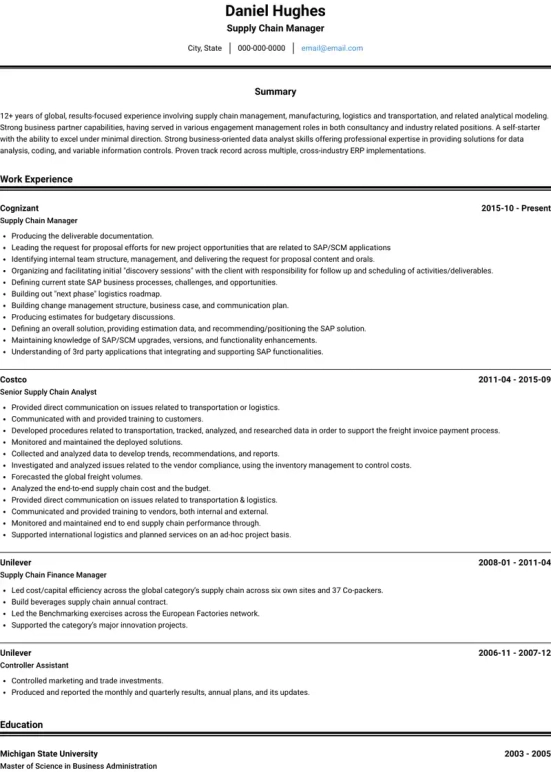
Learn how to effectively list node.js skills on your resume with real-world examples. Includes top node.js skills, sample resume phrases, and related skills.
Node.js Fundamentals: Proficiency in core Node.js concepts, such as modules, events, streams, and non-blocking I/O. This skill is crucial for building scalable, high-performance applications.
Express.js: Knowledge of Express.js, a popular web application framework for Node.js, enables creating robust and maintainable backend services quickly.
RESTful API Development: Experience in designing, building, and maintaining RESTful APIs using Node.js is essential for integrating with various frontend technologies.
MongoDB (or any NoSQL database): Familiarity with MongoDB or another NoSQL database helps in creating flexible, scalable data structures for modern applications.
NPM (Node Package Manager): Proficiency in using NPM to manage dependencies and extend the functionality of Node.js applications is a must-have skill.
Testing Frameworks (Mocha, Jest, etc.): Knowledge of testing frameworks ensures that code quality is maintained and bugs are caught early during development.
Git/Version Control: Familiarity with Git or other version control systems allows for effective collaboration, tracking changes, and maintaining a stable production environment.
ES6+ JavaScript Features: Proficiency in using modern JavaScript features like arrow functions, destructuring, template literals, and Promises can help improve code readability and maintainability.
Webpack/Browserify (Module Bundlers): Knowledge of module bundlers like Webpack or Browserify enables efficient development workflows, optimizing application performance, and managing dependencies.
Async/Await: Experience with async/await makes asynchronous code easier to read, write, test, and maintain, simplifying the development process in complex Node.js applications.
Web Security (OWASP Top Ten): Knowledge of web security best practices, such as those outlined by OWASP, is essential for building secure and robust applications.
Socket.IO: Familiarity with Socket.IO allows for real-time communication between the client and server in Node.js applications.
Passport.js (Authentication): Experience with Passport.js can help streamline user authentication processes, ensuring secure access to sensitive data.
Jade/Pug/Handlebars (Templating Engines): Knowledge of templating engines like Jade, Pug, or Handlebars simplifies the creation of dynamic HTML templates for Node.js applications.
Docker: Familiarity with Docker enables containerization of Node.js applications, making them easily deployable and scalable across different environments.
CI/CD (CircleCI, Jenkins, etc.): Experience with continuous integration and deployment tools helps streamline the development process and ensure rapid deployment of high-quality software.
Agile/Scrum Methodologies: Knowledge of Agile or Scrum methodologies is valuable for working in a fast-paced development environment, fostering collaboration, and delivering projects quickly.
Node-RED (IoT): Familiarity with Node-RED can help developers create custom Internet of Things (IoT) applications using Node.js.
GraphQL: Knowledge of GraphQL enables the creation of flexible APIs that allow clients to specify exactly what data they need, improving performance and reducing network traffic.
Redis/Memcached: Proficiency in caching solutions like Redis or Memcached can help optimize application performance by minimizing database queries.
Organization: Group related skills together to create a clear and organized presentation of your Node.js skillset.
Phrasing: Use active voice, action verbs, and specific examples when describing your Node.js experience to make the skills more impactful.
Quantification: Include metrics, such as the number of lines of code written or projects completed using Node.js, to demonstrate the extent of your expertise.
Relevance: Focus on skills that are most relevant to the position for which you're applying to showcase your ability to perform the required tasks effectively.
Highlight Achievements: Use bullet points or a separate section to highlight specific achievements, such as optimizing an application for increased performance or creating a new feature using Node.js, to make your resume stand out.
Developed and maintained a scalable Node.js backend using Express.js, MongoDB, and NPM for a popular e-commerce platform.
Implemented real-time communication features using Socket.IO, enhancing user experience by enabling seamless collaboration.
Utilized async/await to simplify asynchronous code and improve overall application performance.
As a Full Stack Developer at XYZ Corporation, I was responsible for developing and maintaining our core Node.js backend services. Using Express.js, MongoDB, and NPM, I built scalable, high-performance APIs that powered our web application. In addition, I utilized Socket.IO to enable real-time communication between clients and the server, improving user engagement.
Technical Skills:
Programming Languages: JavaScript (Node.js, ES6+), HTML5, CSS3
Frameworks/Libraries: Express.js, Socket.io, Jade, Passport.js, Webpack
Databases: MongoDB, Redis, Memcached
Tools: Git, Docker, CI/CD (CircleCI, Jenkins)
Web Security: OWASP Top Ten
Senior Node.js Developer - Requires strong expertise in developing scalable, high-performance Node.js applications for enterprise environments.
Frontend Engineer (Node.js specialization) - Involves creating dynamic frontends that interact seamlessly with backends built using Node.js and other technologies.
DevOps Engineer - Requires familiarity with containerization technologies like Docker, continuous integration/deployment tools, and orchestration platforms like Kubernetes to ensure smooth deployment of Node.js applications.
IoT Developer - Involves creating custom applications using Node.js for various Internet of Things devices and systems.
Full Stack Developer (Node.js specialization) - Requires a broad range of skills, including frontend and backend development, database management, and DevOps practices using Node.js.
Web Application Developer - Involves creating robust web applications using modern technologies like React, Angular, or Vue.js, with backends built using Node.js.
API Developer (Node.js specialization) - Requires expertise in designing and building RESTful APIs for integration with other services or frontend technologies.
Software Engineer (Node.js specialization) - Involves creating enterprise-level software solutions using Node.js, Express.js, MongoDB, and other relevant tools.
Python: Python is often used for server-side development or automation tasks that complement Node.js applications.
React/Angular/Vue.js (Frontend Frameworks): Frontend frameworks like React, Angular, and Vue.js are frequently used with Node.js backends for building modern web applications.
REST API Testing Tools (Postman, Insomnia, etc.): These tools help in testing and debugging REST APIs built using Node.js.
SQL/Database Design: Understanding database design principles is essential when working with databases like MongoDB or PostgreSQL, which may require SQL queries for advanced operations.
Linux (Command Line): Proficiency in using Linux and the command line is necessary for managing Node.js applications and other server-related tasks.
Docker Compose: Docker Compose allows developers to define and run multi-container Docker applications, simplifying deployment and scaling processes.
GitHub Actions (CI/CD): GitHub Actions is a powerful tool for automating the continuous integration and deployment of Node.js applications directly within GitHub.
Unit Testing Tools (Mocha, Jest): Unit testing tools help ensure that your code is reliable, maintainable, and adheres to best practices.
Serverless Architecture: While not directly related to Node.js, understanding serverless architecture can help you build scalable applications more efficiently using platforms like AWS Lambda or Google Cloud Functions.
Web Analytics (Google Analytics, Mixpanel): Web analytics tools help in tracking the performance and usage of web applications, enabling developers to make data-driven decisions and optimize their applications accordingly.
When addressing gaps in your node.js experience, focus on showcasing the skills and knowledge gained during those periods that are still relevant to the position you're applying for. Mention any personal projects or online courses completed during these gaps to demonstrate continuous learning and dedication to the field.
Emphasize practical experience and projects where you utilized node.js, providing details about the problems you solved, the technologies integrated with node.js, and the outcomes of your projects. Include relevant certifications or online courses completed to validate self-taught skills.
Update your skills section to highlight your current proficiency in node.js. Mention older versions of node.js briefly, but focus more on knowledge and experience with the latest version or recent features implemented.
Aim for a concise one-page resume that clearly highlights relevant experience, skills, and achievements. If you have extensive node.js experience, consider creating a two-page resume but ensure it remains easy to scan.
List the certification's name, expected completion date, and any relevant details about course content to demonstrate commitment to ongoing learning and field expansion.
Emphasize any related programming experience or transferable skills like JavaScript or other backend technologies. Highlight any projects demonstrating problem-solving abilities and a willingness to learn new technologies. Discuss passion for node.js and plans to develop expertise further in the field.
Showcase unique achievements such as innovative solutions, scalable architectures, or open-source contributions. Highlight soft skills like leadership, communication, and teamwork that might not be apparent from a technical resume alone.
Update your resume whenever you acquire new node.js skills, complete significant projects, or achieve milestones related to your proficiency in node.js. This ensures your resume accurately reflects your current abilities and demonstrates active engagement in the field.
Including side projects and volunteer work is highly recommended, as they demonstrate passion, creativity, and independent working abilities. Showcase these experiences by describing the problem solved, technologies used, and any notable achievements or outcomes.
Remaining current in the rapidly evolving field of node.js is crucial. Consider enrolling in ongoing education programs, attending meetups and conferences, or participating in relevant online communities to stay informed about new developments and best practices.