Top Interior Design Skills For Resume
Learn how to effectively list interior design skills on your resume with real-world examples. Includes top interior design skills, sample resume phrases, and related skills.
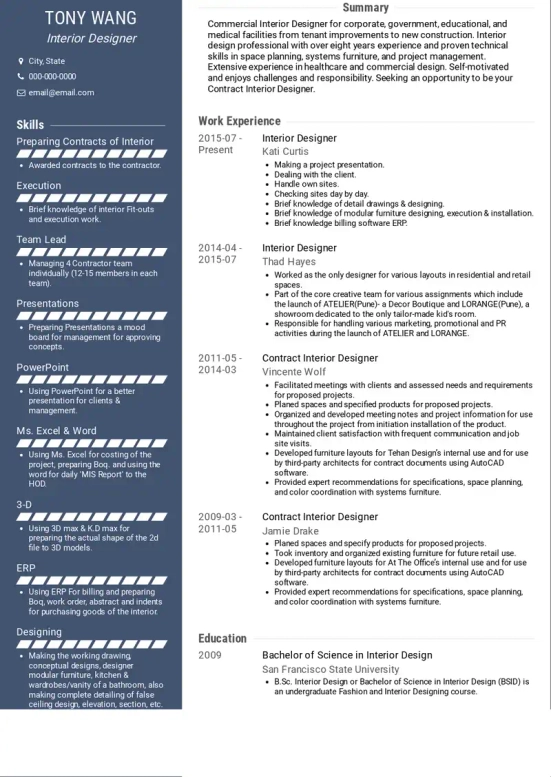
Learn how to effectively list interior design skills on your resume with real-world examples. Includes top interior design skills, sample resume phrases, and related skills.
Space Planning: Ability to create functional and aesthetically pleasing layouts.
Color Theory: Knowledge of color combinations and their psychological effects.
Furniture Selection: Choosing appropriate furniture pieces for a specific space and style.
Textile & Fabric Selection: Skill in selecting fabrics based on durability, texture, and pattern.
Lighting Design: Understanding how to use natural and artificial light effectively.
Materials & Finishes: Knowledge of various materials and finishes for interior design projects.
3D Modeling & Rendering: Ability to create three-dimensional models and visualizations.
AutoCAD Proficiency: Skill in using AutoCAD software for design drafting and documentation.
Project Management: Ability to manage time, budgets, and resources efficiently.
Client Communication: Excellent interpersonal skills for collaborating with clients effectively.
Sustainable Design: Knowledge of eco-friendly materials and practices for sustainable design.
Budgeting & Cost Estimation: Skill in estimating project costs accurately.
Ergonomics: Understanding how to design spaces for comfort and functionality.
Accessibility Design: Ability to create designs that are accessible and inclusive.
Architectural Drawings: Skill in reading and creating architectural drawings.
Technical Drafting: Proficiency in technical drafting for interior design.
Furniture Design: Creativity in designing custom furniture pieces.
Branding & Identity: Ability to create a consistent brand identity for design projects.
Presentation Skills: Strong presentation skills for client presentations and pitches.
Marketing & Networking: Knowledge of marketing strategies and networking to attract clients.
Organize skills by categories (e.g., technical skills, soft skills) for clarity and easy scannability.
Use action verbs to describe your accomplishments when listing skills (e.g., "Managed," "Designed," "Implemented").
Incorporate keywords related to the job description to show relevance.
Quantify achievements whenever possible (e.g., "Redesigned 50 room interiors within budget and on schedule").
Highlight the most relevant skills at the top of your resume, focusing on those that are most valuable for the specific position.
Space Planning: Created functional layouts for residential and commercial interiors.
Color Theory: Used color combinations to evoke specific emotions and moods in design projects.
Furniture Selection: Selected appropriate furniture pieces based on style, function, and budget considerations.
Lighting Design: Implemented effective lighting solutions to enhance interior spaces.
In my role as an Interior Designer, I have honed my skills in space planning, color theory, furniture selection, and lighting design. I have successfully completed over 50 projects, creating functional and aesthetically pleasing designs for residential and commercial clients. My ability to collaborate with clients effectively and manage projects efficiently has contributed to the success of these projects.
Technical Skills:
AutoCAD Proficiency
3D Modeling & Rendering
Technical Drafting
Architectural Drawings
Soft Skills:
Client Communication
Presentation Skills
Project Management
Marketing & Networking
Interior Designer
Residential Designer
Commercial Interior Designer
Kitchen and Bath Designer
Furniture Designer
Space Planner
Lighting Designer
Color Consultant
Sustainable Design Specialist
Universal Design Consultant
Graphic Design: Ability to create cohesive visual brand identities for design projects.
Architecture: Knowledge of architectural principles and practices.
Landscape Architecture: Understanding of outdoor spaces and their integration with interiors.
Product Design: Creativity in designing furniture, fixtures, and other interior accessories.
Photography: Ability to capture high-quality images of completed design projects.
Interior Styling: Skill in accessorizing interior spaces for maximum impact.
Decorative Arts: Knowledge of various decorative arts techniques and styles.
Art History: Understanding of art movements and their influence on design trends.
Architectural History: Knowledge of historical architectural styles and their impact on interiors.
Construction: Basic understanding of construction processes for efficient project execution.
Highlight any relevant interior design-related skills, courses, or projects you gained during this period. If possible, showcase transferable skills developed during the gap that could benefit an interior design role, such as project management, color theory, or software proficiency. Briefly explain the reason for the gap in a professional manner, if necessary.
Emphasize practical experience, certifications, and portfolio work to demonstrate your abilities. Include detailed descriptions of interior design projects you've completed, focusing on the challenges faced, solutions implemented, and the final results. Mention any relevant workshops, online courses, or mentorships that have supplemented your self-taught skills.
Focus on the skills that are current and most relevant to the position you're applying for. If an outdated skill is essential for the role, consider brushing up on it or take a refresher course to demonstrate your commitment to staying updated in the field. Highlight any newer skills you have acquired that build upon the outdated one.
Aim for a concise yet comprehensive length of 1-2 pages, depending on your experience level and the number of projects or achievements to showcase. Prioritize including the most relevant information, such as notable projects, certifications, awards, and any other elements that set you apart from other candidates.
List the certification(s) along with their expected completion date. Include a brief statement about your commitment to continuously improving your skills and expanding your knowledge within the field. If the certification is essential for the role, consider completing it before submitting your application.
Focus on showcasing any relevant education, internships, or volunteer work that demonstrates your passion and dedication to the field. Include a clear, concise objective statement outlining your career goals in interior design and how you plan to contribute to the industry. Highlight transferable skills from previous experiences that are applicable to an interior design role.
Demonstrate a strong, unique portfolio that showcases your creativity, technical skills, and attention to detail. Highlight any notable projects or accomplishments that set you apart from other candidates. Focus on specific areas of expertise within the field where you excel, such as sustainable design or commercial interiors.
Update your resume annually or whenever significant changes occur in your career, such as new projects, certifications, awards, or notable achievements. This will help ensure that your resume remains accurate and relevant, increasing your chances of landing an interview.
Absolutely! Side projects and volunteer work can showcase your creativity, dedication, and versatility as an interior designer. Include detailed descriptions of these projects, focusing on the challenges faced, solutions implemented, and the final results. Be sure to highlight any notable achievements or positive feedback received from clients or peers.
Use industry-specific keywords and phrases throughout your resume, focusing on the skills, software, and techniques relevant to interior design. Ensure that important information, such as project titles, job descriptions, and achievements, are clearly defined and easy for an ATS to parse. Additionally, use a simple, clean format with clear headings and bullet points to make it easier for both humans and machines to read your resume.