Top Event Planner Skills For Resume
Learn how to effectively list event planner skills on your resume with real-world examples. Includes top event planner skills, sample resume phrases, and related skills.
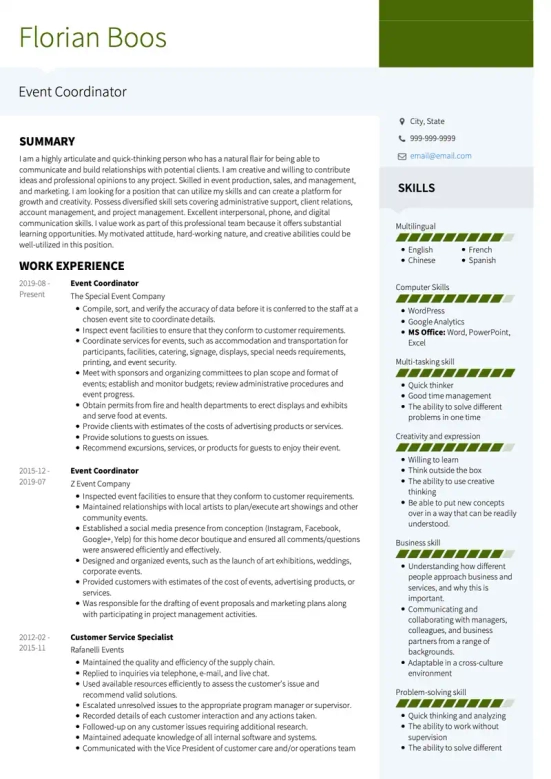
Learn how to effectively list event planner skills on your resume with real-world examples. Includes top event planner skills, sample resume phrases, and related skills.
Project Management: Ensuring events run smoothly by coordinating tasks, timelines, and resources.
Leadership: Guiding teams effectively to achieve event goals.
Communication: Clearly conveying information and expectations to all involved parties.
Budgeting: Managing financial aspects of events, including cost estimation and allocation.
Venue Management: Identifying, negotiating, and managing event spaces.
Vendor Relations: Building and maintaining relationships with service providers.
Marketing & Promotion: Developing strategies to attract attendees and increase event visibility.
Event Design & Décor: Creating visually appealing and functional event layouts.
Risk Management: Identifying potential issues and creating contingency plans.
Technical Production: Understanding audio-visual equipment, lighting, and staging needs.
Catering Management: Coordinating food and beverage services for events.
Transportation & Logistics: Arranging transportation and handling event deliveries.
Guest Experience: Ensuring a positive and memorable experience for attendees.
Sponsorship Procurement: Securing financial support from sponsors and partners.
Registration & Ticketing: Managing event registration processes and ticket sales.
Networking: Building relationships with industry professionals and potential clients.
Time Management: Prioritizing tasks efficiently to meet deadlines.
Problem-Solving: Quickly addressing issues that may arise during event planning.
Creativity & Innovation: Developing unique and engaging event concepts.
Customer Service: Addressing attendee inquiries and concerns in a professional and friendly manner.
Organize skills into categories (e.g., technical, soft, leadership) for easy readability.
Use action verbs (e.g., managed, coordinated, developed) to demonstrate your role in each skill.
Highlight achievements and results when listing event planning experiences.
Quantify accomplishments whenever possible (e.g., "Managed a team of 10 during the planning and execution of a successful conference with over 500 attendees.")
Tailor your resume to each job application, emphasizing relevant skills for that specific position.
Project Management: Led a team in the planning and execution of 3 successful conferences with over 500 attendees each.
Budgeting: Developed and managed event budgets, ensuring financial success for all events.
Marketing & Promotion: Utilized social media platforms and email marketing to increase event visibility and attract attendees.
In my role as an Event Planner at XYZ Company, I was responsible for managing various aspects of the company's events, including project management, budgeting, marketing & promotion, and guest experience. My leadership skills were essential in coordinating a team of 10 during the planning and execution of conferences with over 500 attendees each. By utilizing my problem-solving abilities and time management skills, I was able to ensure the success of every event while maintaining a positive work environment for the team.
Technical Skills:
Project Management
Budgeting
Venue & Vendor Management
Technical Production
Catering Management
Registration & Ticketing
Soft Skills:
Leadership
Communication
Guest Experience
Networking
Problem-Solving
Creativity & Innovation
Customer Service
Conference & Events Manager
Wedding Planner
Special Events Coordinator
Fundraising Event Planner
Trade Show Manager
Festival Director
Corporate Event Planner
Non-profit Event Planner
Exhibition Manager
Social Media Manager for events industry
Graphic Design: Creating promotional materials and event branding.
Public Relations: Managing event publicity and media relations.
Copywriting: Writing engaging content for event websites, brochures, and social media posts.
Sales & Business Development: Generating sponsorships and partnerships.
Web Development: Creating and maintaining event-focused websites or landing pages.
SEO: Optimizing event websites and promotional materials for search engines.
Photography & Videography: Documenting events to showcase the experience to future clients.
Social Media Management: Engaging with attendees online before, during, and after events.
Content Marketing: Creating valuable content related to the event industry.
Mobile App Development: Developing event-specific mobile apps for improved attendee engagement.
To minimize the impact of employment gaps, focus on explaining the time period with relevant experiences such as taking event planning classes or workshops, volunteering for events, or freelance event planning projects. Highlight these activities using bullet points to make them stand out.
To demonstrate self-taught event planning abilities, emphasize quantifiable achievements and results, such as events successfully planned, the number of attendees, any budget constraints, and how challenges were overcome. Consider including testimonials from clients or colleagues who can vouch for your skills.
If an event planning skill is no longer relevant or in demand, consider omitting it from your resume. However, if you feel the skill might still be valuable, mention it briefly and focus more on current and relevant abilities. You can also demonstrate up-to-date knowledge by learning new technologies or methodologies related to event planning.
Aim for a one-page resume when applying for event planner positions, summarizing your most significant achievements in a "Career Highlights" section if necessary. Include all relevant event planning jobs, skills, and certifications.
List your ongoing certifications under a separate section titled "Certifications (In Progress)" or "Professional Development," including the name of the certification, the organization offering it, and an expected completion date. This demonstrates a commitment to continuous learning and staying updated in the event planning field.
Focus on transferable skills from other areas, such as project management, logistics, marketing, and team leadership. Include relevant coursework or internships in event planning, and consider volunteering for local events to gain practical experience. Highlight any achievements that demonstrate organizational and multitasking abilities.
To stand out from more experienced event planner candidates, focus on unique strengths, accomplishments, and personal brand. Tailor your resume and cover letter to each job application by researching the company and using their specific language in your application materials. Highlight innovative ideas and any technology skills that can help streamline event planning processes.
Update your resume whenever you acquire new event planning skills, complete a significant project, or achieve a notable accomplishment to demonstrate ongoing professional development and commitment to the field.
Absolutely! Including side projects or volunteer work showcases your enthusiasm for event planning and your ability to apply your skills in various settings, making it easier for potential employers to assess your versatility as an event planner.
Attend at least one industry-related networking event or conference per quarter to learn from peers, gain insights into the latest trends, and potentially secure new job opportunities. Maintain activity on event planning-focused social media platforms and participate in online forums or groups to expand your professional network.