Data Analyst Resume Objective Examples
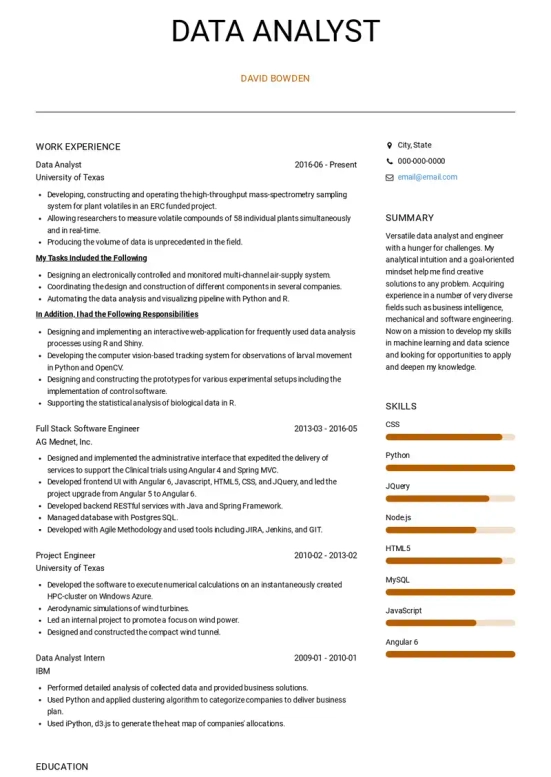
To write a Data Analyst resume objective that stands out, consider these tips:
• Mention core technical proficiencies such as SQL, Python, R, Power BI, and Tableau to demonstrate analytical skill. • Reference industry‑recognized credentials like the Google Data Analytics Professional Certificate or Microsoft Certified: Data Analyst Associate. • Quantify achievements with metrics—data volume processed, percentage improvement, or cost savings—to showcase tangible impact. • Include sector‑specific terminology such as predictive modeling, data mining, or KPI development to align with recruiter language. • Keep the objective 2–3 sentences long, clearly highlighting the value you bring to the organization.
Below are some Data Analyst resume objective examples that stand out:
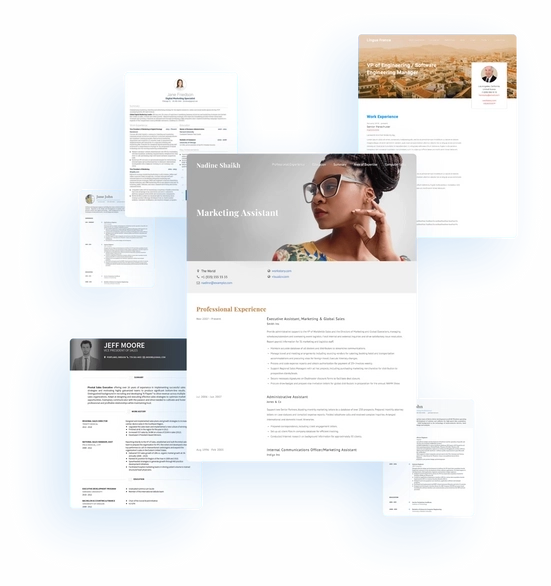
A highly experienced Senior Business Analyst with deep experience of making significant contributions to critical, data-focused technology projects within the eSports industry.
Highly skilled Data Analyst managing Business Analysis and full project life-cycle activities for delivery to stakeholders. Data skills include Conceptual and Physical Data Modeling, Business & Technical Data Architecture, Data Sourcing, Data Quality Assessment & Remediation.
Analytical-thinking Data Analyst, I am eager to bridge the gap between business stakeholders' needs and technical solutions. Due to my demonstrated problem-solving skills and firm background in technical solutions, I can effectively support the business in identifying their – sometimes yet undetected – needs and issues, then “translate them” into the language of the developing team, thus finding the most adequate solutions.
A people-first quick learner and problem solver with an inner drive to create value realized through significant experience across business analysis.
Enthusiast, self-learner, and process-oriented Data Analyst with a keen interest in the latest technological development such as Analytics, Visualization, and Data Science, with a high affinity towards Data & Business Analytics, seeking a responsible full-time career opportunity in a reputable organization where I can work with experienced professionals and reach my full potential.
Versatile data analyst with a hunger for challenges. My analytical approach to problems and a goal-oriented mindset help me find creative solutions to any problem. Acquiring experience in a number of very diverse fields such as business intelligence and data engineering.
Experienced and dedicated Data analyst with several years of experience identifying efficiencies and problem areas with data streams, while communicating needs for the project. Bringing forth the ability to synthesize quantitative information and interact effectively with colleagues and clients.
Data Analyst with deep experience of designing and implementing data warehouses as well as creating KPIs and building dashboards. Extensive experience using SQL, PL/SQL Tableau, and he is skilled in Excel, Power BI, data modeling and ETL.
10+ years of experience in interpreting and analyzing data to drive successful business solutions. Proficient in maximizing data by utilizing different tools and methods to visualize and share final data. Enthusiastic in securing a Data analyst position that offers professional growth and advancement within diversified areas of the industry.
I am looking for a position as Business Planning Analyst where I will be able to combine my Data Analysis expertise with my management skills in order to ensure that Plan and forecast business operations based on the analysis of business requirements.
Expert in SQL have Intermediate knowledge of PL/SQL ,Tableau & Python . Extensive experience in analyzing, monitoring to explore customer patterns. I consider myself a dynamic team player with an analytical mindset.
More than 5 years of experience as a Data Analyst. Skilled in cloud migration, machine learning, waterfall, and agile methodologies, backend development, and migration projects. A keen eye for upskilling and career development.
Recent graduate in computer science with knowledge of software development looking for opportunities to build my career. Where I can utilize my skills to further work towards personal and professional development and contribute towards the prosperity of the organization. I'm Passionate about learning.
Power BI Data Analyst with more than 6 years of experience in data gathering and visualization, with a focus on working with databases, data analysis, and its presentation in Power BI. I participated in every stage of creating Power BI dashboards, starting from data gathering and analysis to its visualization.
I have a degree in Statistics from the University of Texas and have past experience working with data analysis and data science in the eSports industry.
Results‑oriented data analyst with 4+ years of experience in SQL, Python, and Tableau, adept at transforming complex datasets into clear, actionable insights that drive strategic decision‑making. I excel at building automated dashboards and performing deep‑dive analyses that reduce reporting time by 30% and uncover revenue‑growth opportunities. Seeking to leverage my analytical rigor and cross‑functional collaboration skills to support data‑driven initiatives at a forward‑thinking organization.
Data analyst specializing in financial analytics and predictive modeling, with 6 years of experience delivering accurate forecasting and risk‑assessment solutions for multinational banks. Proficient in R, SAS, and Power BI, I have a proven track record of increasing forecasting precision by 15% and cutting reporting cycle time by 20%. I aim to join a progressive fintech firm where I can apply my expertise to optimize financial performance and enhance decision‑making through data‑centric strategies.
Communication‑focused data analyst with 2 years of experience translating business requirements into robust data solutions, using SQL, Excel, and Power BI. I am skilled at creating intuitive dashboards that empower non‑technical stakeholders to make informed decisions and have successfully improved data accessibility for 8 cross‑departmental teams. I seek to contribute my storytelling and stakeholder‑management strengths to a collaborative analytics team dedicated to driving measurable business impact.