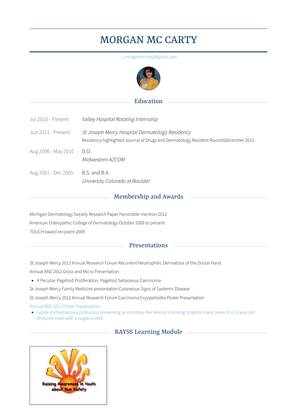
Want a Microbiologist Resume Examples and Templates resume that actually gets results? Skip the guesswork—build yours in minutes with our powerful resume builder and start landing interviews faster.
How to Write a Microbiologist Resume?
To write a professional Microbiologist resume, follow these steps:
- Select the right Microbiologist resume template.
- Write a professional summary at the top explaining your Microbiologist’s experience and achievements.
- Follow the STAR method while writing your Microbiologist resume’s work experience. Show what you were responsible for and what you achieved as a Microbiologist.
- List your top Microbiologist skills in a separate skills section.
Note: Leverage AI to level-up your resume - Try our AI Resume Builder
Write the perfect Microbiologist resume header by:
- Adding your full name at the top of the header.
- Add a photo to your resume if you are applying for jobs outside of the US. For applying to jobs within the US, avoid adding photo to your resume header.
- Add your current Microbiologist to the header to show relevance.
- Add your current city, your phone number and a professional email address.
- Finally, add a link to your portfolio to the Microbiologist resume header. If there’s no portfolio link to add, consider adding a link to your LinkedIn profile instead.
Alyson 7600 W. Bay Meadows Avenue Rochester, NY 14606 Marital Status: Married, email: cooldude2022@gmail.com
Alyson Schmidt, Rochester, NY, Phone number: +1-555-555-5555, Link: linkedin/in/johndoe
Make sure to add a professional looking email address while writing your resume header. Let’s assume your name is John Doe - here is a formula you can use to create email addresses:
- firstnamelastname@email.com - johndoe@email.com
- firstname.lastname@email.com - john.doe@email.com
- lastname.firstname@email.com - doe.john@email.com
- f.lastname@email.com - j.doe@email.com
- l.firstname@email.com - d.john@email.com
- firstnamelastname12@email.com - johndoe12@email.com
For a Microbiologist email, we recommend you either go with a custom domain name (john@johndoe.com) or select a very reputed email provider (Gmail or Outlook).
How to Write a Professional Microbiologist Resume Summary?
Use this template to write the best Microbiologist resume summary:
Microbiologist with [number of years] experience of [top 2-3 skills]. Achieved [top achievement]. Expert at [X], [Y] and [Z].
How to Write a Microbiologist Resume Experience Section?
Here’s how you can write a job winning Microbiologist resume experience section:
- Write your Microbiologist work experience in a reverse chronological order.
- Use bullets instead of paragraphs to explain your Microbiologist work experience.
- While describing your work experience focus on highlighting what you did and the impact you made (you can use numbers to describe your success as a Microbiologist).
- Use action verbs in your bullet points.
Microbiologist Resume Example
Microbiologist
- Recommended changes in patient care based on information collected or observed on rounds.
- Coordinated rounds in all patient care areas.
- Coordinated the development and implementation of Infection Control programs and activities in hospital.
- Identified, recommended, and implemented changes to improve infection prevention and control practices
- Coordinated implementation and education about the Infection Control Plan.
Microbiologist Resume Example
Microbiologist
- Participated in surveillance activities to identify unusual epidemic situations
- Evaluated the impact of new procedures or equipment on delivery of patient care.
- Identified and recorded hospital acquired infections
- Reviewed appropriate laboratory data and medical records for surveillance and reporting purposes.
- Analyzed records and prepared reports on the incidence of targeted infections.
Microbiologist Resume Example
Microbiologist
- Conducted research activities in infection related practices and published the data
- Collaborated with representatives of community health agencies and other institutions to assure coordinated service for prevention and control of infection.
- Formulation of state-of-the-art infection control manual and regular updates for the same.
- Assisted Public Health authorities in the investigation of reportable infections as required.
Microbiologist Resume Example
Microbiologist- Participated in providing microbiological advice.
- Advised clinicians on the use of appropriate microbiological tests and management for individual patients.
- Took ward rounds on-site
- Supported the establishment and Maintenance of testing laboratory to ensure compliance and industry standards for best practices.
- Established and coordinated test sampling plans
- Participated in verification of microbiological methods and method transfers.
Microbiologist Resume Example
Microbiologist
- Followed regular sampling schedules within a specific environment
- Used a variety of identification methods, including molecular techniques, to evaluate samples
- Monitored and identified microorganisms
- Tracked microorganisms in a range of environments
- Monitored and assessed samples from a range of sources
Microbiologist Resume Example
Microbiologist
- Ensure that all testing is completed, reviewed and approved within agreed turnaround times.
- Ensure activities comply with product license commitments
- Ensures that all testing is completed, reviewed and approved within agreed turnaround times.
- Ensures QC activities are carried out in compliance with product license commitments Support raw material, utility, in-process, release and stability testing of sterile products.
- Perform routine and non-routine Microbiological testing activities as required.
Microbiologist Resume Example
Microbiologist
- Gowning qualification of personnel
- Identification of microorganisms
- Daily equipment calibration
- Handling of Change Controls and Deviations
- Participation in investigations for out-of-spec results
- Sterility testing
- Bacterial endotoxins testing
- Particulate matter analysis
- Method development and validation
- Viable & non-viable environmental monitoring
Top Microbiologist Resume Skills for 2022
- Bio: Biochemical
- Bio: Bacterial
- Basic: Autoclave
- Bio: Biotechnology
- Basic: Environmental Monitoring
- Other: GMP
- Basic: Limit Test
- Languages
- Communication
- Bio: Bioburden
How Long Should my Microbiologist Resume be?
Your Microbiologist resume length should be less than one or two pages maximum. Unless you have more than 25 years of experience, any resume that’s more than two pages would appear to be too long and risk getting rejected.
On an average, for Microbiologist, we see most resumes have a length of 2. And, that’s why we advise you to keep the resume length appropriate to not get rejected.
Specific Metrics/KPIs to Include in a Microbiologist Resume
When crafting your microbiologist resume, it's essential to highlight key metrics and KPIs that demonstrate your proficiency and impact in the field. Some examples include:
- Number of bacterial strains identified and characterized
- Success rate in sterilization procedures (e.g., autoclave cycles, filtration efficiency)
- Contamination levels in laboratory settings and clean rooms
- Number of microbial cultures successfully maintained for research or diagnostic purposes
- Data from experiments or analyses that contributed to the advancement of scientific knowledge or industry standards
Certifications for a Microbiologist Resume
Certifications are crucial for validating your expertise as a microbiologist. Make sure to include the following certifications on your resume:
- American Society for Microbiology (ASM) certification, if applicable
- Certification in Clinical Laboratory Science (ASCP), if working in clinical settings
- Association of Food and Drug Officials (AFDO) certifications, if involved in food safety inspections or research
- Certified in Environmental Health (CEH) by the National Environmental Health Association (NEHA), if focusing on environmental microbiology
Be specific about the software and platforms you're proficient in when listing them on your resume:
- Bioinformatics tools such as BioPython, Bioconductor, or CLC Genomics Workbench
- Sequencing analysis platforms like NextStrain or iTOL (IntraTypic Phylogenetic Tree)
- Microscopy software for image analysis, such as ImageJ, Fiji, or Metafer
- Laboratory information management systems (LIMS), if applicable
Methodologies and Frameworks for a Microbiologist Resume
Highlight your familiarity with various methodologies and frameworks relevant to microbiology:
- Molecular techniques like PCR (Polymerase Chain Reaction), qPCR (Quantitative Polymerase Chain Reaction), or NGS (Next-Generation Sequencing)
- Bioinformatics tools for data analysis, such as R, Python, or MATLAB
- Genome editing methods like CRISPR-Cas9 or TALENs
- Quality control procedures and Good Laboratory Practices (GLP)
The format you choose for your microbiologist resume should reflect your career goals and the requirements of the position you're applying for. Consider these options:
- Functional resume - Emphasizes skills and knowledge relevant to the field, rather than work experience (ideal for those transitioning into microbiology from a different background)
- Combination resume - Balances between a functional and chronological format, highlighting both transferable skills and work history (most versatile option)
- Chronological resume - Focuses on work experience in reverse chronological order, showcasing career progression and growth (best for experienced professionals)