What Do Hiring Managers Look for in an Insurance Agent Resume?
- Proven sales experience and ability to achieve or exceed insurance sales targets.
- Strong knowledge of insurance products, policies, and regulations.
- Exceptional communication and interpersonal skills to build trust and rapport with clients.
- Ability to assess client needs and recommend tailored insurance solutions.
- Proficiency in customer relationship management (CRM) software.
- Relevant certifications or licenses, such as state insurance licenses or FINRA credentials.
How to Write an Insurance Agent Resume?
To craft a professional Insurance Agent resume, follow these steps:
- Select a clean and professional Insurance Agent resume template.
- Write a concise summary emphasizing your sales experience, product knowledge, and customer service skills.
- Detail your work experience, focusing on sales performance, client relationships, and policy management.
- Highlight certifications like state insurance licenses, CPCU, or FINRA Series licenses in a dedicated section.
- Include skills like customer acquisition, risk assessment, and negotiation in a skills section.
- Proofread for clarity, accuracy, and professionalism.
Struggling to make your insurance agent resume stand out? Let our AI resume tool do the hard work—analyze job requirements, optimize your content, and create a resume that gets noticed.
Write an effective Insurance Agent resume header by:
- Displaying your full name prominently at the top.
- Adding a professional title such as "Licensed Insurance Agent" or "Insurance Sales Representative."
- Providing contact information: phone number, professional email, and LinkedIn profile.
- Optionally, including your city or region if relevant for the role.
John Doe, Insurance Specialist, johndoe123@gmail.com
John Doe, Licensed Insurance Agent | Denver, CO | Phone: (555) 555-5555 | Email: john.doe@gmail.com | LinkedIn: linkedin.com/in/johndoe
How to Write a Professional Insurance Agent Resume Summary?
Use this template to craft your summary:
"Insurance Agent with [number] years of experience in [specific areas, e.g., life insurance, property and casualty]. Skilled in [key skills, e.g., client relationship management, policy underwriting]. Proven success in [key achievements, e.g., exceeding sales targets, retaining clients]."
Examples:
- "Results-driven Insurance Agent with 7+ years of experience in property and casualty insurance sales. Skilled in identifying client needs, tailoring policies, and achieving 110% of sales targets consistently."
- "Dedicated Life Insurance Agent specializing in client retention and financial planning. Proven track record of increasing client portfolios by 30% through personalized service and product education."
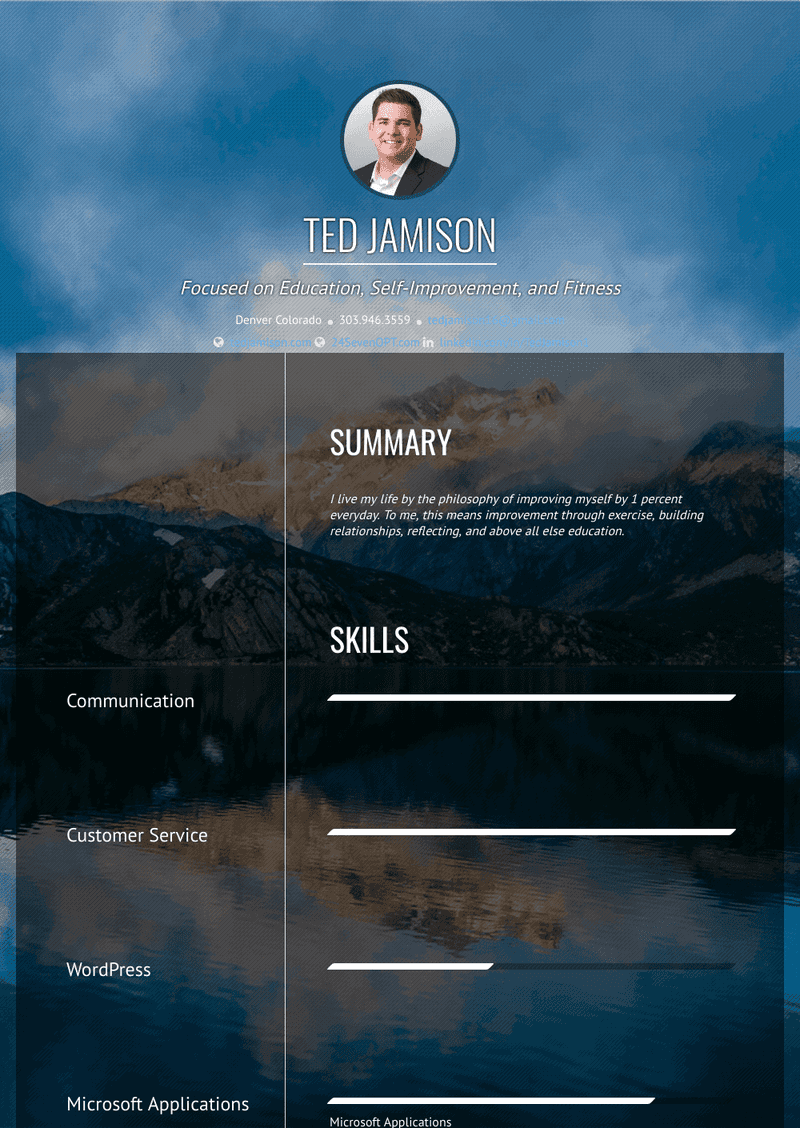
Insurance Agent Resume Example
Insurance Sales Representative - XYZ Insurance Company
- Advised clients on a wide range of insurance products, including auto, home, and life policies.
- Achieved 120% of monthly sales targets for three consecutive quarters.
- Conducted needs analysis to identify gaps in coverage and recommend appropriate solutions.
- Built and maintained relationships with 200+ clients, ensuring a 95% retention rate.
- Collaborated with underwriters to process applications efficiently and accurately.
Insurance Agent Resume Example
Independent Insurance Agent - Freelance
- Generated leads through networking and referrals, increasing client base by 40% over two years.
- Assisted clients with claims processing, ensuring a seamless and supportive experience.
- Conducted seminars on insurance literacy to educate prospective clients.
- Implemented CRM tools to track client interactions and renewals, improving client satisfaction.
- Stayed current on industry trends and regulatory changes to provide accurate advice.
Additional Sections for an Insurance Agent Resume
- Certifications (e.g., Property & Casualty License, Life & Health Insurance License, CPCU)
- Technical Skills (e.g., CRM Software, Microsoft Office, Insurance Management Tools)
- Languages (e.g., Spanish, French, Mandarin)
- Awards and Recognitions (e.g., Top Sales Performer, Best Client Retention Award)
- Volunteer Experience (e.g., financial literacy workshops, community outreach programs)
Top Insurance Agent Resume Skills for 2025
- Client Relationship Management
- Sales and Negotiation Skills
- Policy Underwriting and Customization
- Risk Assessment and Analysis
- CRM Software Proficiency
- Knowledge of Insurance Regulations
- Claims Processing and Resolution
- Networking and Lead Generation
- Communication and Presentation Skills
- Problem-Solving and Decision-Making
How Long Should My Insurance Agent Resume Be?
Insurance Agent resumes should typically be 1 page long, but can extend to 2 pages if you have extensive experience. Focus on showcasing your sales achievements, client management skills, and product expertise to create a compelling document.
For assistance, explore resume templates or browse Insurance Agent resume examples for inspiration.
Specific Metrics/KPIs to Include in a Insurance Agent Resume
Highlighting your achievements and performance metrics can help potential employers understand your success as an insurance agent. Some key KPIs to include are:
- Number of policies sold per year
- Total premiums generated annually
- Renewal rate for existing policies
- Growth in client base over a specific period
- Client retention rate
- Awards and recognition received within the industry
Certifications for a Insurance Agent Resume
Demonstrate your expertise and commitment to continuous learning by listing relevant certifications on your resume:
- Certified Insurance Counselor (CIC)
- Chartered Property Casualty Underwriter (CPCU)
- Associate in Risk Management (ARM)
- Accredited Adviser in Insurance (AAI)
- Professional Designation in Personal Lines Coverage (PDPLC)
Showcasing your familiarity with essential insurance-related tools and platforms can set you apart from other candidates:
- Insurance software such as Applied Epic, IVANS, or Vertafore
- Customer Relationship Management (CRM) systems like Salesforce or HubSpot
- Microsoft Office Suite (Word, Excel, PowerPoint) for data analysis and presentation purposes
- Online insurance databases like NAIC or S&P Global Market Intelligence
Methodologies and Frameworks for a Insurance Agent Resume
Sharing your understanding of various methodologies and frameworks used in the insurance industry can showcase your strategic thinking:
- Actuarial methodologies like Probability Theory and Risk Management
- Underwriting frameworks like the American Academy of Actuaries' principles
- Sales methodologies such as Solution Selling or Consultative Selling techniques
- Risk management strategies like Enterprise Risk Management (ERM) or Operational Risk Management (ORM)
Customizing your resume to the insurance industry and role can help you stand out. Here are some tips:
- Functional format: Emphasize your skills and abilities in a functional resume if you have limited experience or are transitioning careers
- Combination format: A combination of functional and reverse chronological formats, highlighting both transferable skills and work history
- Reverse chronological format: Ideal for candidates with extensive experience in the insurance industry, focusing on your most recent achievements and progression