USA CV Tips & Format Requirements
Applying for a job in the United States? This guide has the tips, examples, & format requirements needed to write the perfect USA CV. Create your VisualCV today!
Popular American Resume Templates
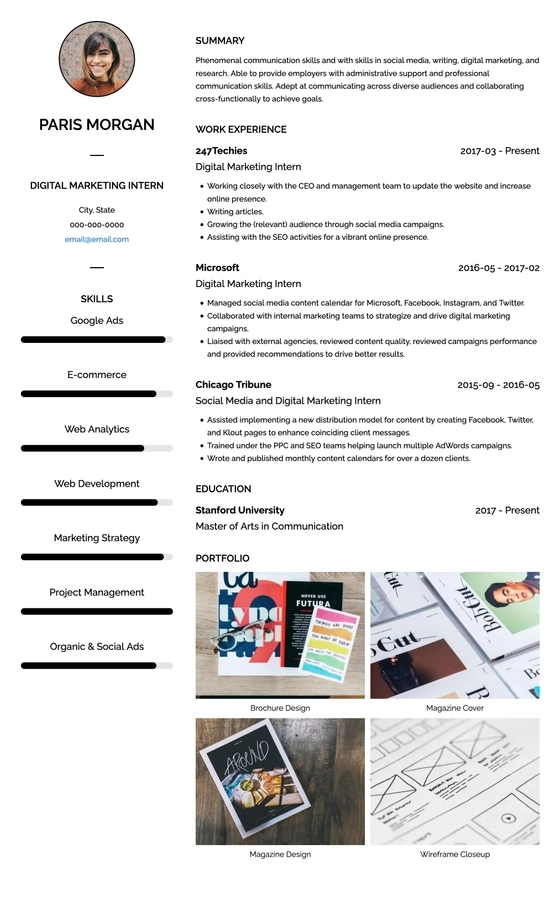
Digital Marketing Resume Template for American Jobs

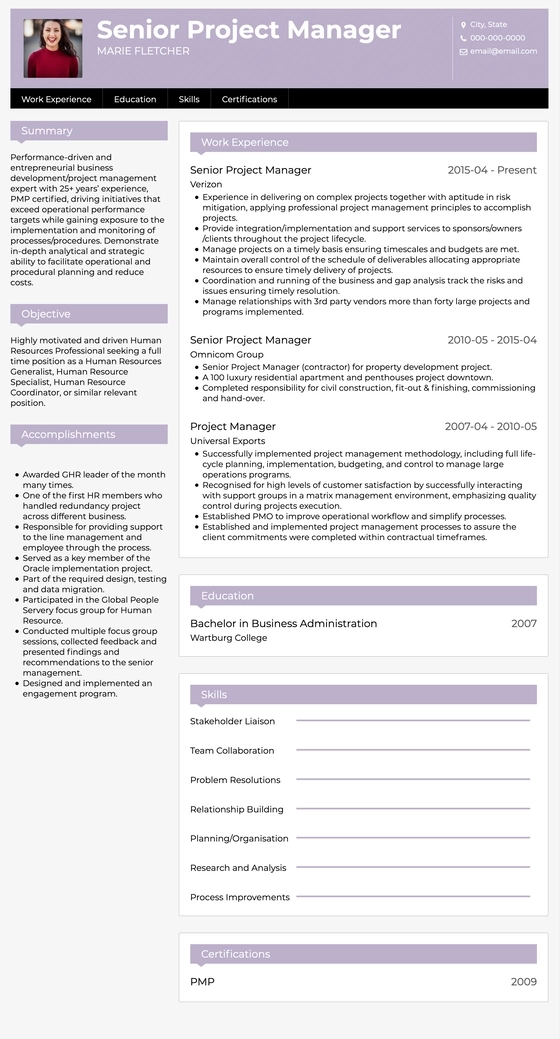
Project Management USA Resume Template

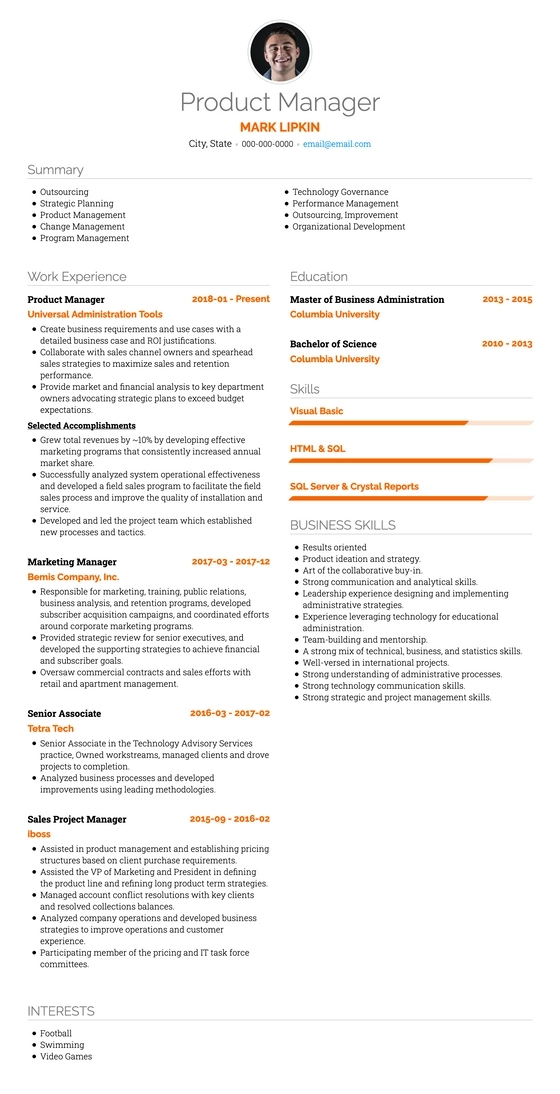
Product Management USA Resume Template

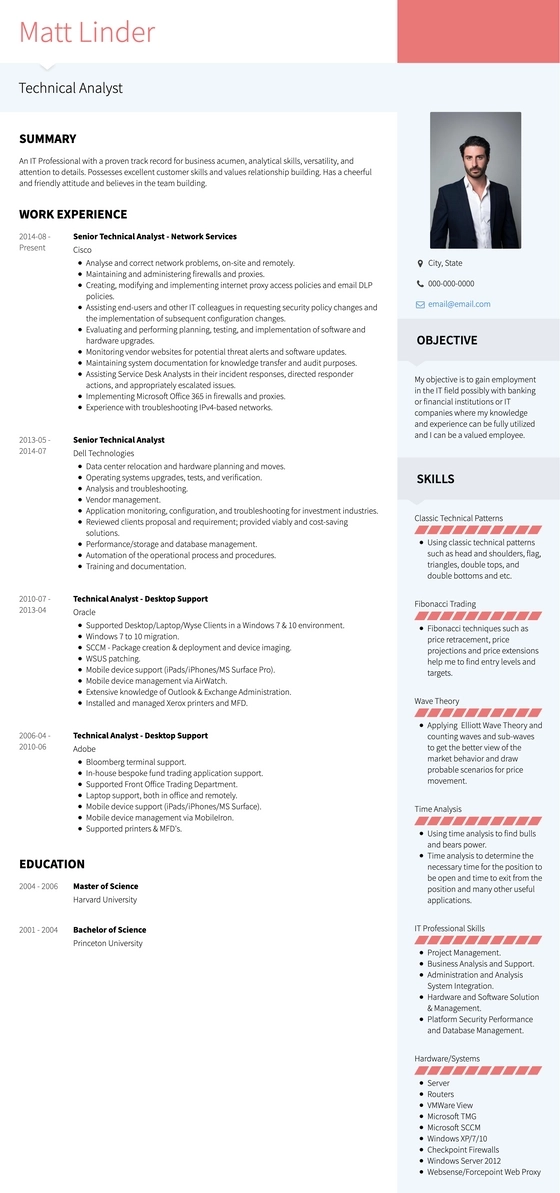
Technical Resume Template for USA

Manager USA Resume Template

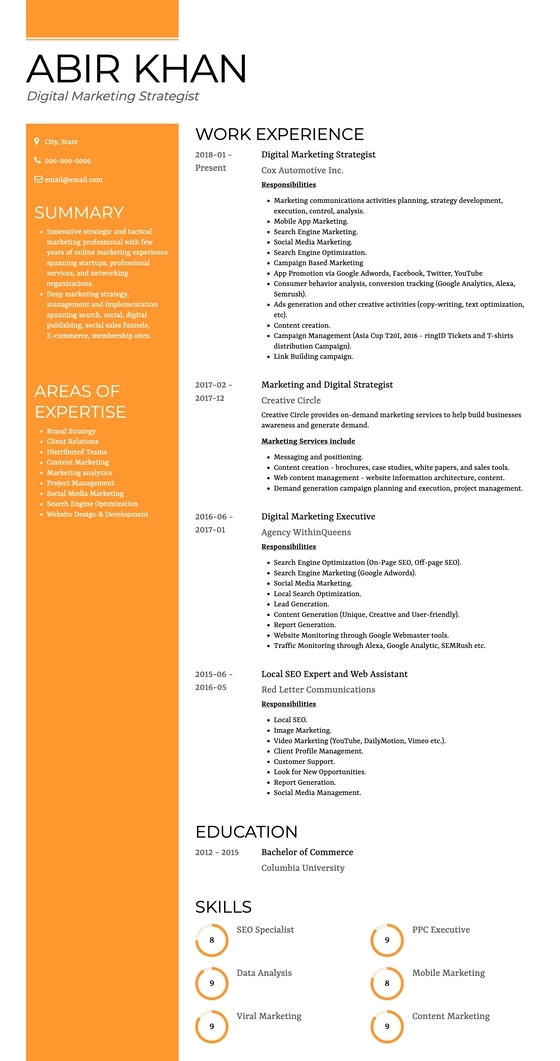
USA Student Resume Template

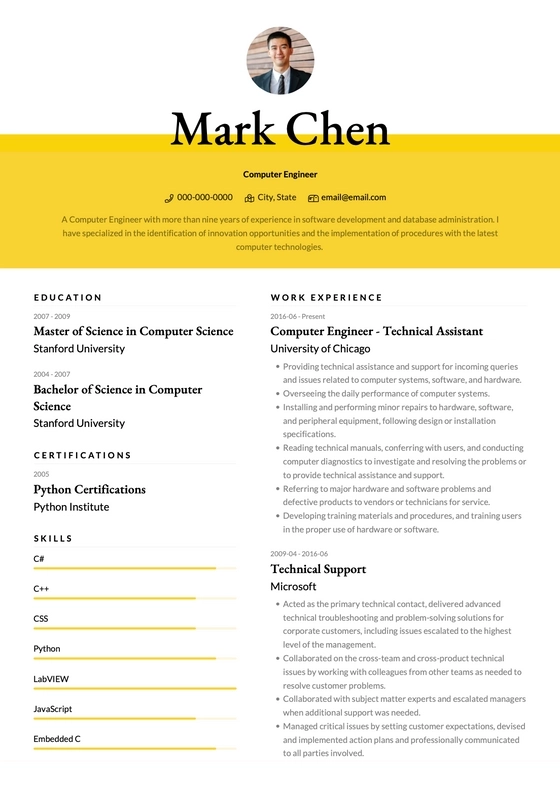
Director USA Resume Template

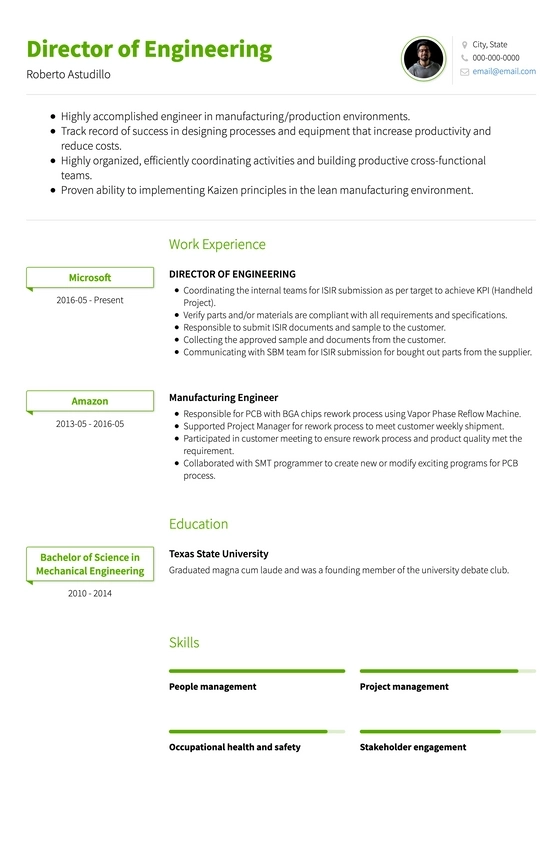
Hospitality Resume Template USA

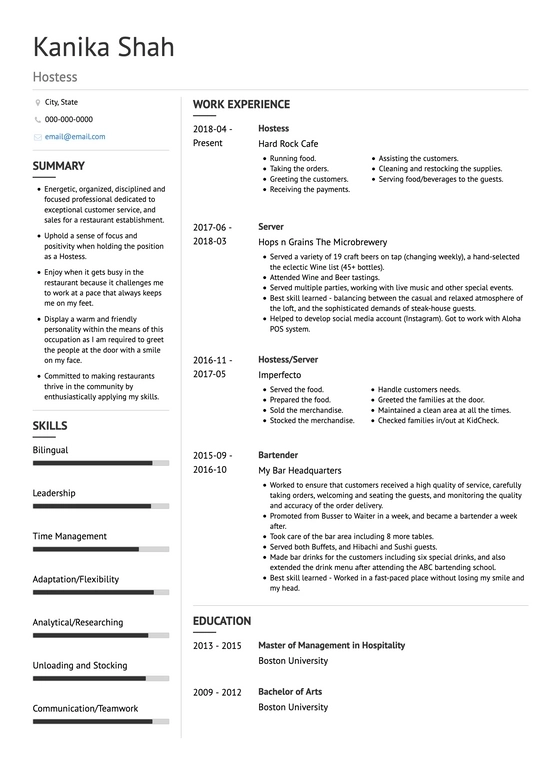
Modern USA Resume Template
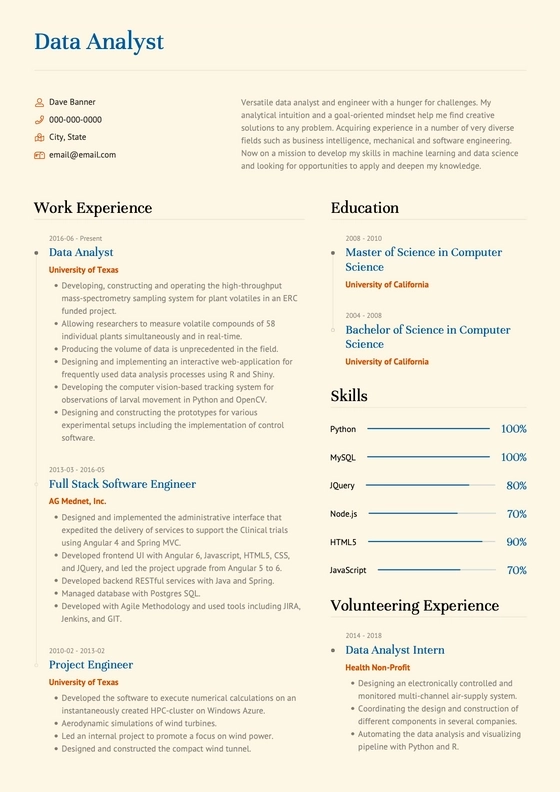
Software Engineering Resume Template for USA

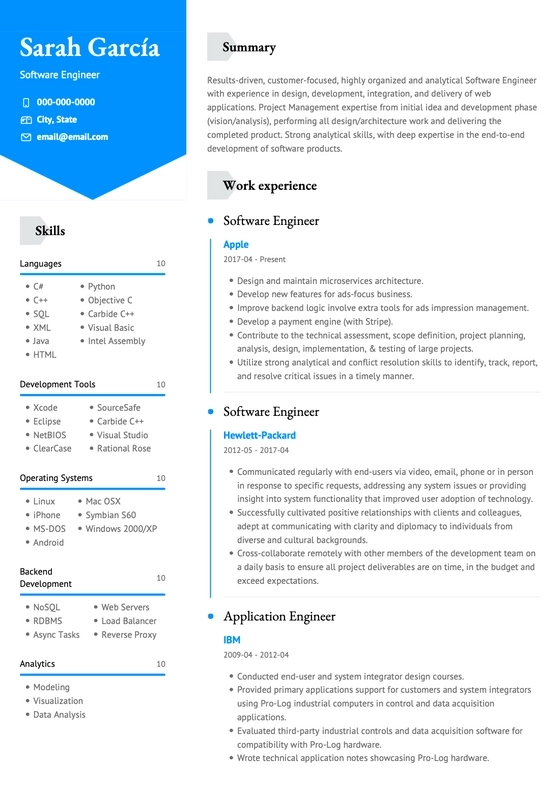
Combination Resume Template USA

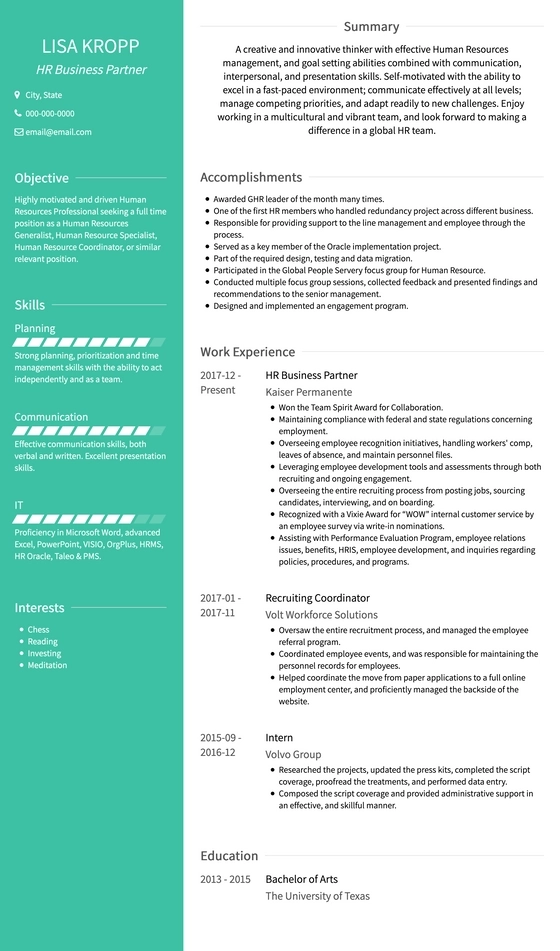
Simple USA Resume Template

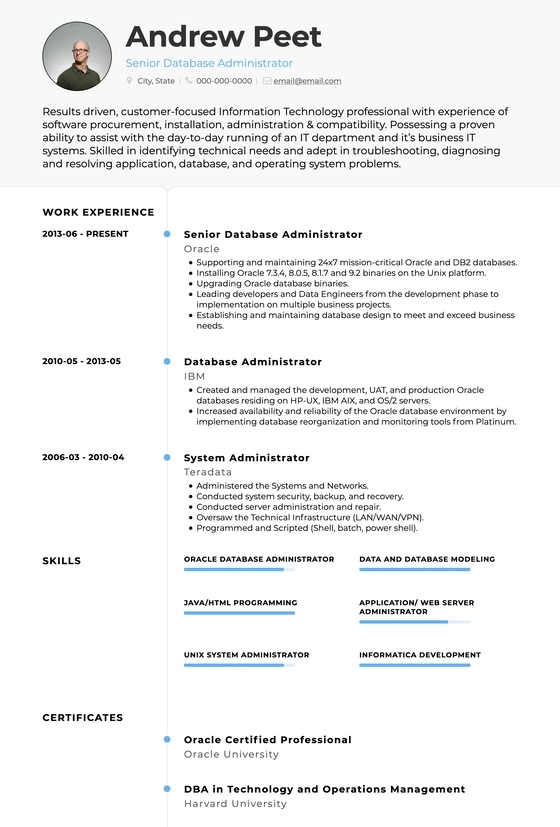
ATS USA Resume Template

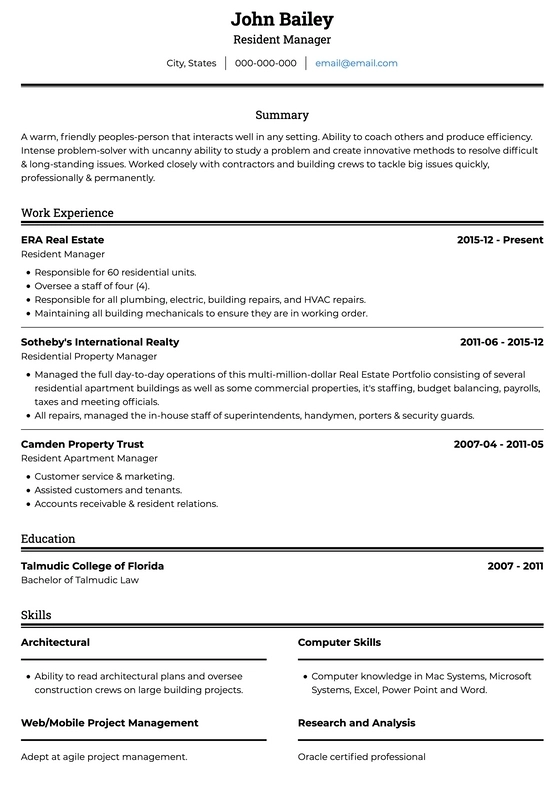
Public Relations USA Resume Template

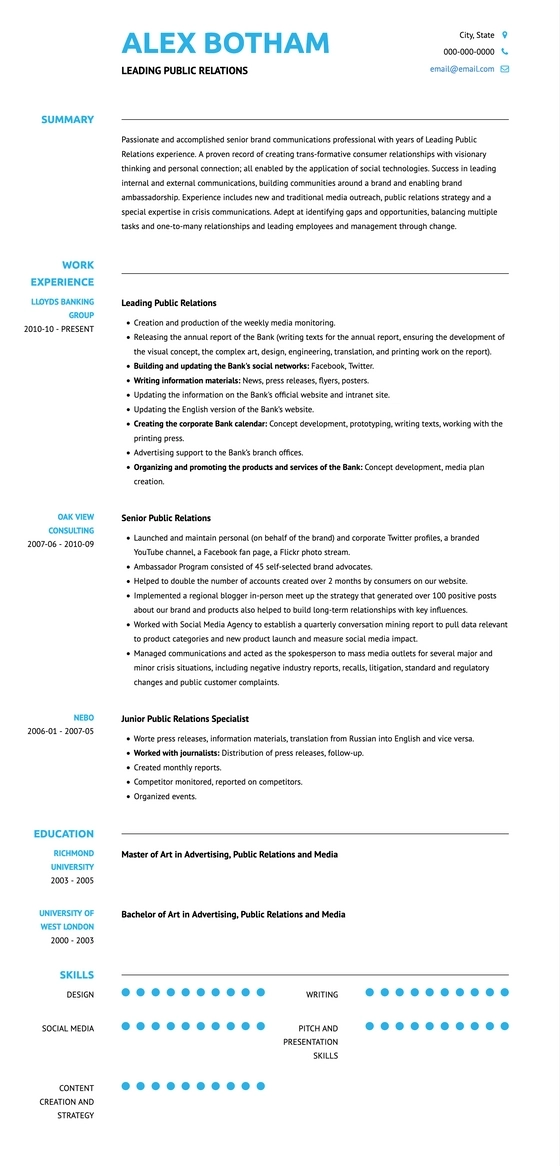
How to Format a US Resume?
To format a resume for jobs in US, select the right resume format based on your work experience. Once you choose a resume format type, fill it with information relevant to the job that you are applying for.
The most popular resume formats in US are:
- Reverse chronological resume format
- Combination resume format
- Functional resume format
Reverse Chronological Resume Format for USA
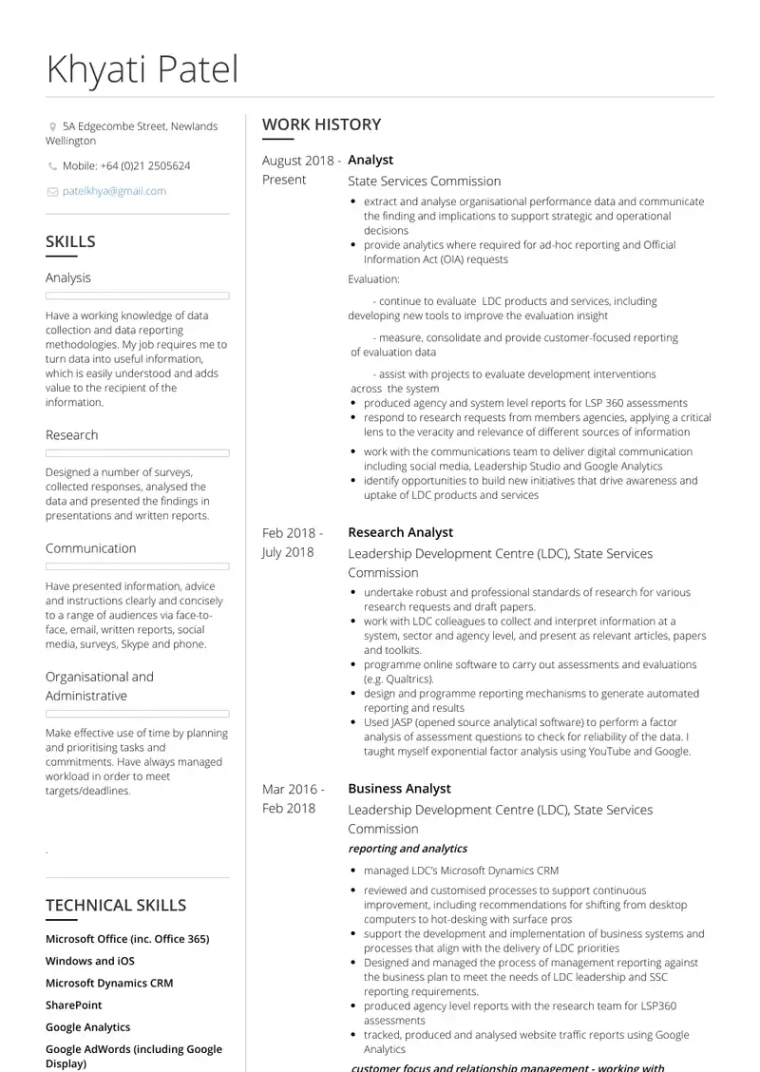
If you are an experienced professional applying for relevant jobs in the US, we would recommend that you use a reverse chronological format.
Here’s a reverse chronological American resume format example:

Combination Resume Format for America
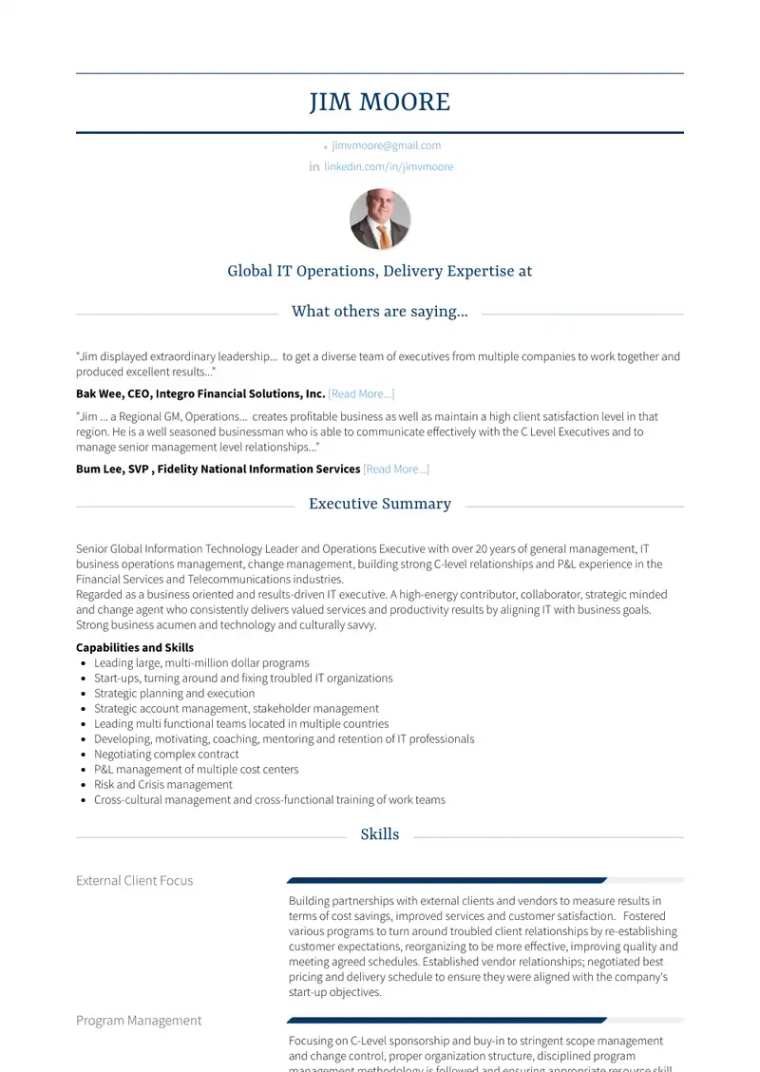
Trying to build a US resume that is more focused on displaying diverse skills? Maybe you want to show a hiring manager how your past skills and work experience is transferable to the job you are applying for.
Here’s what a combination resume format looks like:
Functional Resume Format for US Jobs
Are you someone who has very little or no experience? A functional resume format could just be what you need. With this resume format, it is easier for candidates in the US to display their skills to cover for the lack of experience.
Here’s a functional US resume format example:
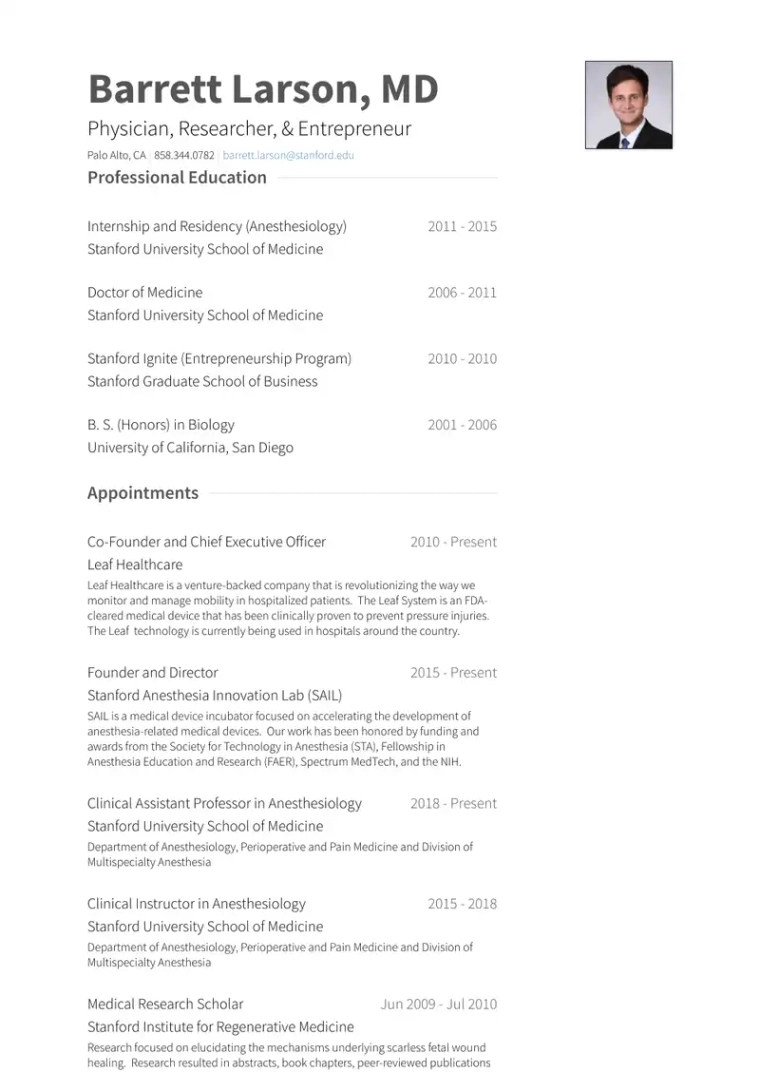


USA Resume Formatting Tips for 2025
The top resume formatting tips to follow while writing a resume for an American job are:
- Select the right resume format based on your work experience.
- Keep the length of your resume to 1 page if you have less than 15 years of experience. A two page resume is acceptable if the total work experience exceeds 15 years.
- Use a professional font. Use a serif font for building a traditional US resume and a sans-serif font for a modern US resume.
- Make sure the resume sections have sufficient margins on all sides.
- Use either 1 or 1.15 as your line spacing.
What to Avoid in a US Resume?
Avoid the following mistakes in a US resume:
- Adding photo to a US
- Adding personal information like gender, SSN, religion, age, or nationality.
- Adding your entire address to your resume.
- Eligibility to work within the United States should not be listed on your resume.
- References on a resume are generally not required and only add clutter to it.
- Adding unprofessional email e.g. cooljay2022@gmail.com.
American Resume Requirements
In America, the term ‘resume’ is much more common than ‘CV’ - in fact, these terms refer to two different things. A ‘CV’ usually refers to a long, detailed document for academics and jobs in academia. In all likelihood, this is not what you will need when applying for a job in America - a simpler, two page resume will do.
Browse our gallery of resume examples here.

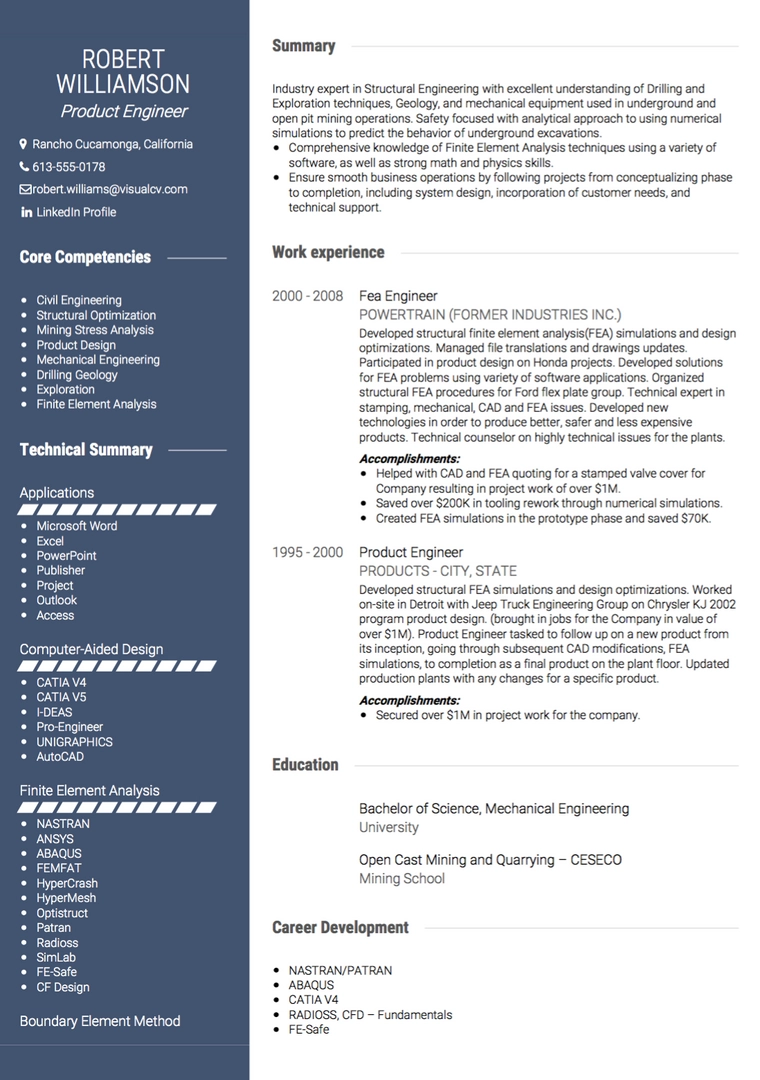
How do I write a US resume?
To write a US resume, consider the following golden rules:
- Keep the length of your resume to a maximum of two pages.
- Add the following to your resume: contact details, work history, resume summary/objective, skills and certifications.
- Customize your resume for each job you apply to.
- Add the right set of keywords to pass the ATS
US Resume Tips and rules:
Length: In most cases, two pages is sufficient for your US resume. A one page resume will do if you graduated within the past few years, and a three page resume is acceptable for very experienced job seekers, but be careful - “The longer your resume is, the less likely an employer is to see the parts you want them to see,” according to Alison Green at Ask a Manager. Unless you are very certain, keep it to two pages.
Language: Use standard American English when writing your American resume. Drop those extra U’s: it’s ‘color’ and ‘labor’, not ‘colour’ or ‘labour’.
CV or Resume: In the United States, the term ‘resume’ is more common than ‘CV’. ‘CV’ usually refers to a longer academic document that contains much more information than a regular resume.
Resume template: Browse through our gallery of USA resume templates.
US Resume Format, Order and Layout:
Photo: Most experts recommend that you don't include a picture of yourself on your resume. Your appearance is not relevant to your skills and abilities, and including a picture distracts from the content of your resume and opens the door for discrimination. In fact, some companies will reject resumes with photos outright to avoid any accusations. This rule of thumb has exceptions, however; be sure to do your research before making your decision. If you are applying to a more creative role - perhaps in film, graphic design, or the performing arts - a professional picture may help you to stand out and build your personal brand. Use your discretion when deciding if a CV picture is right for each application.
Personal Information: It is important to include your name, address, phone number, and email address. You can also include a link to your LinkedIn or other social media, but only if you are completely certain that these profiles will present you as professional and hireable. Be sure that any online profiles are up to date and reflective of your goals and professionalism.
Personal Summary: A summary of your qualifications separate from your work experience is optional, but for experienced job seekers it is a great way to provide a snapshot of your history and skillset. According to Lily Zhang at The Muse, summary statements are “usually best for more experienced professionals with years of experiences to tie together with a common theme.” This section should be short and punchy - sell yourself in as little space as possible.
Work experience: Write your work experience in reverse-chronological order, with your most recent position at the top. When writing your work experience, focus on your achievements rather than your responsibilities, highlighting quantifiable information whenever possible. Your work history should be tailored to suit the job you are applying to - use keywords from the job posting, but only if you can back up your claims.
Education: Your educational achievements should also be listed in reverse-chronological order. If you are a recent graduate you can include your GPA, but only if it is high and only if it is relevant to the job. Once you have more years of work experience, your GPA becomes less important.
How to Convert an Indian Resume to an American Resume
To convert an Indian resume to an American resume, follow these steps:
- Change your resume format to either: Chronological, functional or hybrid resume format. The first are a lot more popular in the U.S. as compared to the later.
- Indian resumes follow British language and writing conventions - Instead switch to US grammar and writing conventions. Make sure your resume is easy to read. Avoid using difficult words and expressions that are uncommon in America.
- Reduce the length of your resume summary section. Add your top skills, number of years of work experience and top relevant achievements in it.
- Remove any pictures from your resume to convert it into an American resume.
- List a US City, State along with an American phone number. Apart from your email, remove your Indian contact information.
- Make your resume one page if your work experience is less than 15 years.
And, that’s it! Your Indian resume is now converted to an American resume.
How to Convert an European Resume to an American Resume
To convert your European resume to an American resume, follow these steps:
- Reduce your European resume. While descriptive and long resumes work in the EU, American resumes are usually one page for candidates with less than 15 years of work experience.
- Remove all personal information that’s usually common such as date of birth, marital status, and nationality. In the US, due to anti-discrimination law personal details like date of birth, marital status, etc are not required. Furthermore, an ATS might reject a resume that has personal information on it.
- Reduce focus on skills and extracurricular activities. In American resumes, work experience and accomplishments take the priority.
- European resumes are a bit more detail oriented when it comes to the education section. Remove anything that’s not an achievement from your education section to convert it.
- Remove any references that you have on your resume.
- Remove photo (if you have any) from your resume.
Customize Your USA Resume for Each Job
Spray and pray job application using the same generic resume without customization isn’t the best job search strategy in the US. Customize the following in your resume based on each job that you apply to:
- Work history - show relevant skills and experience to the job.
- Summary - shape your resume to show that would make the US based employer feel that you are the perfect candidate for the job.
- Stand out by customizing your skills section to show only relevant or stand out skills.
- When it comes to projects or portfolio, keep it relevant to the role.
- Finally, pick relevant keywords from the job description and add them to your resume
How to Write a Fresher Resume Format for USA
As a fresher in USA, a good resume format would include:
- Header with a resume objective customized for American jobs.
- Education - include your GPA only if it is more than 3.7.
- Skills - include relevant skills only.
- Projects - list your top projects.
- Certification - if your target job requires certifications, list them with the date till they are valid.
- Avoid using reverse chronological resumes.
How to Write a H1B Resume for USA
To write a H1B resume, follow the American resume formats listed above. Showcase achievements and highlight skills using the STAR framework. While creating your resume don’t put a picture, avoid listing personal details, and H1B status.
Contact Information Template for Your US Resume
In every US resume, it is expected that a candidate would list the following contact information:
- Full Name
- Email Address
- Phone Number
- Address (usually in a city, state format)
- LinkedIn Profile
- Personal Website or Portfolio
- Professional Social Media Profiles
Example Contact Information Template for Resume
[First Name Last Name], [Phone Number], [Email Address], [City, State/Province, Country]
Example Contact Information Template for Your US Resume with LinkedIn
[First Name Last Name], [Email Address], [Phone Number], [LinkedIn Profile URL], [City, State/Province, Country]
How to List Work Experience on Your American Resume
To list work experience on your American resume follow these steps:
- Start with your most recent job and work backwards.
- Include the job title, company name, location, and dates of employment.
- Use bullet points to describe your job duties and accomplishments, starting each bullet point with an action verb.
- Focus on your most relevant experience and skills for the job you are applying for.
- Use quantifiable data to illustrate your achievements, such as the number of projects you completed or the amount of revenue you generated.
- Use keywords and phrases from the job description to make your resume more relevant to the job.
- Use specific examples to demonstrate your skills and achievements, such as how you improved a process or solved a problem.
- Keep your bullet points concise, clear, and easy to read, using short phrases or sentences.
- Use past tense for previous jobs and present tense for your current job.
- Customize your work experience section for each job you apply for, highlighting the skills and experience that are most relevant to the job.
How to List Education on Your US Resume
How to List Education on an Experienced Candidate’s US resume
- Start with your latest degree and work backwards.
- Include institution name, degree, field of study, and graduation date.
- List additional relevant coursework, certifications, or training in a separate section.
- Consider adding a high GPA or academic honors.
- Keep your education section concise and relevant to the job.
- Emphasize how your education prepared you for the job by highlighting skills and knowledge gained.
- Customize the education section for each job by highlighting relevant education and training.
How to List Education on an Entry-Level Candidate’s US resume
- Start with your most recent degree and work backwards.
- Include institution name, degree, field of study, and graduation date.
- Add a high GPA or academic honors if applicable.
- Highlight relevant coursework or projects if you lack work experience.
- Emphasize how your education prepared you for the job.
- Include internships or volunteer work in a separate section.
- Use industry-specific keywords and bullet points to make the section concise and relevant.
- Customize the education section for each job.
How to List Skills on Your USA Resume
To list skills on your USA resume:
- Create a separate section for your skills and list your skills in it.
- List your skills in summary and work experience sections of your resume. Do so by showing the situations you faced and the skills you used to solve the problem.
There are several ways to list skills on your US resume. Let’s take a look at a couple of them.
Skills on Your US Resume in a Bullet List
If your US resume has a lot of empty space, this is a good way to list your skills. Here’s an example of how to list:
- Skill 1
- Skill 2
- Skill 3
- Skill 4
- Skill 5
Skills on Your US Resume Without a Bullet List
To list your skills on your US resume without a bullet list, add them with either a comma or a tab on your resume.
An example would to list skills would be: Skill 1, Skill 2, Skill 3, Skill 4, Skill 5, Skill 6, Skill 7, …
Example of How to List Soft Skills on a US Resume
Soft skills demonstrate your interpersonal abilities, work ethic, and communication style. These skills are especially valuable in roles requiring collaboration, customer interaction, or leadership. When listing soft skills, integrate them into a "Skills" section or weave them into your job descriptions and achievements. Here’s an example:
Skills
- Strong communication and presentation skills
- Team collaboration and conflict resolution
- Adaptability in fast-paced environments
- Time management and organizational abilities
- Creative problem-solving and critical thinking
Alternatively, integrate soft skills into job descriptions: Customer Service Associate XYZ Retail, New York, NY June 2020 – Present
- Resolved customer inquiries with empathy and effective communication, earning a 95% satisfaction score.
- Collaborated with team members to optimize workflows, improving productivity by 15%.
Example of How to List Hard Skills on a US Resume
Hard skills are technical or specialized proficiencies that you’ve gained through education, training, or experience. These are often industry-specific and measurable. When listing hard skills, include them in a "Skills" section and tailor them to the job description. For instance:
Skills
- Proficient in Microsoft Excel (pivot tables, VLOOKUP, macros)
- Experienced in JavaScript, Python, and SQL
- Certified in Adobe Photoshop and Illustrator
- Skilled in data analysis and visualization (Tableau, Power BI)
- Expertise in social media marketing and SEO strategy
For technical roles, hard skills can also be highlighted under job descriptions: Data Analyst ABC Tech Solutions, San Francisco, CA January 2019 – Present
- Utilized SQL and Python to process and analyze large datasets, delivering actionable insights for quarterly reports.
- Developed interactive dashboards in Tableau to enhance data accessibility for stakeholders.
How to List Certifications on Your US Resume
To list a certification on your US resume:
- List it in your resume’s header e.g. PMP Certified Project Manager
- Create a separate section for certifications and list them. While listing certifications, list the issuing authority, dates from which the certificate is valid and list an expiration date (if any).
Other sections:
Skills: A list of skills is a great way to supplement your work history. It is a simple and readable way to give an idea of what you excel at.
Volunteer experience: Relevant volunteer experience looks great on a resume. If your volunteer experience is particularly robust, you can include it in your work experience section instead.
References: It is not necessary to include your references on your resume. Simply supply them when asked by an employer.
How to Customize Your US Resume for Each Job
Customizing your US resume for each job is essential to stand out in a competitive job market. By tailoring your resume to align with the specific requirements of the job description, you highlight your most relevant skills, experiences, and qualifications. Follow these steps to create a personalized resume that resonates with hiring managers and applicant tracking systems (ATS):
1. Analyze the Job Description
Carefully read the job posting to identify keywords, skills, and qualifications that the employer values most. Pay attention to:
- Job title: Reflect this in your resume headline or summary.
- Required skills: Highlight both hard skills (e.g., "Microsoft Excel" or "JavaScript") and soft skills (e.g., "team collaboration" or "problem-solving").
- Preferred experience: Match your experience to their requirements where possible.
2. Use Relevant Keywords
Incorporate the exact keywords from the job description into your resume to optimize it for ATS scans. For example, if the job emphasizes "project management," ensure this phrase appears in your skills, job titles, or descriptions.
3. Tailor Your Professional Summary
Rewrite your professional summary to match the job you're applying for. For example: Generic Summary: "Experienced marketing professional with strong communication skills." Tailored Summary: "Results-driven marketing professional with 5+ years of experience in digital campaign management, social media strategy, and SEO optimization."
4. Prioritize Relevant Skills and Experience
Place the most relevant skills and experiences at the top of each section. For example:
- Skills Section: List job-specific hard skills like "Python programming" or "AutoCAD."
- Experience Section: Highlight roles where you used skills or achieved outcomes that align with the target job.
5. Showcase Quantifiable Achievements
Use numbers and metrics to demonstrate impact. Instead of: "Managed projects for various clients," write: "Led 10+ cross-functional projects, delivering 100% on-time completion and increasing client satisfaction by 15%."
6. Customize Additional Sections
Add relevant certifications, professional affiliations, or personal projects that align with the role. For instance:
- Certifications: Include industry-recognized credentials like "Google Analytics Certified" or "AWS Certified Solutions Architect."
- Projects: Highlight relevant projects, such as a software development portfolio or case studies in marketing.
7. Adjust for Layout and Formatting
Ensure your resume layout is clean, professional, and easy to read. Keep formatting consistent and adapt the design to match the industry norms—conservative for finance, more creative for design roles.
8. Proofread and Edit
Finally, review your customized resume for errors and inconsistencies. A polished resume demonstrates attention to detail, an essential quality in any role.
By customizing your US resume for each job, you maximize your chances of landing an interview. This strategy ensures your application aligns with the employer’s expectations while showcasing your unique value proposition.
Conclusion:
A straightforward two page resume is the way to go in America. Strong, active language, achievement-focused work history, and a robust skill set will impress recruiters and employers all across America.
Copyright ©2025 Workstory Inc.