2024 Malta CV Guide - Formats, Requirements, Templates & 10+ Examples
Our expert written guide on how to create a Malta CV with Malta CV templates and 10+ examples. Find detailed examples and tips on writing each section of your Malta CV.
What to Include in a Malta CV?
When creating a CV for the Maltese job market, it’s essential to include specific sections to match local standards and employer expectations. Here’s what to include:
- Personal Information - Start with your full name, contact information (phone number and email), nationality, and optionally, a professional photo. Including a photo is common in Malta but not mandatory. Also, specify your work permit or residency status if you're not an EU citizen.
- Professional Summary or Objective - Write a brief professional summary or objective that outlines your qualifications, career goals, and motivation for applying for the position. Tailor this section to the job role you’re targeting.
- Work Experience - List your work experience in reverse chronological order. For each job, include the company name and location, job title, dates of employment (month/year), and responsibilities. Emphasize key achievements using the STAR method (Situation, Task, Action, Result).
- Skills Section - Highlight job-related skills, technical abilities, and soft skills such as problem-solving, teamwork, or leadership. In Malta, employers value adaptability, customer service, and language skills.
- Language Skills - Malta is bilingual, so listing your proficiency in Maltese and English is crucial. Additionally, if you are fluent in other languages like Italian, French, or German, it can be an advantage, especially in hospitality and international business roles.
- Certifications and Licenses - Include any professional certifications and licenses relevant to your industry. This can improve your credibility and increase your chances of being noticed by hiring managers.
- Education and Qualifications - List your education in reverse chronological order, including the institution name, degree or qualification earned, and dates of attendance. Mention any notable achievements or specializations relevant to the job.
- References - In Malta, it is common practice to indicate that "References are available upon request" instead of listing the references outright. This saves space and maintains confidentiality.
This structure will help you create a well-organized and professional CV suited to the Maltese job market.
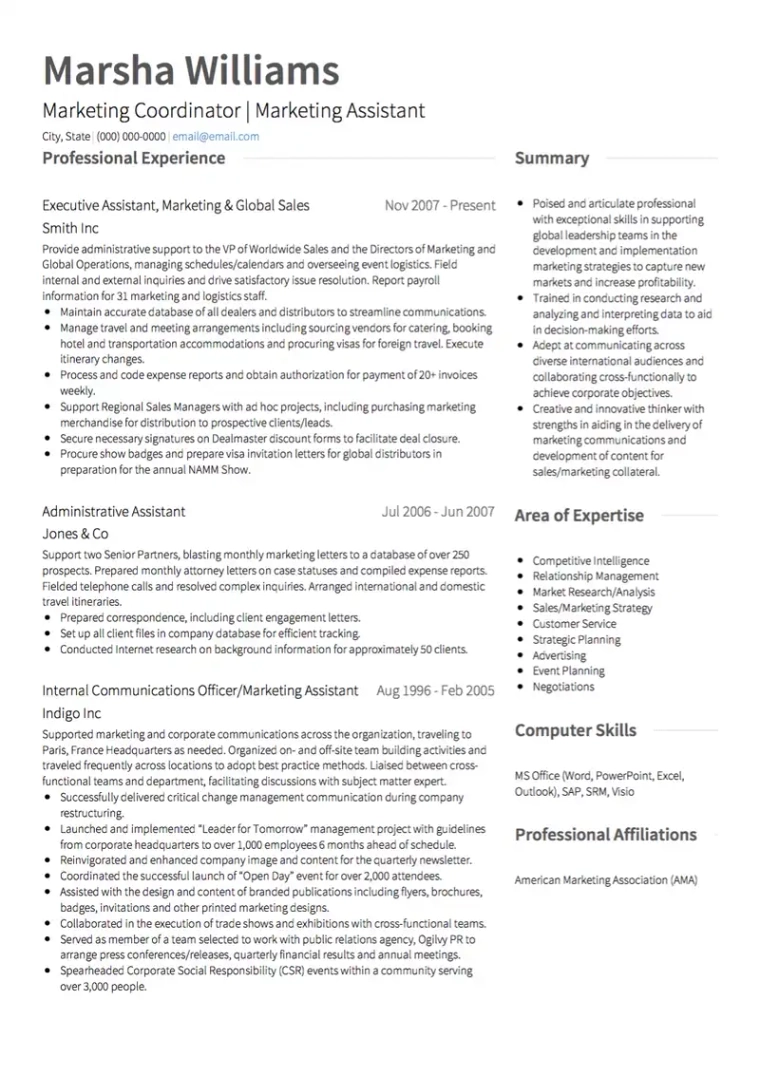
Malta CV Example

How to Write a Malta CV
To write a CV for jobs in Malta, follow these steps:
- Start with Personal Information: At the top of your CV, include your full name, a professional photo (optional but often preferred in Malta), your contact information (phone number and email), nationality, and any work permit or residency details, if applicable.
- Write a Professional Summary or Objective Statement: Tailor this section to the job or industry you’re applying for. If you’re an entry-level professional, clearly state your career goals and motivation for working in Malta.
- List Your Work Experience: Write your work experience in reverse chronological order. For each role, clearly state the company name, your position, dates of employment, and responsibilities. When describing your experience, use the STAR method (Situation, Task, Action, Result). Highlight any relevant international or EU work experience, as Malta values diverse backgrounds and experiences.
- Create a Skills Section: List job-related skills, including any technical skills, and soft skills such as communication and problem-solving. In Malta, adaptability and teamwork are highly valued.
- List Language Skills Separately: Malta is a bilingual country with Maltese and English as the official languages. However, other language skills such as Italian, French, or German can also be an asset due to the country’s diverse tourism and business sectors.
- Include Certifications and Licenses: Highlight any professional certifications or licenses relevant to your industry. This will enhance your credibility and make you stand out to hiring managers.
- Add a Section for References: In Malta, it’s common practice to include a separate section for references, typically mentioning that they are "available upon request." Alternatively, you may include references within your work history if they are particularly relevant to the job.
How to Format a Malta CV
The top CV formatting tips to follow while writing a CV for a job in Malta are:
- Select the Appropriate CV Format - Choose the CV format based on your work experience and industry standards. In Malta, a reverse-chronological format is the most common and recommended, especially for experienced professionals. Functional formats focusing on skills can be considered for career changers or those with limited experience.
- Keep the Length Concise - Aim to keep your CV to one or two pages in length, depending on your experience. For professionals with significant experience, it is acceptable to extend to a maximum of two pages, but be concise. In the case of academic or research-focused CVs, a longer format with more details may be appropriate.
- Use Professional and Readable Fonts - Utilize professional fonts such as Arial, Calibri, or Times New Roman. Ensure that the font size is between 10 to 12 points to maintain readability and a clean, polished look.
- Maintain Adequate Margins - Ensure that your CV has sufficient margins on all sides, ideally around 1 inch (2.5 cm). This creates white space around the text, making your CV easier to read and more visually appealing.
- Apply Appropriate Line Spacing - Use a line spacing of either 1.0 or 1.15 for your CV text. This spacing strikes a balance between compactness and readability, helping employers scan through your content smoothly.
- Tailor the CV to the Maltese Job Market - Customize your CV for the job you’re applying for, considering the local work culture in Malta. Highlight relevant skills, experiences, and achievements, and avoid generic descriptions. Ensure that your CV demonstrates your adaptability and understanding of the Maltese work environment.
These formatting guidelines will help you create a clear and professional CV that meets the expectations of recruiters in Malta.
CV Tips and Rules for Malta
Length: CVs in Malta should be clear and concise, typically not exceeding two pages. Employers value focused content that highlights key qualifications, relevant experience, and achievements.
Language: The primary language for CVs in Malta is English, given its status as an official language and its use in business and professional contexts. However, if applying for a role in government or where local knowledge is crucial, demonstrating proficiency in Maltese can be an advantage. Including sections in Maltese may be beneficial if the job description specifically requests it.
CV or Resume: In Malta, the term "CV" (Curriculum Vitae) is more commonly used than "resume." A CV tends to be more detailed, covering academic qualifications, work experience, skills, and relevant achievements. For most job applications in Malta, a comprehensive CV is expected rather than a shorter, resume-style document. However, always pay close attention to the job advertisement to determine whether a tailored, concise version may be preferred.
How to List Personal Information on a Malta CV
To list personal information on a Malta CV, include the following in your CV header:
- Full Name: Display your full name prominently at the top of the CV.
- Contact Information: Include your phone number with the country code (+356), a professional email address, and your city or town of residence.
- LinkedIn Profile (Optional): If your LinkedIn profile is up-to-date and reflects your professional experience well, you can include a link to it.
- Date of Birth and Nationality: While not mandatory, it is common practice in Malta to include your date of birth and nationality. This can help employers understand your eligibility to work in Malta.
- Work Permit or Residency Status: If you are not an EU citizen, it’s advisable to mention your residency or work permit status to clarify your eligibility to work in Malta.
- Marital Status (Optional): Generally omitted unless the job description specifically requires it or you feel it’s relevant to the application.
How to List Your Name on a Malta CV
Follow these instructions while listing your name on a Malta CV: Placement: Place your full name prominently at the top of the CV. Formatting: Use a slightly larger font size and consider bolding your name for emphasis, but avoid full capitalization unless for the surname, if desired.
Photo on a Malta CV
Including a photo on a CV in Malta is generally common but not mandatory. Here’s what to consider if you decide to add a photo:
- Placement: Place your professional photo in one of the top corners of your CV, usually the upper right or left side.
- Size: Keep your photo small and passport-sized, around 2x2 inches or 4x4 centimeters.
- Attire: Dress professionally in business attire that reflects your industry norms. Avoid overly casual or flashy clothing.
- Background: Use a plain, neutral background to keep the focus on you. Busy or colorful backgrounds can be distracting.
- Expression: Aim for a neutral or friendly expression, conveying professionalism without appearing overly stern.
- Quality: Ensure your photo is clear, well-lit, and of high quality. Blurry or low-resolution images can leave a negative impression.
How to List Your Nationality on a Malta CV
List your nationality in the personal information section. This is especially important for job applicants from outside the EU to indicate work eligibility.
Some examples of how to list nationality on a Malta CV: Nationality: Maltese Nationality: Italian Nationality: Australian
How to List Your Contact Information on a Malta CV
When listing your contact information on a Malta CV, include a professional email address and a phone number with the Malta country code (+356). You should also add your city or town of residence.
How to Mention Your Work Permit or Residency Status on a Malta CV
If you’re not an EU citizen, it’s advisable to indicate your work permit or residency status in the personal information section. You can mention it as follows:
- Residency Status: Permanent Resident
- Work Permit: Valid Employment Visa
Tailoring these elements to the Maltese market will make your CV more aligned with local norms and expectations.
How to Write a Winning Work Experience on a Malta CV
To effectively write your work experience on a Malta CV, follow these guidelines:
- Use Reverse Chronological Order: List your most recent job at the top, followed by earlier roles.
- Use Bullet Points: Break down each job’s key responsibilities and achievements using bullet points for better readability and clarity.
- Highlight Impact and Achievements: Emphasize what you accomplished and the positive impact you made. Whenever possible, quantify your achievements with numbers, percentages, or other measurable results.
- Start with Action Verbs: Begin each bullet point with a strong action verb to convey a sense of initiative and impact.
How to List Your Work Experience in Malta
When listing your work experience in a Malta CV, make sure to include the following:
- Job Title: Clearly mention the job title you held.
- Company Name: State the name of the company or organization where you worked.
- Location: Specify the city and country where the company is located (e.g., Valletta, Malta).
- Dates of Employment: Include the start and end dates of your employment (month and year).
- Responsibilities and Achievements: In bullet points, describe your main responsibilities and highlight any notable achievements. Focus on achievements that are quantifiable or showcase your contribution to the organization. For example:
- Led a team of 10 in developing a new project management system, increasing efficiency by 20% within the first quarter.
- Exceeded sales targets by 30% through effective client relationship management and strategic marketing initiatives.
Education Background on a Malta CV
When detailing your education background on a Malta CV, include the following information:
- Degrees Obtained: List your degrees starting with the highest level of education achieved. Clearly mention the type of degree (e.g., Bachelor’s, Master’s, Diploma) and the field of study.
- Institutions Attended: Provide the full name of the institutions where you obtained your qualifications, along with their location (city and country).
- Graduation Dates: Include the graduation dates for each degree. Mention the month and year of graduation to give a clear timeline of your education.
- Majors/Fields of Study: Specify the major or field of study for each degree. This helps employers gauge your academic background and area of expertise.
- Relevant Courses or Projects: Optionally, include relevant courses, projects, or modules that showcase your skills or knowledge related to the job you are applying for.
Example Format to List Education on a Malta CV
Example 1:
Degree: Master of Science in Marketing Institution: University of Malta, Msida, Malta Graduation Date: November 2021 Major: Marketing and Digital Strategy Relevant Projects: Developed a digital marketing campaign strategy for a local NGO, resulting in a 40% increase in online engagement.
Example 2:
Degree: Bachelor of Arts in European Studies Institution: University of Malta, Msida, Malta Graduation Date: June 2019 Major: European Studies and International Relations Relevant Courses: European Policy Analysis, Political Economy of the EU, Research Methods in Political Science
Example 3:
Degree: Diploma in Tourism and Hospitality Management Institution: MCAST, Paola, Malta Graduation Date: October 2017 Major: Hospitality Management Relevant Projects: Led a research project on sustainable tourism practices in Malta, collaborating with local tourism boards.
How to List Skills on Your Malta CV
When listing your skills on a Malta CV, follow these guidelines:
- Create a Separate Skills Section: Add a dedicated section titled “Skills” to your CV. This section should be clearly distinguishable to allow hiring managers to quickly review your core competencies.
- List Relevant Job-Related Skills: Start by listing the most relevant skills for the job you are applying for. Tailor this section to the job description and prioritize skills that are specifically requested by employers. Examples include project management, digital marketing, sales strategies, etc.
- Include Technical Skills: If your role requires technical skills, such as knowledge of specific software, tools, or programming languages, make sure to include them in this section. For example: “Proficient in MS Excel and QuickBooks” or “Experienced with AutoCAD.”
- Highlight Soft Skills: Employers in Malta value communication, teamwork, problem-solving, and adaptability. List your soft skills that demonstrate your ability to collaborate effectively and handle challenges. For example: “Strong interpersonal skills” or “Adaptable in fast-paced work environments.”
- Language Proficiency: If you are fluent in more than one language, consider listing language skills in this section or in a dedicated “Languages” section. In Malta, proficiency in English and Maltese is highly regarded, along with other European languages like Italian or French.
- Prioritize Skills by Relevance: Organize the skills from the most relevant to least relevant for the position you’re applying to. This ensures that the hiring manager sees your key qualifications first.
Example Format for Skills Section on a Malta CV
Skills
- Project Management: Successfully led multiple projects from planning to completion, ensuring deadlines and budgets were met.
- Digital Marketing: Proficient in social media marketing, SEO, and content strategy, increasing online engagement by 25%.
- Communication: Strong written and verbal communication skills, with experience in public speaking and client presentations.
- Technical Skills: Advanced knowledge of Microsoft Excel, WordPress, and Adobe Photoshop.
- Language Skills: Fluent in English and Maltese, conversational in Italian.
What type of CV is preferred in Malta?
In Malta, a traditional reverse-chronological CV is the most preferred format. This format emphasizes work experience and lists jobs in order from most recent to oldest. Employers appreciate this format as it provides a clear and easy-to-follow timeline of your career progression. However, if you’re a recent graduate or changing careers, you can use a skills-based or functional CV to highlight relevant competencies and achievements. In all cases, ensure that your CV is tailored to the job requirements, concise, and includes only pertinent information.
Should I include a cover letter with my CV in Malta?
Yes, including a cover letter with your CV is highly recommended in Malta. A cover letter allows you to introduce yourself and explain why you are a suitable candidate for the job. It gives you the opportunity to highlight specific skills and experiences that align with the position and the company’s needs. In Malta, recruiters and employers appreciate receiving cover letters as it shows your commitment and attention to detail. Always personalize your cover letter to each application, addressing the hiring manager by name whenever possible.
What format should my CV file be in when applying for jobs in Malta?
When submitting your CV for jobs in Malta, it is best to use a PDF format unless the job advertisement specifies otherwise. A PDF ensures that your formatting remains consistent and that your CV can be viewed correctly on various devices and software platforms. Additionally, using a PDF minimizes the risk of accidental edits or formatting changes. If an employer requests a different format, such as a Word document, then it’s acceptable to submit it as requested.
Is it common to include references in a Malta CV?
In Malta, it is not necessary to list references directly on your CV unless specifically requested by the employer. Instead, you can include a line at the end of your CV indicating that “References are available upon request.” This keeps your CV concise and allows you to provide reference details later in the hiring process when requested by the employer. Including this note shows that you are prepared to provide references while maintaining the confidentiality of their contact information.
Should I mention my hobbies and interests on a Malta CV?
Mentioning hobbies and interests on a Malta CV is optional and depends on the relevance of those activities to the job. If your hobbies or interests demonstrate transferable skills, such as teamwork, leadership, or creativity, you can include them to give the employer additional insight into your personality and character. For example, if you volunteer regularly or participate in team sports, this could reflect well on your collaboration skills and community involvement. However, avoid including irrelevant or overly personal activities that don’t add value to your candidacy.
What is the ideal file size for submitting a CV to employers in Malta?
The ideal file size for submitting a CV to employers in Malta should generally not exceed 1 to 2 MB. Keeping your CV within this size range ensures that it can be easily uploaded and transmitted via email without encountering issues related to file size limits. To maintain a manageable file size, use compressed images for any photos you include and avoid embedding unnecessary graphics or designs. A clean and simple layout not only reduces the file size but also enhances readability.
Should I follow up after submitting my CV to an employer in Malta?
Yes, following up after submitting your CV is considered a professional and proactive step in Malta. It demonstrates your interest in the position and keeps your application top of mind for the employer. If no response has been received within a week or two after submission, sending a polite follow-up email to the hiring manager or recruiter is appropriate. Express your continued interest in the role and inquire about the status of your application. Be concise and respectful, as Maltese employers appreciate a courteous approach.
How important is it to tailor my CV for each job application in Malta?
Tailoring your CV for each job application in Malta is crucial for increasing your chances of success. Employers value candidates who take the time to customize their CV to align with the specific job requirements and company culture. A well-tailored CV demonstrates that you understand the role and have carefully considered how your skills and experience fit the position. It’s advisable to adjust your professional summary, key skills, and relevant experiences to match the language and criteria mentioned in the job advertisement.
Copyright ©2025 Workstory Inc.