Dubai Resume: How to Write, Formats, Templates, and Much More
Create a Dubai resume that lands your dream role without 2024 guide on how to create a Dubai resume with examples, tips on how to write and our Dubai templates.
How to Write a Dubai Resume
If you're making a resume for jobs in Dubai, here's what to do:
-
- Start with your basic info: your full name, picture, where you're from, how to reach you, and your visa status.
-
- Then, write a short bit about yourself and what you want to do. If you're new to the job scene, say what you hope to achieve.
-
- Next, talk about your work history, starting with your most recent job. Say where you worked, what you did, and for how long. Also, mention any experience you have in Dubai or nearby places.
-
- Make a section for your skills. List the things you're good at for the job, like using a computer or being friendly.
-
- Tell them what languages you speak. Being able to speak different languages is really useful in Dubai.
-
- If you have any certificates or licenses, put them in a section too. These can help show you're qualified.
-
- Lastly, give them a list of people who can say good things about you. You can put this in a separate part or with your work history.
How to Format a Dubai Resume
- When formatting your Dubai resume, keep it professional and easy to read. Start by choosing a clean font like Arial or Times New Roman, and set the font size to between 10 and 12 points.
- Your resume should not exceed two pages. Begin with your personal information at the top, followed by your professional summary or objective. This structure immediately presents your most relevant qualifications.
- Maintain consistent formatting throughout your resume. Use bullet points to list your skills and achievements under each job in the work experience section.
- Use bold and italic fonts sparingly, primarily for section headings and job titles to help them stand out. Ensure adequate white space around sections to avoid a cluttered look.
- Lastly, save your resume in PDF or Word format to preserve the layout and ensure that it appears the same way on any device or software.
Popular Dubai Resume Examples
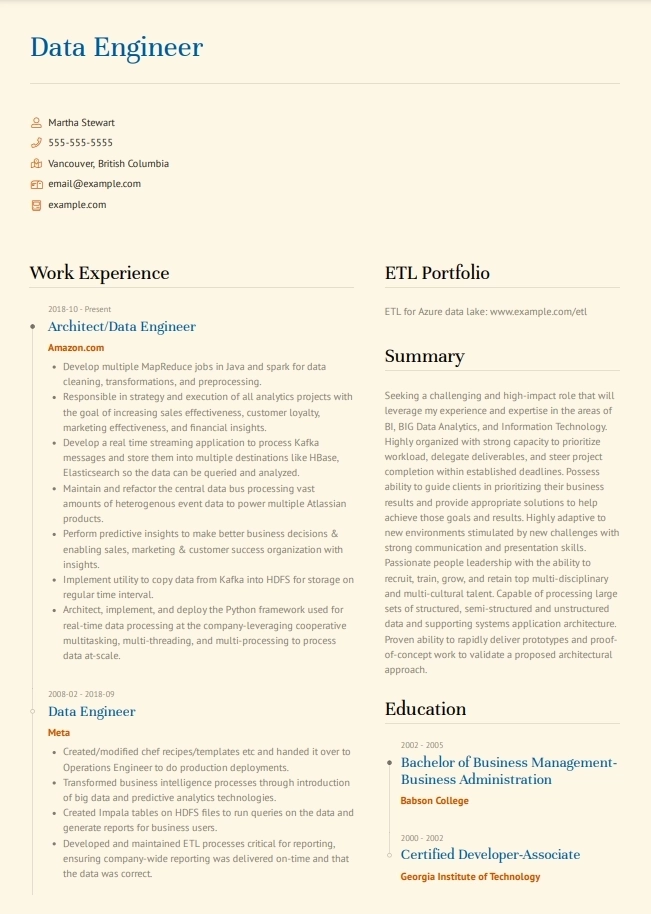
Data Engineering Resume Example for Dubai

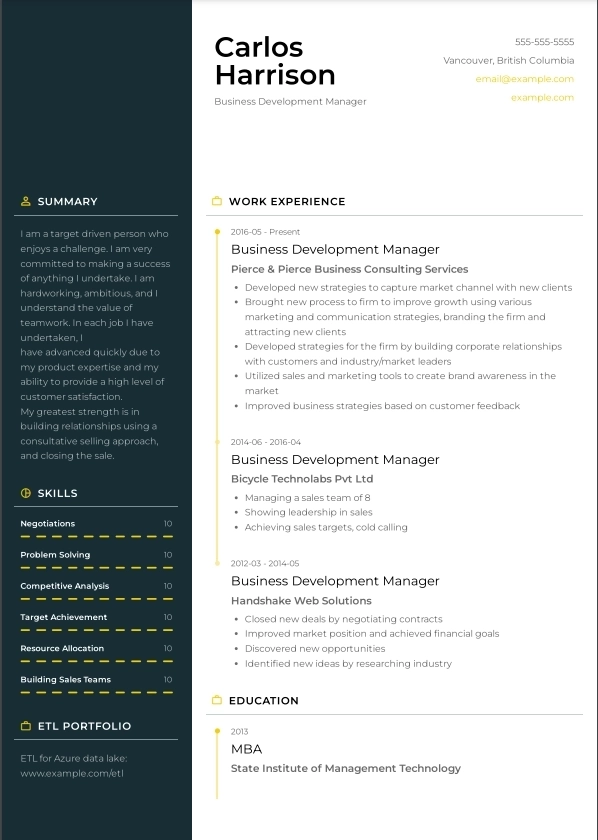
Sales Dubai Resume Example

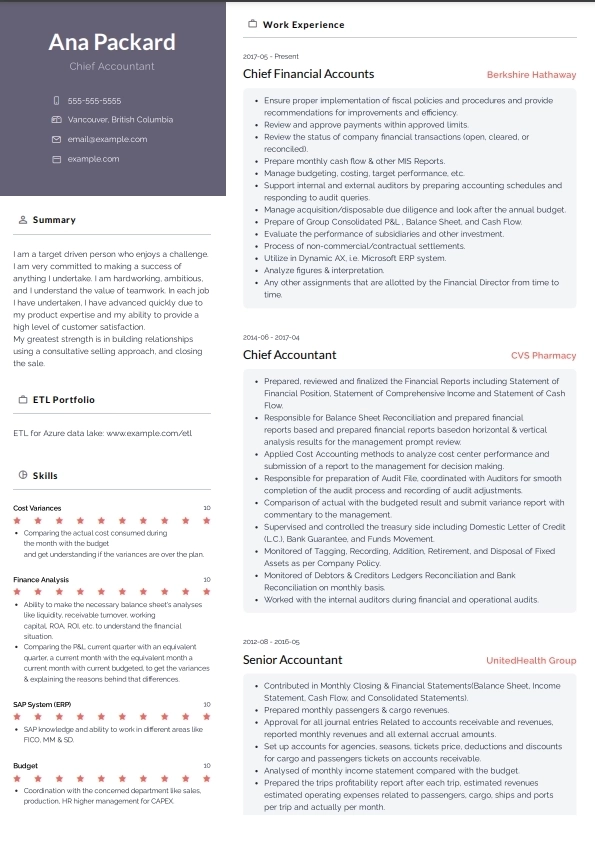
Dubai Resume Example for Accountants

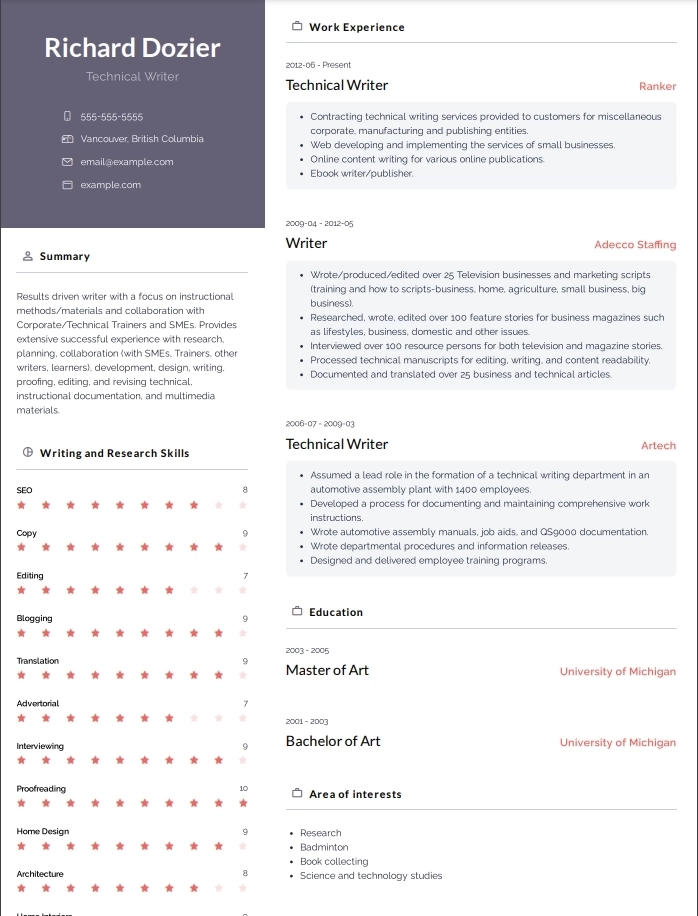
Technical Writer Resume Example for Dubai

Dubai Resume Example for Executives


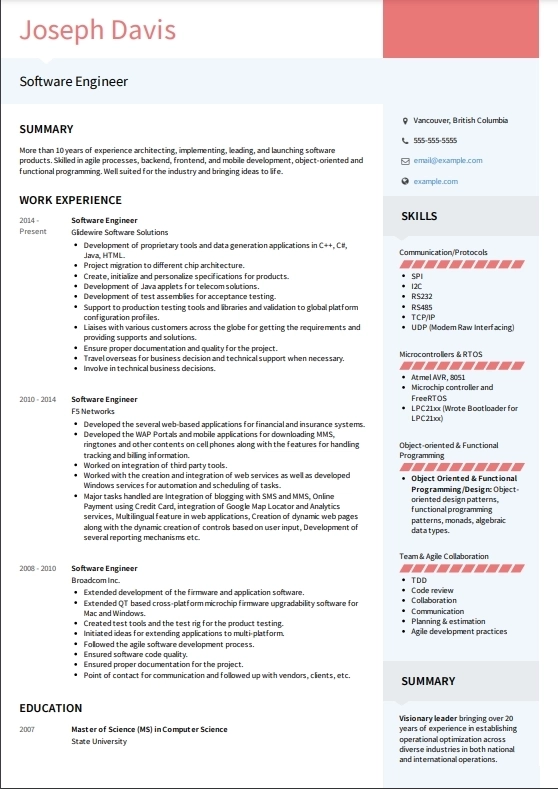
Software Engineering Resume Example for Dubai

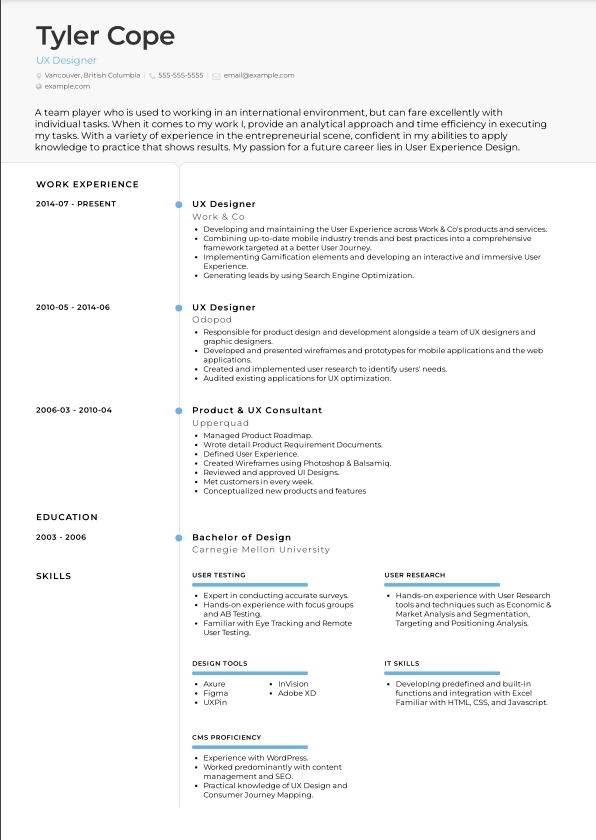
Designer Resume Example for Dubai
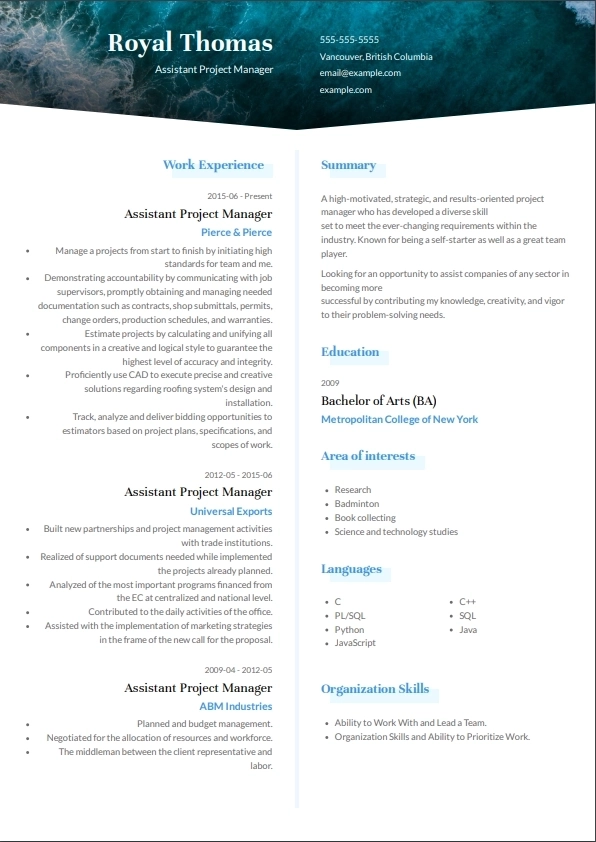
Project Management Resume for Dubai

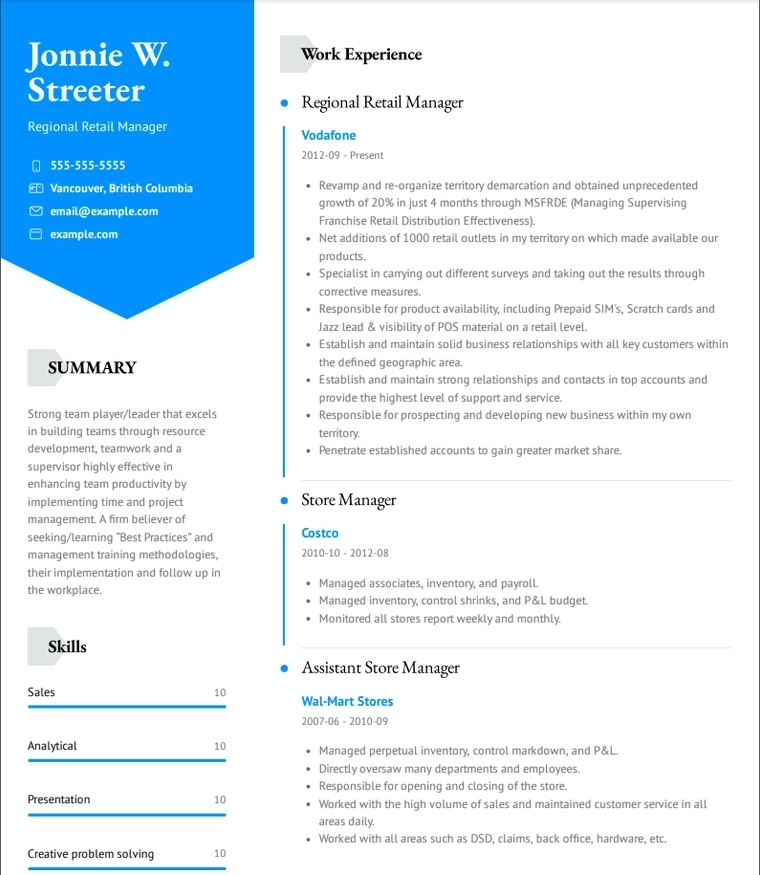
Retail Dubai Resume Example

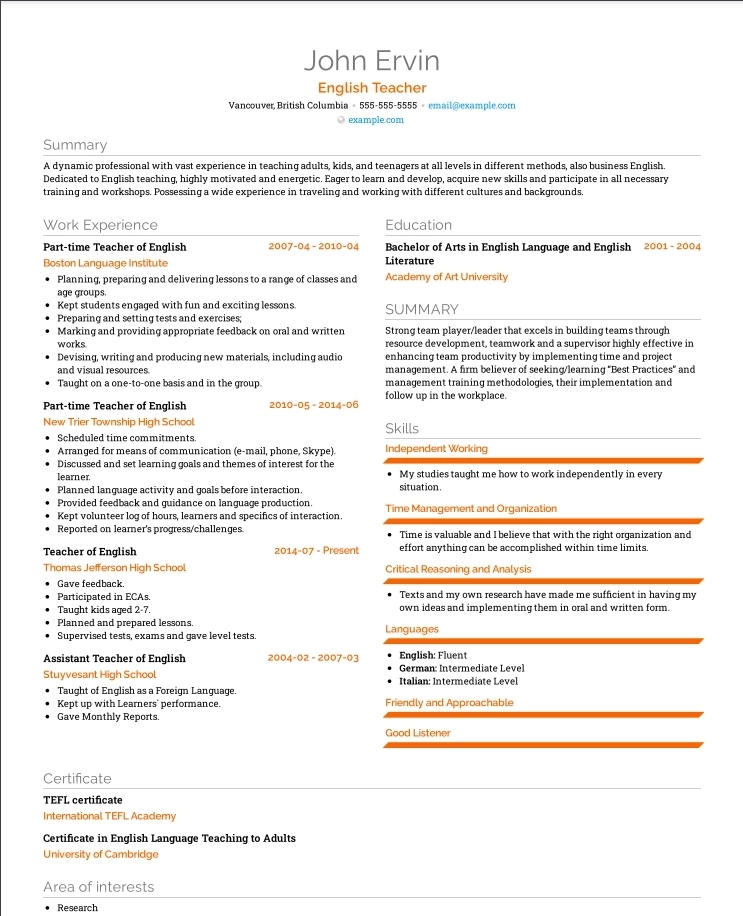
Teaching Resume for Dubai

How to List Personal Information on Dubai Resume
When listing personal information on a Dubai resume, ensure your header includes the following:
- Full Name: Place it prominently at the resume's top.
- Contact Information: Include your phone number (with country code +971), a professional email address, and the city where you live.
- LinkedIn Profile (Optional): If you have one that's current and professional, adding a link can be beneficial.
- Date of Birth and Nationality: These are optional but often included. Use your judgment based on personal preference.
- Marital Status and Family Information: Usually left out, unless directly relevant to the job. For instance, if you're applying for a family counselor position, you might mention your marital status.
How to List Your Name on a Dubai Resume
When listing your name on a resume for Dubai, follow these guidelines:
-
Full Name: Place your full name prominently at the top of the resume. Make sure it stands out and is easy to read.
- Example: Mohammed Ali Khan
-
Professional Title (Optional): Optionally, you can add a professional title below your name that summarizes your expertise or career focus.
- Example: Software Engineer | Experienced Sales Manager
-
Formatting: Use a font size slightly larger than the rest of the text to make your name noticeable.
- Example:
MOHAMMED ALI KHAN
- Example:
-
Avoid Nicknames: Use your full legal name rather than any nicknames or abbreviations.
- Example: Use "Mohammed" instead of "Mo" or "Ali" instead of "Al".
-
Consistency: Ensure that the name you use on your resume matches the name on your official documents and professional profiles.
- Example: If your name is "Mohammed Ali Khan" on LinkedIn, use the same on your resume.
By following these guidelines, you present your name professionally and ensure it catches the recruiter's eye.
Photo on a Dubai Resume
In Dubai, including a professional photograph on your resume is a common practice, but it's important to adhere to specific guidelines:
-
Formal Attire: Dress conservatively and professionally, reflecting local cultural norms. For men, a suit or collared shirt is appropriate, while women should opt for business attire with modest neckline and sleeves.
-
Cultural Sensitivity: Be mindful of cultural sensitivities. Avoid clothing or accessories that may be deemed inappropriate in the local context.
-
Neutral Background: Choose a background that is plain and neutral in color, such as a solid wall or backdrop. This ensures the focus remains on you and avoids any distractions.
-
Friendly Expression: Maintain a warm and approachable expression, with a natural smile. Avoid overly stern or casual expressions.
-
Head and Shoulders: Your photograph should primarily showcase your head and shoulders, ensuring your face is clearly visible. Avoid full-body shots or images where you appear too distant.
-
Quality Image: Use a recent, high-resolution photograph that accurately represents your appearance. Blurry or pixelated images may create a negative impression.
-
Consistency: Ensure your photograph aligns with your appearance during interviews. Consistency in presentation helps maintain professionalism.
How to List Your Nationality on a Dubai Resume
When indicating your nationality on a resume for Dubai, consider these guidelines:
-
Inclusion: Including your nationality is common practice in Dubai resumes and can provide important context for employers.
-
Placement: Typically, your nationality is listed in the personal information section, along with your contact details and other pertinent information.
-
Format: Write your nationality directly below your name or in a separate line. Keep it simple and clear.
-
Be Specific: Specify your nationality accurately. Avoid using broad terms like "Middle Eastern" or "Arab" if they don't precisely reflect your citizenship.
-
Optional: While it's customary to include your nationality, it's not obligatory. If you prefer not to disclose this information, it's generally acceptable.
-
Respect Cultural Sensitivities: Be mindful of cultural sensitivities and local regulations regarding the disclosure of nationality.
Example John Smith Canadian Dubai, UAE Phone: +971 XXX XXX XXX Email: john.smith@email.com
How to List Your Contact Information on Dubai Resume
When listing contact information on your Dubai resume, add the following details:
- Name: Clearly display your full name.
- Phone: Add your UAE phone number (include country code +971).
- Email: Provide a professional email address.
- City: Specify your current city, such as Dubai or Abu Dhabi.
Example 1: Name: Sara Khalid Phone: +971 XXX XXX XXX Email: sara.khalid@email.com
Example 2: Name: Ahmed Hassan Phone: +971 XXX XXX XXX Email: ahmed.hassan@email.com
Example 3: Name: Maryam Ali Phone: +971 XXX XXX XXX Email: maryam.ali@email.com
How to Mention Your Visa Status on Dubai Resume
Include visa information near your contact details, using clear terms like "Resident Visa." While common, it's optional. Ensure legal compliance with local regulations.
Some examples of how to list visa details on a Dubai resume:
-
Sarah Ahmed
- Phone: +971 XXX XXX XXX
- Email: sarah.ahmed@email.com
- Visa Status: Employment Visa
- City: Dubai, UAE
-
Ali Khan
- Phone: +971 XXX XXX XXX
- Email: ali.khan@email.com
- Visa Status: Dependent Visa
- City: Abu Dhabi, UAE
-
Fatima Patel
- Phone: +971 XXX XXX XXX
- Email: fatima.patel@email.com
- Visa Status: Visit Visa
- City: Sharjah, UAE
-
Ahmed Hassan
- Phone: +971 XXX XXX XXX
- Email: ahmed.hassan@email.com
- Visa Status: Student Visa
- City: Ras Al Khaimah, UAE
-
Maryam Ali
- Phone: +971 XXX XXX XXX
- Email: maryam.ali@email.com
- Visa Status: Tourist Visa
- City: Fujairah, UAE
How to Write a Winning Work Experience on Dubai Resume
The best way to write a winning work experience for your Dubai resume is: Chronological Order:
- Arrange your work history in reverse chronological order, starting with your most recent job.
- Bullet Points: Use bullet points to succinctly outline your work experience, making it easier for recruiters to scan.
- Highlight Achievements: Emphasize your accomplishments and the measurable impact you've had in each role. Incorporate numbers and metrics where possible to quantify your success.
- Action Verbs: Begin each bullet point with strong action verbs to convey your responsibilities and achievements effectively.
How to List your UAE or GCC Work Experience on Dubai Resume
When listing UAE or GCC work experience on a Dubai resume, arrange in reverse chronological order with clear bullet points highlighting responsibilities and achievements. Use action verbs and quantify impact where possible to demonstrate suitability for the role. Tailor descriptions to match job requirements for maximum relevance.
Example of listing Dubai work experience: Senior Marketing Manager ABC Company, Dubai Developed and executed digital marketing campaigns, resulting in a 30% increase in online sales. Led a team of five marketing professionals, achieving a 15% improvement in campaign efficiency. Implemented customer segmentation strategies, leading to a 20% boost in customer engagement.
Education Background on Dubai Resume
When outlining your educational background on a Dubai resume, include the following details:
- Degrees Attained: Begin with the highest level of education completed, specifying the type of degree (e.g., Bachelor's, Master's) and the field of study.
- Institutions Attended: Clearly state the names of the institutions from which you earned your degrees, providing both the full institution name and its location (city and country).
- Graduation Dates: Include precise graduation dates for each degree achieved, indicating the month and year of graduation.
- Majors/Fields of Study: Specify the majors or fields of study for each degree obtained, offering insight into your academic specialization and expertise.
- Relevant Courses or Projects: Optionally, include any pertinent courses or projects completed during your education that showcase your skills and proficiency in your chosen field. This supplementary information can further demonstrate your qualifications to prospective employers in Dubai's competitive job market.
Example Format to List Education on Dubai resume
Bachelor of Business Administration (BBA) Dubai University, Dubai, UAE Graduation Date: May 2020 Major: Marketing
Master of Science in Mechanical Engineering American University of Sharjah, Sharjah, UAE Graduation Date: December 2018 Major: Mechanical Engineering
Diploma in Digital Marketing Dubai Institute of Marketing, Dubai, UAE Graduation Date: June 2017
Skills to Emphasize on Your Dubai Resume
- Bilingual Proficiency: Fluent in Arabic and English languages, essential for effective communication in Dubai's diverse workplace.
- Cross-Cultural Communication: Ability to interact and collaborate with individuals from various cultural backgrounds, crucial in the multicultural environment of Dubai.
- Technical Proficiency: Proficient in relevant technical skills specific to your field, demonstrating competency and expertise.
- Leadership and Management: Strong leadership abilities to lead teams and manage projects effectively, essential for navigating Dubai's competitive job market.
- Adaptability and Flexibility: Capacity to adapt to changing environments and embrace new challenges, reflecting Dubai's dynamic business landscape.
- Customer Service Excellence: Commitment to delivering exceptional customer service experiences, a cornerstone of Dubai's service-oriented industries.
- Teamwork and Collaboration: Demonstrated ability to work collaboratively in diverse teams, fostering a culture of cooperation and synergy.
- Problem-Solving and Critical Thinking: Aptitude for identifying and resolving complex issues using innovative and analytical approaches, valued in Dubai's fast-paced work environment.
- Time Management and Organization: Strong organizational skills to effectively prioritize tasks and meet deadlines in a busy and demanding workplace.
- Networking Proficiency: Ability to build and maintain professional relationships, leveraging networks for career advancement opportunities in Dubai's interconnected business community.
How to List Languages on a Dubai Resume
Language proficiency can be listed either in a dedicated language section or within the general skills section. Prioritize a separate "Language Skills" section, but if unavailable, incorporate proficiency under general skills to highlight abilities, especially in Arabic and English, crucial for Dubai's diverse work environment.
Language Proficiency With Detailed Scores Example
- English: Fluent (IELTS: Overall Band Score 8.0)
- Arabic: Native Speaker
- French: Intermediate (DELF B2)
Listing Language with Examination Authority Example
- English: Fluent (TOEFL: 110)
- Arabic: Native Speaker
- Spanish: Intermediate (DELE: B2)
Listing Language Skills with Center Certification Example
- English: Advanced (Cambridge English: C1)
- Arabic: Native Speaker
- German: Beginner (Goethe-Zertifikat: A1)
How to Mention Arabic Proficiency on a Dubai Resume
- Arabic: Native Speaker
- English: Fluent (TOEFL: 110)
- French: Intermediate (DELF B2)
These examples demonstrate different ways to effectively list language proficiency on a Dubai resume, including detailed scores, examination authority, and center certification. Additionally, emphasizing native Arabic proficiency is essential for roles in the UAE's multicultural environment.
How to List References on Dubai Resume
When including references on a Dubai resume, follow these instructions:
- Separate Section: Create a distinct section titled "References" or "Professional References" to clearly designate the information as pertaining to your references.
- Provide Details: For each reference, furnish their full name, job title, company name, email address, and phone number, ensuring accuracy and completeness.
- Professional Relationship: Briefly mention your professional relationship with each reference, whether they are a former supervisor, colleague, or other relevant connection.
- Obtain Permission: Obtain explicit permission from potential references before listing them and ensure their willingness to provide a positive recommendation.
Example of References on Dubai Resume
References Dubai resume reference example 1: John Smith Job Title: Senior Manager Company: ABC Corporation Email: john.smith@example.com Phone: +971 50 123 4567 Professional Relationship: Former Supervisor
Dubai resume reference example 2: Sarah Johnson Job Title: Marketing Director Company: XYZ Company Email: sarah.johnson@example.com Phone: +971 55 987 6543 Professional Relationship: Colleague
Copyright ©2024 Workstory Inc.