Denmark CV: How to Write, Formats, Templates, and Much More
Learn how to create a standout Denmark CV. Get tips on essential sections, popular formats, legal requirements, and industry-specific advice to enhance your job application.

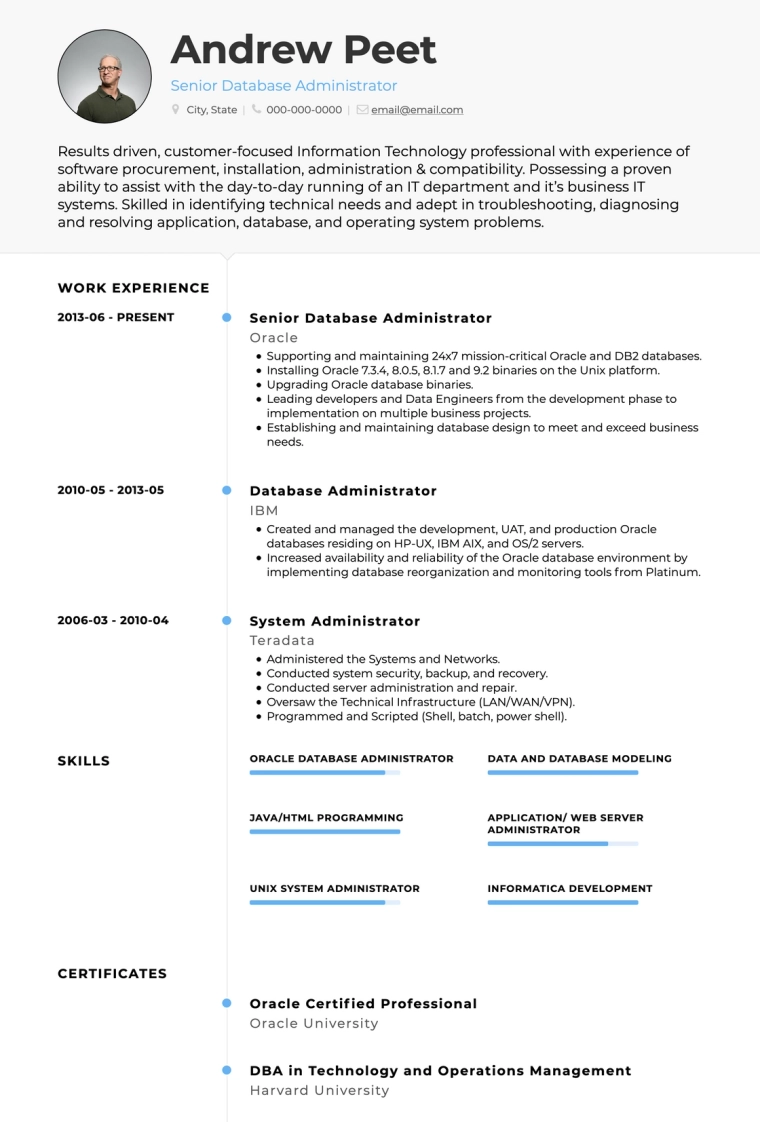
For more templates browse our 30+ CV templates here.
How to Write a Denmark CV
To write a Denmar CV, follow these tips:
- Personal Information - Include your full name, address, phone number, and email. A professional photo is optional but can be included if it aligns with the industry standards in Denmark.
- Professional Summary - Write a concise, engaging summary of your career highlights and objectives. Keep it to 3-4 sentences to quickly capture the employer's interest.
- Work Experience - List your work experience in reverse chronological order. Include job title, company name, location, dates of employment, and key responsibilities and achievements. Use bullet points for clarity and focus on quantifiable achievements.
- Education - Detail your educational background starting with the most recent degree. Include the degree obtained, institution name, location, and dates attended. Mention any relevant coursework, projects, or honors.
- Skills - Highlight your relevant skills, focusing on those that match the job description. Include both hard and soft skills, ensuring they are directly applicable to the position you are applying for.
- Certifications and Training - Include any additional certifications, courses, or training programs relevant to the job. Provide details such as the institution, date of completion, and a brief description of the qualification.
- Languages - Specify your proficiency level for each language (native, fluent, intermediate, basic). Multilingual abilities are highly valued in Denmark, especially proficiency in Danish and English.
- Professional Associations - Mention any professional associations or memberships that are relevant to your field. This shows your engagement and commitment to your profession.
- Volunteer Work - Include volunteer work if it is relevant to the job or demonstrates valuable skills and experiences. This can provide additional insight into your abilities and character.
- References - Instead of listing references, you can mention that they are available upon request. This keeps your CV concise and focused on your qualifications.
By following these steps, you can create a Denmark CV that meets local hiring standards and effectively showcases your qualifications to potential employers.
How to Format a Denmark CV
To format your Denmark CV properly, follow these tips:
- Length - Keep your CV concise and to the point. For most professionals, a one-page CV is ideal. If you have extensive experience, a two-page CV is acceptable.
- Font and Size - Use a professional, easy-to-read font such as Arial, Calibri, or Times New Roman in size 10-12 points to ensure clarity and readability.
- Margins and Spacing - Maintain consistent margins of 1 inch on all sides. Use adequate white space and line spacing to make your CV easy to read.
- Headings and Sections - Clearly label each section with descriptive headings (e.g., “Work Experience,” “Education,” “Skills”) to guide the reader through your CV.
- Bullet Points - Use bullet points to list responsibilities and achievements under each job title. This format helps break up text and makes key information stand out.
- Consistent Formatting - Ensure consistent formatting throughout your CV, including font style, size, and bullet point style. This uniformity creates a professional and polished appearance.
- Contact Information - Place your contact information at the top of the CV. Include your full name, phone number, email, and address. A professional photo is optional but can be included if it aligns with industry standards.
- Professional Summary - Position your professional summary at the beginning of your CV. This section should be concise and highlight your key achievements and career objectives.
- Reverse Chronological Order - List your work experience and education in reverse chronological order, starting with the most recent. This format helps employers quickly see your latest and most relevant experience.
- File Format - Save and send your CV as a PDF to preserve formatting and ensure it looks the same on any device.
By following these formatting guidelines, you can create a professional, polished CV that aligns with Danish standards and enhances your chances of making a strong impression on potential employers.
Popular Denmark CV Formats
- Reverse Chronological Format - This is the most widely used CV format in Denmark. It lists your work experience and education in reverse chronological order, starting with the most recent. This format highlights your career progression and is ideal for individuals with a steady work history.
- Functional Format - This format focuses on your skills and experience rather than your chronological work history. It's suitable for individuals with gaps in their employment, those changing careers, or those with a diverse range of skills.
- Combination Format - This format blends elements of both the reverse chronological and functional formats. It starts with a skills summary followed by a detailed work history. This format is perfect for those with extensive experience and a strong skill set.
- Targeted Format - Tailored to a specific job or industry, this format highlights the most relevant skills and experiences for the position you are applying for. It shows employers that you are a perfect fit for the role.
Examples of Layout Fit Within Different Danish Locations and Jobs
Copenhagen - Technology Sector
- Format: Reverse Chronological
- Reason: The tech industry in Copenhagen values continuous professional development and career progression. Highlighting your latest roles and achievements can show your adaptability and growth in a rapidly evolving field.
Aarhus - Creative Industries
- Format: Combination
- Reason: Aarhus, known for its vibrant creative scene, benefits from a CV that showcases both skills and experience. A combination format can highlight your creative skills and relevant job experience, making you stand out in roles such as graphic design, marketing, or content creation.
Odense - Healthcare Sector
- Format: Functional
- Reason: For healthcare professionals in Odense, emphasizing skills and certifications is crucial. A functional format can help highlight your specialized skills, training, and any relevant experience, even if it is not continuous.
Aalborg - Engineering and Manufacturing
- Format: Reverse Chronological
- Reason: Aalborg’s strong industrial and engineering sectors appreciate a clear and detailed work history. A reverse chronological format helps potential employers see your technical expertise and project experience in an organized manner.
Esbjerg - Energy Sector
- Format: Targeted
- Reason: Esbjerg’s energy sector, including renewable energy and oil and gas, requires specific technical skills. A targeted CV format that emphasizes relevant certifications, skills, and project experience can be very effective.
Roskilde - Education and Research
- Format: Combination
- Reason: In the education and research fields in Roskilde, a combination format that showcases both your academic achievements and professional experience can highlight your expertise and versatility.
Silkeborg - Tourism and Hospitality
- Format: Functional
- Reason: For roles in tourism and hospitality, where customer service skills are paramount, a functional format can highlight your abilities and relevant experience, even if your job history is varied.
By selecting the appropriate CV format for your specific industry and location within Denmark, you can effectively showcase your qualifications and increase your chances of securing your desired job.
Do I need to include a professional photo on my Denmark CV?
Including a professional photo is optional in Denmark. While it's common in some industries, it’s not mandatory. If you choose to include a photo, make sure it is professional and appropriate for the job you are applying for.
How should I handle employment gaps on my Denmark CV?
If you have employment gaps, address them briefly in your CV or cover letter. Explain any productive activities during the gap, such as further education, volunteering, or freelancing. Using a functional or combination format can help focus on skills rather than chronological work history.
Is it necessary to translate my CV into Danish?
If the job posting is in Danish or the company operates primarily in Denmark, it is recommended to submit your CV in Danish. For international companies or roles where English is required, an English CV is appropriate.
How detailed should the education section be on my Denmark CV?
Include your most recent and relevant educational qualifications. Provide details such as the degree obtained, institution name, location, and dates attended. Mention any relevant coursework, projects, or honors that align with the job requirements.
Should I list all of my work experience on my Denmark CV?
Focus on the most relevant work experience related to the job you are applying for. Generally, include work experience from the last 10-15 years. Summarize earlier roles briefly if they add value to your overall qualifications.
How do I tailor my Denmark CV for different job applications?
Customize your CV by highlighting skills and experiences that are most relevant to each job. Use keywords from the job description and adjust your professional summary to reflect the specific role you are targeting.
What sections are essential on a Denmark CV?
Essential sections include Personal Information, Professional Summary, Work Experience, Education, Skills, and Certifications. Depending on the job, you might also include sections for Languages, Professional Associations, Volunteer Work, and Hobbies.
How can I make my Denmark CV stand out?
Use a clean and professional layout, include quantifiable achievements, and tailor the content to the job description. Highlight unique skills or experiences that set you apart from other candidates.
Is it important to include a cover letter with my Denmark CV?
Yes, including a cover letter is important. A well-crafted cover letter can provide additional context about your skills and experiences and explain why you are a good fit for the role.
How should I list my language skills on a Denmark CV?
Specify your proficiency level for each language (native, fluent, intermediate, basic). Indicating your language skills clearly can be advantageous, especially if the job requires multilingual capabilities.
Are references necessary on a Denmark CV?
It is not necessary to include references directly on your CV. Instead, you can mention that references are available upon request. This keeps your CV concise and focused on your qualifications.
What should I avoid including on my Denmark CV?
Avoid including personal information such as age, marital status, religion, or national identification numbers. Focus on professional details relevant to the job. Also, avoid using jargon, overly complex language, or unprofessional email addresses.
Are there any legal requirements for personal information on a Denmark CV?
Under Danish law, you are not required to include sensitive personal information such as age, marital status, religion, or national identification numbers on your CV. Including such information is optional and should be avoided to prevent potential discrimination.
Can an employer in Denmark request a photo on a CV?
While it is common practice to include a photo on a CV in Denmark, it is not legally required. An employer cannot reject your application solely based on the absence of a photo. Including a photo is optional and should be considered based on industry norms.
What are the data protection considerations when submitting a CV in Denmark?
When submitting a CV in Denmark, it must comply with the General Data Protection Regulation (GDPR). Ensure that your CV only contains necessary personal data relevant to the job application. You have the right to know how your data will be processed and stored by the employer.
Is it legal for employers to ask for references on a Denmark CV?
Employers in Denmark can request references, but it is not mandatory to include them directly on your CV. You can mention that references are available upon request. Ensure that you have the consent of your referees before sharing their contact details.
What are the legal implications of falsifying information on a Denmark CV?
Falsifying information on a CV can have serious legal consequences in Denmark. If discovered, it can lead to termination of employment and potential legal action. It is important to provide accurate and truthful information in your CV.
Can an employer in Denmark ask for a criminal record on a CV?
Employers in Denmark may ask for a criminal record check, especially for positions that require a high level of trust and security. However, this request should be relevant to the job position and comply with privacy laws. It's not standard to include this information on the CV itself.
Are there specific anti-discrimination laws related to CVs in Denmark?
Yes, Denmark has strict anti-discrimination laws that protect against discrimination based on race, gender, age, disability, religion, or sexual orientation. Employers must ensure that their hiring processes, including CV assessments, comply with these laws.
Copyright ©2025 Workstory Inc.