China CV Tips & Format Requirements

Applying for a job in China? This guide has the tips, examples, & format requirements needed to write the perfect Chinese CV. Create your VisualCV today!

What Is a China CV?

A China CV is a resume formatted according to hiring standards and cultural expectations in mainland China. While structurally similar to Western resumes, a Chinese CV includes additional personal details, places heavier emphasis on education, and typically requires a professional photo.

It is used when applying for roles in:

  • Chinese private companies
  • State-Owned Enterprises (SOEs)
  • Multinational corporations operating in China
  • International schools
  • Universities
  • Government-affiliated institutions

A standard China CV is one to two pages long, written in a clear, modest tone, and organized in reverse-chronological order.

Unlike US or UK resumes, Chinese CVs are expected to present a fuller personal profile alongside professional qualifications.

How a China CV Differs From a Western Resume

Understanding the differences is critical. Many foreign applicants lose interviews not because of qualifications — but because their CV doesn’t match local expectations.

1. Personal Information Is Expanded

In China, including detailed personal information is common and culturally accepted.

A typical China CV may include:

  • Full name
  • Date of birth
  • Gender
  • Nationality
  • Marital status
  • Number of children (sometimes with ages)
  • Current location

In contrast, Western resumes often exclude this information due to anti-discrimination norms. In China, however, this transparency is standard practice.

2. A Professional Photo Is Expected

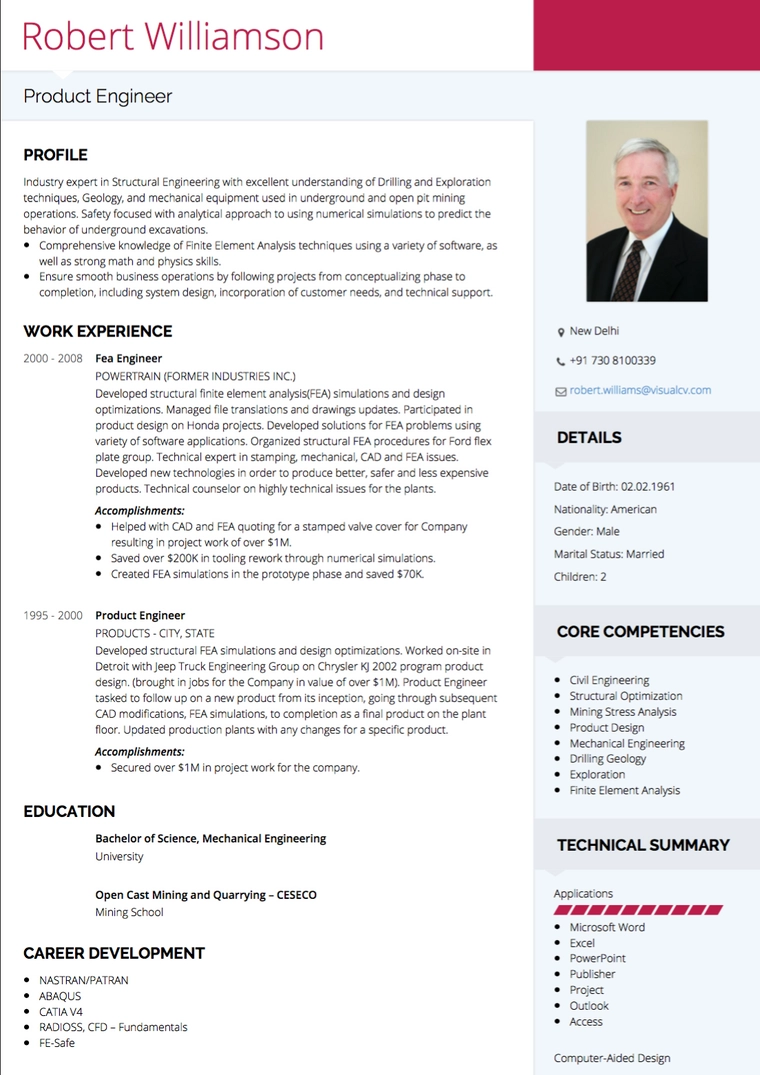
Most Chinese employers expect a recent headshot placed at the top of the CV. Submitting a CV without a photo can appear incomplete.

The photo should be:

  • Professional
  • Passport-style
  • Neutral background
  • Business attire

3. Education Carries More Weight

In Chinese hiring culture, academic credentials are strong indicators of capability. Employers often prioritize:

  • Highest degree obtained
  • University ranking or reputation
  • Academic honors
  • Certifications

For many roles, education is reviewed before work experience.

4. Tone Should Be Modest and Factual

Chinese business culture values humility. Overly promotional language can be perceived as exaggeration.

Instead of: “Visionary leader who revolutionized operations”

Use: “Led a team of 8 to improve operational efficiency by 15%”

Direct, evidence-based statements perform better than inflated descriptions.

5. Length and Structure Expectations

A China CV should be concise:

  • 1 page for early-career candidates
  • 2 pages for experienced professionals

It should follow a clear structure:

  1. Photo
  2. Personal Information
  3. Professional Summary (optional)
  4. Work Experience (reverse chronological)
  5. Education
  6. Skills & Languages
  7. References

Aligning with this format ensures your CV meets baseline expectations before recruiters evaluate your qualifications.

China CV Format: Step-by-Step Structure

To rank well in applicant tracking systems (ATS) and meet recruiter expectations in China, your CV should follow a predictable, structured format. Chinese employers value clarity, hierarchy, and completeness.

Below is the recommended structure — followed by deep guidance on how to execute each section correctly.

Standard China CV Structure

  1. Photo (top right or top left)
  2. Personal Information
  3. Professional Summary (optional but recommended)
  4. Work Experience (reverse chronological)
  5. Education
  6. Skills & Certifications
  7. Languages
  8. References

Consistency matters. Avoid creative layouts that sacrifice readability. Clean formatting and clear section headings perform better than design-heavy resumes.

Browse our gallery of resume examples here.

China CV Image

Photo Placement and Professional Standards

A photo is not optional in most Chinese hiring contexts. It is expected across industries, including corporate roles, education, hospitality, and government-affiliated organizations.

Where to Place the Photo

  • Top right corner (most common)
  • Top left corner (acceptable alternative)
  • Sized approximately passport-photo scale
  • Aligned neatly with header content

Photo Guidelines

Your photo should:

  • Be taken within the last 12 months
  • Use a neutral background (white or light gray)
  • Show business attire appropriate for your industry
  • Avoid casual clothing, sunglasses, filters, or heavy editing

For teaching, client-facing, or public-facing roles, appearance professionalism carries additional weight.

Submitting a CV without a photo can signal unfamiliarity with local norms.

Personal Information Section (Detailed Expectations)

This section appears directly beneath your name and photo.

Required Information

  • Full legal name
  • Phone number (with country code)
  • Professional email address
  • Current city of residence
  • Date of birth

Commonly Included (and Often Expected)

  • Gender
  • Nationality
  • Marital status
  • Visa status (for foreign applicants)
  • LinkedIn profile (optional but increasingly common)

Including visa status is particularly important for foreign applicants. Chinese employers often want immediate clarity on work authorization (e.g., “Eligible for Z visa sponsorship” or “Currently holds valid work permit”).

Formatting Tips

Use a compact line or two rather than long paragraphs. For example:

John Smith Date of Birth: 12 March 1990 | Nationality: Canadian | Married Phone: +86 138 XXXX XXXX | Email: johnsmith@email.com Location: Shanghai, China

Clarity reduces recruiter friction.

Professional Summary (Strategic Positioning)

While optional, a professional summary significantly improves clarity — especially for foreign applicants.

Keep it to 3–4 concise sentences that communicate:

  • Years of experience
  • Industry specialization
  • Core expertise
  • Current objective (if relevant)

Avoid generic statements like: “Seeking a challenging position in a dynamic organization.”

Instead, use quantified credibility:

“Marketing professional with 8 years of experience in B2B SaaS expansion across Asia-Pacific markets. Specialized in demand generation, localized growth strategy, and cross-cultural team leadership.”

The summary should function as a positioning statement — not a biography.

Keep tone factual and confident, not exaggerated.

Work Experience on a China CV

The work experience section should appear immediately after your professional summary (or after personal information if you omit a summary).

Chinese recruiters review this section for:

  • Stability
  • Company credibility
  • Measurable results
  • Alignment with the role

List roles in reverse chronological order (most recent first).

How to Structure Each Role

For each position, include:

Company Name Job Title Location (City, Country) Start Date – End Date (Month/Year format)

Follow this with 3–6 bullet points outlining responsibilities and achievements.

Example:

ABC Technology Co., Ltd. Senior Marketing Manager Shanghai, China June 2020 – Present

  • Led a team of 6 in executing digital campaigns across WeChat and Baidu platforms
  • Increased qualified inbound leads by 28% year-over-year
  • Coordinated product localization strategy for the China market
  • Managed annual marketing budget of RMB 3 million

How Chinese Recruiters Evaluate Work Experience

  1. Company Recognition Brand-name employers and reputable institutions carry weight. If your previous employer is not widely known in China, include a brief descriptor:

“XYZ Analytics (US-based data consulting firm, 200+ employees)”

  1. Employment Stability Frequent short tenures may raise questions. If you held short-term contracts, clarify:

“12-month fixed-term contract”

  1. Quantifiable Results Metrics increase credibility. Focus on:
  • Revenue growth
  • Efficiency improvements
  • Cost savings
  • Enrollment numbers (education sector)
  • Market expansion metrics
  1. Leadership Hierarchy Chinese companies often operate with clear hierarchical structures. If you managed people, specify:

“Supervised 8 direct reports” “Reported directly to Regional Director”

Tone and Cultural Alignment

Avoid overly self-promotional phrasing.

Instead of: “Revolutionized company operations through visionary leadership”

Use: “Improved operational workflow, reducing processing time by 18%”

Concrete results > exaggerated claims.

Education Section

Education carries significant weight in Chinese hiring decisions. In many industries, this section is reviewed before work experience.

List your education in reverse chronological order.

For each entry include:

  • Degree title
  • Major or specialization
  • University name
  • Location
  • Graduation year

Example:

Master of Business Administration (MBA) University of Toronto Toronto, Canada 2018

What to Emphasize

Chinese employers often value:

  • Advanced degrees (Master’s and PhD carry strong signaling power)
  • Recognizable international universities
  • Academic honors
  • Scholarships
  • Research publications (for academic roles)

If your university may not be widely known in China, you may add context:

“Ranked top 5 public university in Canada”

Keep this factual — avoid marketing language.

Additional Academic Details (Optional)

You may include:

  • GPA (if strong)
  • Thesis title (for research or academic roles)
  • Relevant coursework (if early-career)
  • Professional certifications

Certifications that are globally recognized (PMP, CFA, CPA, TESOL, CELTA, etc.) should be listed clearly, as they strengthen credibility.

The education section should reinforce capability and discipline. In China’s hiring context, academic background is often seen as a predictor of long-term potential — so treat this section strategically, not as an afterthought.

Skills, Certifications, and Technical Competencies

After education, include a clearly structured skills section. Chinese recruiters prefer organized, categorized information rather than long descriptive paragraphs.

Use grouped bullet points where possible.

Technical Skills

  • Software proficiency (e.g., Excel, SAP, Python, AutoCAD)
  • Industry tools (WeChat Ads Manager, Baidu Analytics, Alibaba Cloud, etc.)
  • Data analysis platforms
  • CRM systems

Professional Skills

  • Project management
  • Cross-cultural communication
  • Vendor negotiation
  • Budget management
  • Team leadership

Certifications

  • PMP (Project Management Professional)
  • CFA (Chartered Financial Analyst)
  • CPA
  • TESOL / CELTA (for teaching roles)
  • Industry-specific licenses

Certifications should include year obtained if recent or highly relevant.

Resume template: Browse through our gallery of resume templates.

Local Platform Awareness (Strategic Advantage)

For candidates targeting China-based roles, demonstrating familiarity with local ecosystems can strengthen your CV.

Examples:

  • WeChat (Weixin) marketing tools
  • Douyin advertising
  • Baidu SEO/SEM
  • Xiaohongshu (RED) content strategy
  • Alibaba or JD e-commerce platforms

If you have direct experience using Chinese platforms, highlight it clearly. It signals market readiness.

Languages Section (Critical for Foreign Applicants)

Language proficiency is a high-signal factor in China’s job market.

List languages separately from general skills to increase clarity.

Format Example:

Languages

  • English: Native
  • Mandarin Chinese: HSK 5 (Advanced Working Proficiency)
  • French: Intermediate

If applicable, include:

  • HSK level (for Mandarin)
  • IELTS or TOEFL score (if relevant)
  • Business vs conversational proficiency

For corporate roles, specifying “Business-level Mandarin” can differentiate you from other foreign applicants.

Should You Include a Chinese Name?

If you have an officially registered Chinese name or commonly used Chinese professional name, you may include it in parentheses after your English name.

Example:

Michael Chen (陈伟)

This can be beneficial for roles involving Chinese clients or internal teams.

References on a China CV

References are typically placed at the end of the document.

You have two acceptable approaches:

  1. Write: “References available upon request.”

  2. Attach written recommendation letters (more common for academic or education roles).

In China, written reference letters may carry more influence than simple contact information, especially in:

  • University positions
  • International schools
  • Senior corporate roles

If including referees directly, provide:

  • Full name
  • Job title
  • Organization
  • Email
  • Relationship to you

Ensure you have obtained prior consent.

China CV vs Western Resume: Key Differences

Understanding the structural and cultural differences between a China CV and a Western resume can prevent costly mistakes.

ElementChina CVUS / UK Resume
PhotoExpected and standardUsually discouraged
Date of BirthCommonly includedTypically omitted
GenderOften includedOmitted
Marital StatusSometimes includedOmitted
Length1–2 pages1–2 pages
ToneModest, factualAchievement-focused, self-promotional
Education EmphasisHigh importanceModerate (depends on experience level)
Personal DetailsExpandedMinimal
ReferencesMay attach lettersUsually “Available upon request”

Cultural Context Behind the Differences

  • Transparency norms: In China, providing personal details is culturally standard and not viewed as discriminatory.
  • Education signaling: Academic pedigree plays a stronger role in perceived capability.
  • Hierarchy awareness: Titles, reporting structure, and formal credentials carry weight.
  • Modesty preference: Overly bold self-marketing may be viewed as exaggeration.

If you are a foreign applicant applying to Chinese employers, aligning with local formatting norms demonstrates cultural awareness — which can positively influence hiring decisions.

Common Mistakes to Avoid on a China CV

Even qualified candidates are rejected because their CV does not meet local expectations.

1. Submitting a CV Without a Photo

In many industries, this signals unfamiliarity with Chinese hiring standards.

Always include a professional headshot unless explicitly instructed otherwise.

2. Using an Overly Western Format

Common mistakes include:

  • Omitting date of birth
  • Excluding nationality
  • Removing personal details entirely
  • Using creative or graphic-heavy resume templates

Clean, structured formatting performs better than highly stylized designs.

3. Writing in an Overly Promotional Tone

Avoid exaggerated language such as:

  • “Visionary leader”
  • “Game-changing strategist”
  • “Best-in-class innovator”

Instead, use measurable outcomes:

  • “Increased revenue by 22%”
  • “Managed cross-functional team of 5”
  • “Reduced operational costs by 15%”

Concrete results increase credibility.

4. Ignoring Visa Status (Foreign Applicants)

If you require work authorization, clarify your situation.

For example:

  • “Eligible for Z visa sponsorship”
  • “Currently holds valid Chinese work permit”

This reduces uncertainty for employers.

5. Listing Irrelevant Experience

Chinese recruiters prefer relevance and clarity. Tailor your CV to the role rather than submitting a generic document.

Focus on:

  • Industry alignment
  • Market-specific skills
  • Leadership hierarchy
  • Quantifiable outcomes

6. Poor Formatting or Inconsistent Dates

Ensure:

  • Consistent month/year formatting
  • No unexplained employment gaps
  • Clear section headings
  • Professional email address

Formatting errors reduce perceived professionalism.

FAQ: China CV Requirements

How long should a China CV be?

A China CV should be one page for early-career professionals and no more than two pages for experienced candidates. Concise, structured formatting is preferred.

Do Chinese CVs require a photo?

Yes, in most industries a professional headshot is expected. Submitting a CV without a photo may appear incomplete.

Should I include my age on a China CV?

You should include your date of birth. Age is commonly disclosed and culturally accepted in Chinese hiring practices.

Can I submit my CV in English?

Yes. Many multinational companies and international organizations accept English-language CVs. However, some local companies may prefer a Chinese-language version.

Do I need a Chinese name on my CV?

Not required, but including a commonly used Chinese name (if you have one) can be helpful for roles involving local teams or clients.

Is marital status required?

While not always mandatory, it is commonly included on Chinese CVs, particularly when applying to domestic companies.

Should I attach reference letters?

For academic, education, or senior-level roles, attaching written reference letters can strengthen your application. Otherwise, “References available upon request” is acceptable.

Frequently Asked Questions About China CVs

What is a China CV?

A China CV is a resume formatted according to Chinese hiring standards. It typically includes a professional photo, expanded personal information such as date of birth and nationality, and places strong emphasis on education. It is usually one to two pages and structured in reverse-chronological order.

How long should a China CV be?

A China CV should be one page for early-career candidates and no more than two pages for experienced professionals. Recruiters in China prefer concise, clearly organized resumes that highlight relevant qualifications and measurable results.

Is a photo mandatory on a China CV?

In most industries, yes. Employers expect a recent professional headshot placed at the top of the document. The photo should be passport-style, with business attire and a neutral background.

What personal details are typically included?

Chinese CVs commonly include full name, phone number, email address, current city, and date of birth. Many applicants also list nationality and gender. Including this information aligns with local hiring norms.

Can I apply with an English-language CV?

Yes. Multinational companies and international institutions widely accept English CVs. However, local Chinese firms may prefer a Chinese-language version, especially for domestic or client-facing roles.

Should foreign applicants mention visa status?

Yes. Clearly stating whether you require sponsorship or already hold a valid Chinese work permit helps employers assess eligibility quickly and reduces hiring uncertainty.

How important is education on a China CV?

Education carries significant weight. Employers often evaluate degree level, university reputation, and academic achievements carefully. Advanced degrees and recognized institutions can strengthen a candidate’s profile.

Copyright ©2026 Workstory Inc.