How to Write an Austria CV
Writing a CV for Austria is not just about listing your experience. Austrian employers have clear expectations around structure, content, and even personal details, and following these conventions can make a real difference in how your application is received.
In Austria, a CV is usually more detailed and personal than in countries like the US or UK. It is common to include information such as your date of birth, nationality, and a professional photo. Most employers also prefer a clear, chronological overview of your education and work history, rather than a highly creative or experimental layout.
Below are the key elements that should be included in an Austrian CV, along with practical guidance on how to present each section.
Personal information
Your CV should start with basic personal details. In Austria, it is still standard practice to include more information than you might in other countries.
This typically includes your full name, address, phone number, email address, date of birth, nationality, and a professional photo. While some international companies may be flexible, many Austrian employers still expect this information, especially in traditional industries.
Professional summary
A short professional summary at the top of your CV helps employers quickly understand who you are and what you bring to the role. This should be a brief paragraph that highlights your experience, key strengths, and career focus.
Rather than stating what you want, focus on what you can offer and how your background aligns with the position.
Work experience
Your work experience should be listed in reverse chronological order, starting with your most recent role. For each position, include your job title, company name, location, and employment dates.
Use short, clear bullet points to describe your responsibilities and, where possible, measurable achievements. Austrian employers value clarity and consistency, so avoid vague descriptions and focus on concrete contributions.
Education
List your education in reverse chronological order as well. Include the name of the institution, the degree obtained, and the dates attended. If relevant, you can also mention academic honors, specializations, or coursework that relates directly to the role.
Skills and languages
A dedicated skills section is expected in an Austrian CV. This can include technical skills, professional competencies, and soft skills that are relevant to the job.
Language skills are especially important. Be specific about your proficiency level for each language, using clear terms such as native, fluent, or basic.
Certifications and additional training
If you have completed professional training, certifications, or courses, list them in a separate section. Include the name of the certification and the issuing organization. This is particularly useful in technical, regulated, or specialized roles.
References
It is common to state “References available upon request” rather than listing referees directly on your CV. Make sure you have references prepared, as Austrian employers may ask for them later in the hiring process.
Austria CV vs Resume and Lebenslauf
If you are applying for jobs in Austria, it is important to understand the terminology employers use and what they expect when they ask for a CV.
In Austria, the term CV is often used interchangeably with the German word Lebenslauf. Both refer to the same document: a structured, chronological overview of your education, work experience, and qualifications. This is different from the resume format commonly used in countries like the United States.
An Austrian CV or Lebenslauf is usually more detailed than a US-style resume. It typically includes personal information such as date of birth, nationality, and a professional photo. Employers also expect a clear timeline of your education and work history, rather than a short, highly condensed summary.
A resume, in the American sense, is usually one page long, omits personal details, and focuses heavily on achievements and keywords. This style can feel unfamiliar or incomplete to Austrian employers, especially in more traditional industries.
If a job posting in Austria is written in German and asks for a Lebenslauf, you should follow Austrian conventions. If the posting is in English, a CV written in English is usually acceptable, but the structure and level of detail should still match Austrian expectations.
When in doubt, it is safer to follow local standards. A well structured Austrian CV signals cultural awareness and professionalism, which can be just as important as your qualifications.
How to Format an Austria CV
The way your CV is formatted matters just as much as what you include in it. Austrian employers generally prefer documents that are clear, structured, and easy to read. A clean layout signals professionalism and makes it easier for hiring managers to quickly find the information they care about.
An Austrian CV should look formal and well organized rather than creative or experimental. While design can support readability, it should never distract from the content.
Use a clear and professional layout
Choose a simple layout with enough white space so the page does not feel crowded. A single-column structure is usually the safest option and works well for both human readers and applicant tracking systems.
Avoid decorative elements, heavy colors, or complex graphics. These are rarely expected in Austria and can make your CV harder to scan.
Use clear section headings
Each section of your CV should be clearly labeled, such as personal information, professional summary, work experience, and education. Headings should stand out slightly from the body text, but they do not need to be oversized or stylized.
Clear headings help recruiters quickly move through your CV and understand its structure at a glance.
Keep a consistent order
Work experience and education should be listed in reverse chronological order, starting with the most recent entry. This is the standard format in Austria and allows employers to quickly see your current level of experience.
Be consistent with dates, job titles, and location formatting throughout the document. Consistency signals attention to detail.
Use bullet points sparingly and clearly
Bullet points work best for describing responsibilities and achievements within each role. Keep them short and focused, ideally one idea per bullet.
Avoid long paragraphs. Austrian recruiters often skim CVs first, and concise bullet points make key information easier to spot.
Choose a readable font and size
Stick to classic, professional fonts such as Arial, Calibri, or Times New Roman. Font sizes between 10 and 12 points work well for body text, with slightly larger sizes for section headings.
Using too many fonts or sizes can make your CV feel unstructured and unprofessional.
Include a professional photo
Including a photo is still common practice in Austria. If you choose to add one, use a high-quality, professional headshot with a neutral background. Place it at the top of the CV, usually near your personal information.
Avoid casual photos or selfies, as they can undermine an otherwise strong application.
Place contact details at the top
Your name and contact information should be easy to find. This usually means placing them at the top of the first page, along with your address and other personal details.
If you include an online profile such as LinkedIn, make sure it is up to date and consistent with your CV.
Keep length and relevance in mind
Most Austrian CVs are one to two pages long. Focus on information that is relevant to the role you are applying for, and avoid adding unnecessary details.
If you have extensive experience, prioritize recent and relevant roles rather than listing everything in full detail.
Proofread carefully
Spelling or grammar mistakes can leave a negative impression. Before sending your CV, review it carefully and consider asking someone else to proofread it as well.
A clear, error-free CV reflects professionalism and respect for the employer’s time.
Popular Austria CV Formats
Choosing the right CV format is important because it affects how clearly your experience and skills are presented. In Austria, employers tend to value structure, clarity, and a logical career progression. While there is some flexibility depending on your background, certain formats are more widely accepted than others.
Reverse chronological CV
The reverse chronological CV is the most commonly used format in Austria. It presents your work experience and education starting with the most recent role or qualification and works backward.
This format is especially suitable if you have a consistent work history and want to highlight career growth, recent responsibilities, and current expertise. Most Austrian employers expect this structure, and it is often the safest choice.
Functional CV
A functional CV focuses more on skills and competencies than on a timeline of employment. Instead of listing roles in detail, it groups experience by skill areas.
This format can be useful if you have employment gaps, are changing careers, or want to emphasize transferable skills. However, it is less common in Austria, and some employers may still prefer to see a clear work history.
Combination CV
The combination CV, sometimes called a hybrid CV, blends elements of both the reverse chronological and functional formats. It typically starts with a skills overview and then provides a chronological list of work experience.
This format works well for professionals who have a strong skill set and a solid employment history, especially in technical or specialized roles.
Targeted CV
A targeted CV is tailored specifically to a single role or employer. It highlights only the experience and skills that are most relevant to the position you are applying for.
While this approach requires more effort, it can be very effective in Austria, particularly for competitive roles or senior positions where relevance matters more than completeness.
Academic CV
An academic CV is used mainly in academic, research, or scientific fields. It includes detailed information about education, research projects, publications, conferences, and teaching experience.
Academic CVs in Austria are often longer than standard CVs and follow different expectations, depending on the institution and field.
Popular Austrian CV Templates
Using a CV template can make it much easier to follow Austrian conventions, especially if you are applying from abroad or are not familiar with local expectations. A good Austrian CV template focuses on clarity, structure, and professionalism rather than creative design.
Most templates used in Austria follow a reverse chronological layout, include space for a professional photo, and present information in a clean, well organized way. Below are examples of CV templates commonly used across different roles and industries in Austria.
Data Engineering CV Template for Austria
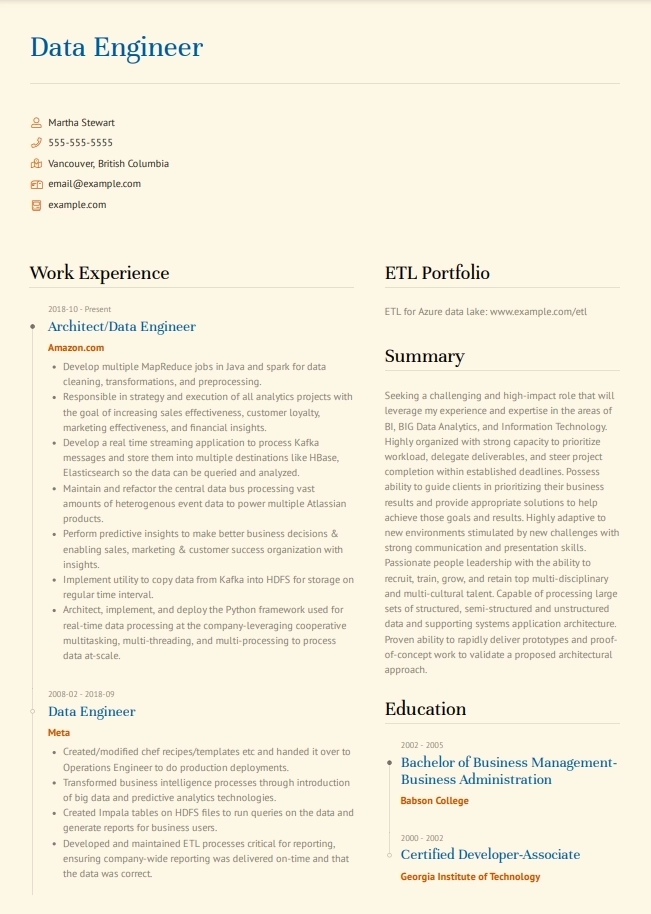
This template is suitable for technical roles where clarity and structure are essential. It allows you to clearly present your technical skills, tools, and project experience while maintaining a formal layout that Austrian employers expect.
Sales CV Template For Austria
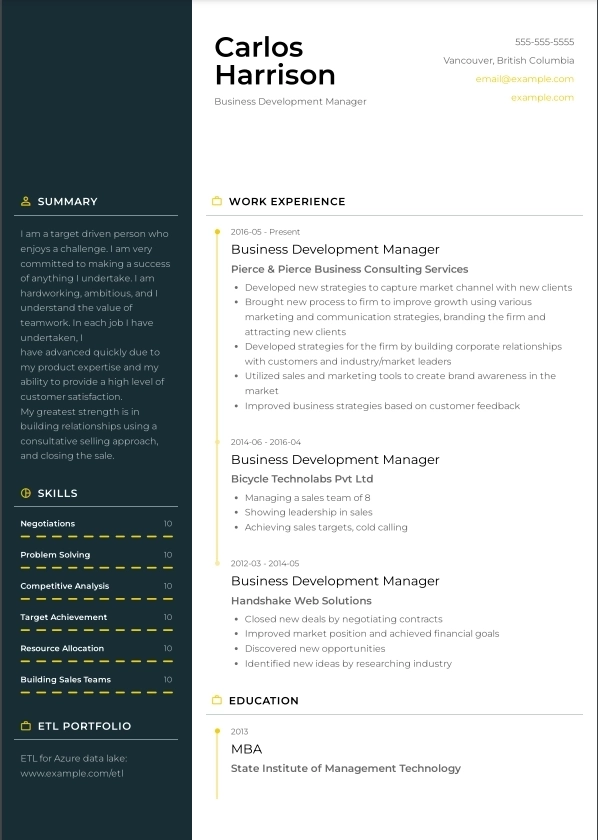
Sales CVs in Austria typically emphasize measurable results, client relationships, and industry experience. This template highlights achievements and performance metrics while keeping the overall design professional and easy to scan.
Accountants CV Template For Austria
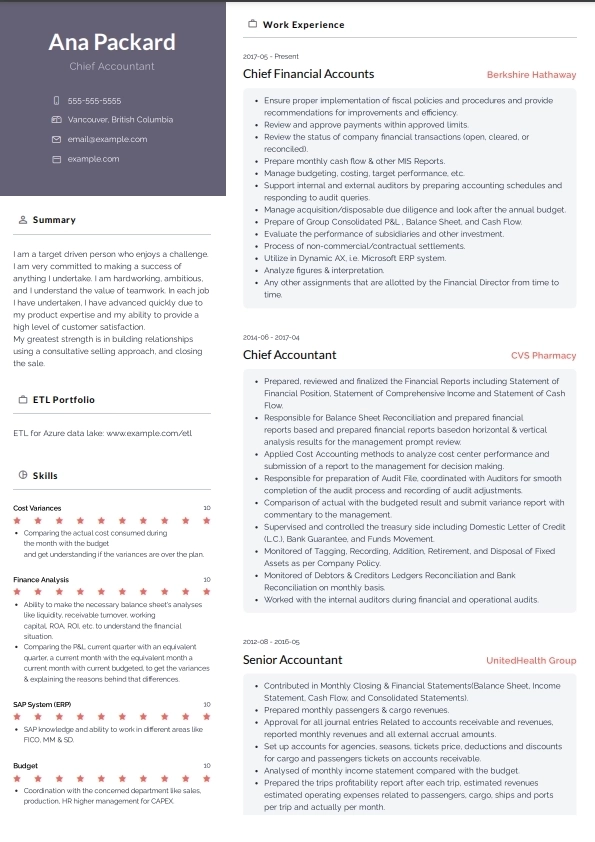
Accounting and finance roles often require a conservative and precise presentation. This template focuses on qualifications, certifications, and work experience in a clear chronological order, which is important in regulated professions.
Writer CV Template For Austria

For writing and content-related roles, this template balances professionalism with enough flexibility to showcase experience, publications, and areas of specialization. It keeps the structure formal while allowing space to highlight creative work.
Executive CV Template For Austria
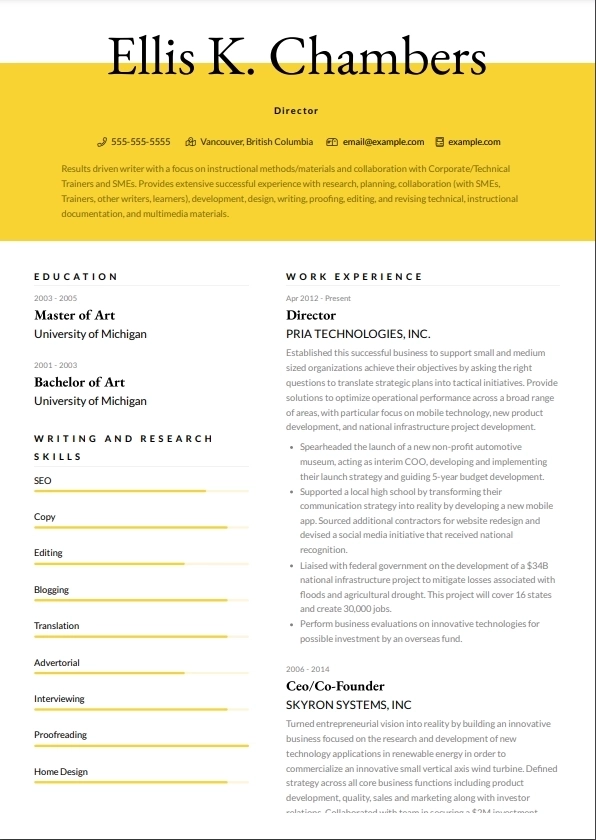
Executive CVs in Austria are typically more detailed and emphasize leadership experience, strategic responsibilities, and measurable impact. This template provides enough space to showcase senior roles without becoming overly complex.
Software Developer CV Template For Austria
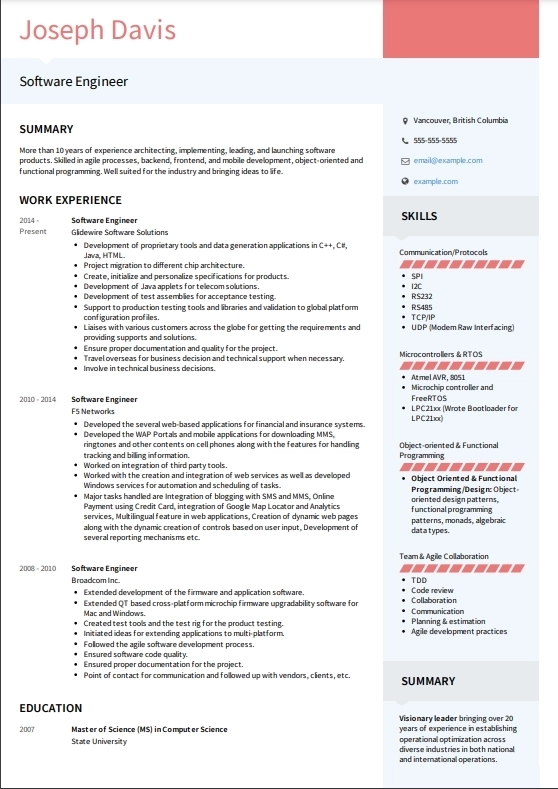
This template is designed for software developers and engineers who need to present both technical skills and professional experience clearly. It allows room for programming languages, frameworks, and key projects, while maintaining a clean layout.
Designer CV Template For Austria
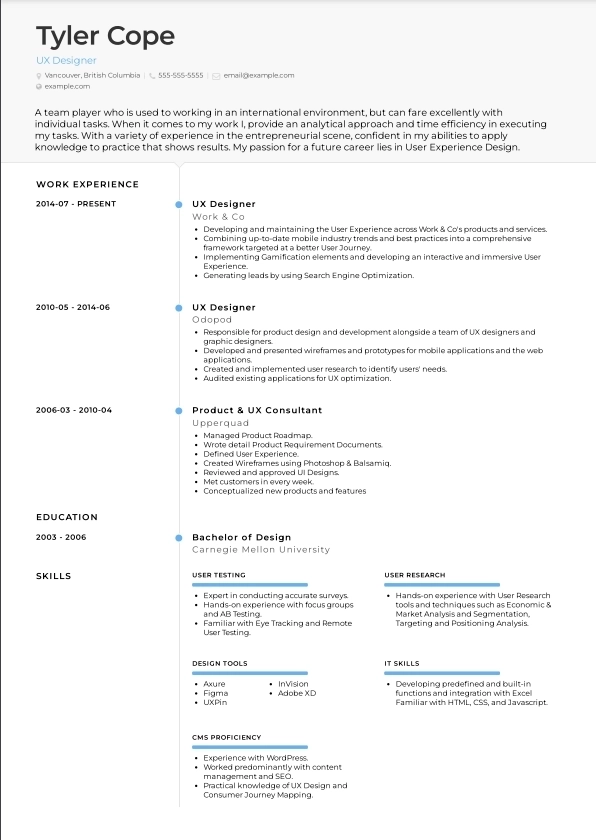
Design roles still benefit from a structured CV in Austria. This template keeps the layout professional while allowing limited visual flexibility to reflect a design background without distracting from the content.
Project Management CV Template For Austria
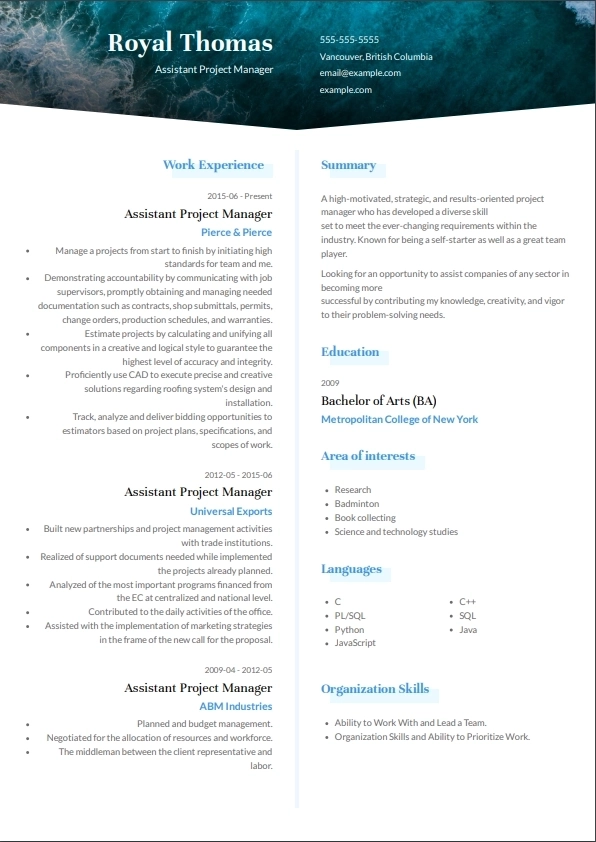
Project management CVs often focus on scope, timelines, budgets, and leadership responsibilities. This template supports a clear overview of projects and roles, which is important for Austrian employers evaluating experience quickly.
Retail CV Template For Austria
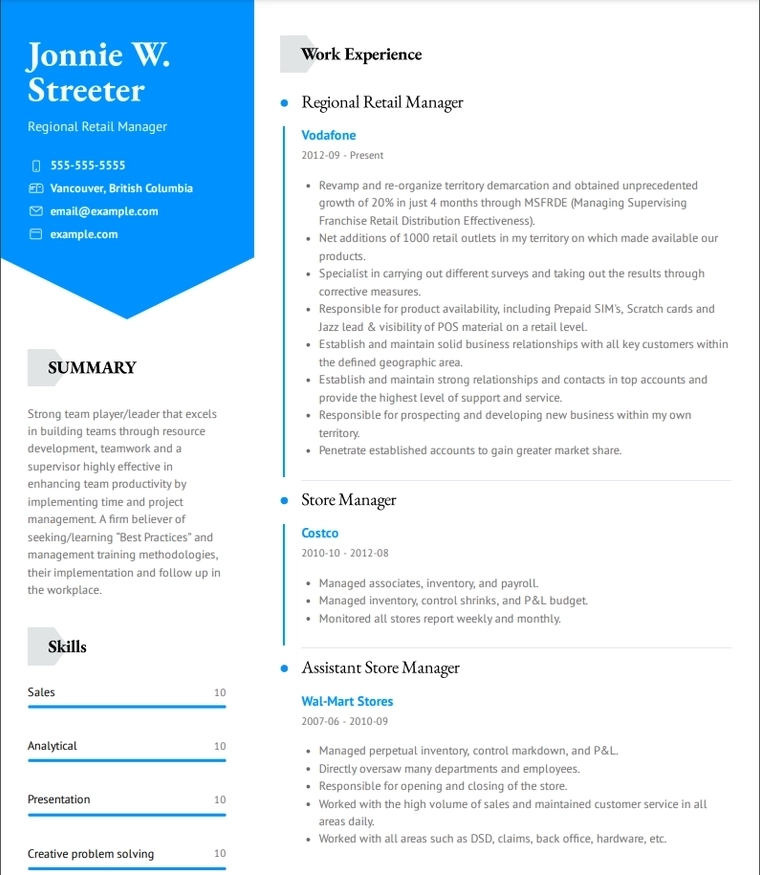
Retail CVs usually emphasize customer service, sales performance, and operational responsibilities. This template keeps information concise and accessible, which works well for both entry-level and experienced candidates.
Teaching CV Template For Austria
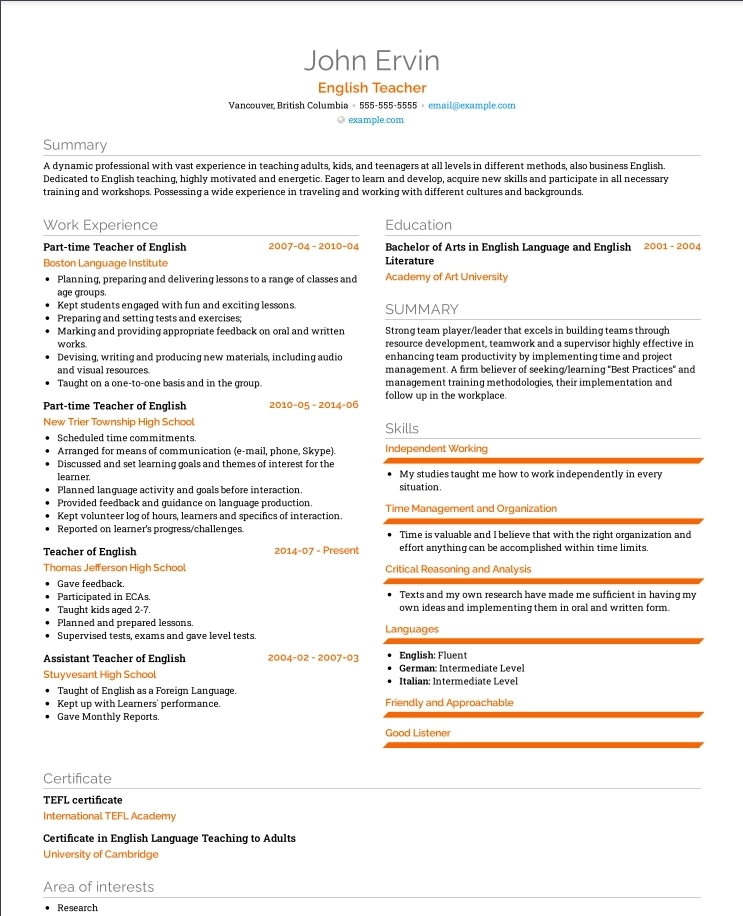
Teaching CVs in Austria typically include education, certifications, and teaching experience in a structured format. This template allows candidates to clearly present qualifications and relevant experience in an easy-to-read layout.
These templates can be adapted to different levels of experience, but they all follow the same core principles valued in the Austrian job market: clarity, consistency, and professionalism.
How to Write Personal Information on an Austrian CV
Personal information is usually the first section of an Austrian CV and sets the tone for the rest of the document. Compared to some other countries, Austrian employers often expect more personal details, and including them correctly helps your CV feel familiar and complete.
In most cases, this section should be placed at the top of the first page, alongside or just below your professional photo.
You should typically include the following details:
- Full name
- Address
- Phone number
- Email address
- Date of birth
- Nationality
- Professional photo
If you are applying to an international company based in Austria, expectations may be slightly more flexible. However, for many local employers, especially in traditional industries, leaving out key personal details can feel unusual.
Bad example
Anna
Austria
Phone: +43 123 456 789
Email: annaschmidt@example.com
This example is incomplete and lacks basic information that Austrian employers usually expect, such as a full address and date of birth.
Good example
Anna Schmidt
Hauptstraße 10
1010 Wien
Austria
Phone: +43 123 456 789
Email: anna.schmidt@example.com
Date of birth: January 15, 1985
Nationality: Austrian
This version provides complete and clearly structured personal information, making it easy for employers to identify and contact the candidate.
Bad Example of How to Write Personal Information of an Austrian CV
Anna
Austria
Phone: +43 123 456 789
Email: annaschmidt@example.com
Good Example of How to Write Personal Information of an Austrian CV
Anna Schmidt
Hauptstraße 10, 1010 Wien, Austria
Phone: +43 123 456 789
Email: anna.schmidt@example.com
Date of Birth: January 15, 1985
Nationality: Austrian
How to Write a Professional Summary on an Austrian CV
A professional summary gives employers a quick overview of who you are and what you bring to the role. In Austria, this section is usually short and factual, and it should sit near the top of the CV, just below your personal information.
The goal is to highlight your professional background, key strengths, and area of focus in a few clear sentences. It is not meant to be a personal statement or a list of career goals, but rather a concise introduction to your profile.
A strong professional summary usually:
- Describes your current role or level of experience
- Highlights your main skills or areas of expertise
- Connects your background to the type of role you are applying for
Avoid vague phrases or generic statements. Austrian employers tend to value clarity and substance over overly promotional language.
Bad example
Looking for a job in marketing. I have some experience in this field.
This summary is too general and does not communicate any clear value or expertise.
Good example
Marketing professional with over ten years of experience in digital marketing and brand management. Experienced in developing integrated campaigns, managing cross-functional teams, and driving measurable revenue growth.
This example clearly communicates experience, focus, and professional value in a direct and credible way.
How to Write Work Experience on an Austrian CV
The work experience section is one of the most important parts of an Austrian CV. Employers use it to understand your career progression, responsibilities, and the impact you have had in previous roles.
In Austria, work experience is typically presented in reverse chronological order, starting with your most recent position. This makes it easy for employers to see where you are now and how your career has developed over time.
For each role, you should include:
- Job title
- Company name
- Location
- Employment dates
- Key responsibilities and achievements
Keep descriptions clear and factual. Austrian employers generally prefer concrete examples over broad or exaggerated claims.
Bad example
Marketing Manager at XYZ GmbH
- Worked on marketing strategies.
This example is too vague and does not provide enough detail about the role or achievements.
Good example
Marketing Manager
XYZ GmbH, Vienna, Austria
June 2016 – Present
- Led a team of ten marketing professionals to plan and execute integrated marketing strategies
- Increased online sales by 25 percent through targeted social media campaigns
This version clearly outlines the role, context, and measurable results, making it easier for employers to assess the candidate’s experience.
How to Write Education on an Austrian CV
The education section is an important part of an Austrian CV, especially for recent graduates or roles where formal qualifications are required. Employers in Austria usually expect to see a clear and structured overview of your academic background.
Education should be listed in reverse chronological order, starting with your most recent qualification. This helps employers quickly understand your highest level of education and how it relates to the role.
For each entry, include:
- Name of the institution
- Degree obtained
- Dates attended
- Academic honors, specializations, or relevant coursework, if applicable
If you completed your education outside Austria, use the official degree name and consider adding a short clarification if the qualification may not be immediately familiar.
Bad example
MBA from Vienna University
- Took courses in business.
This example is vague and does not provide enough detail about the qualification or institution.
Good example
Master of Business Administration
Vienna University of Economics and Business
2012 – 2014
Graduated with honors
This version clearly presents the degree, institution, and achievement in a way that is easy for employers to understand.
Skills and Languages on an Austrian CV
A skills section helps employers quickly understand what you are able to do and where your strengths lie. In Austria, this section is usually concise and focused on skills that are directly relevant to the role.
You can group skills into categories such as technical skills, professional competencies, or soft skills, depending on your background. Avoid listing too many generic skills and focus instead on those you can confidently support with experience.
Language skills are especially important in the Austrian job market. Many roles require German, and employers want to see clearly how well you can use each language in a professional context.
When listing languages, be specific about your level. Common and easily understood terms include:
- Native
- Fluent
- Advanced
- Intermediate
- Basic
If a role requires German, it is helpful to clearly indicate your level rather than simply listing the language. This makes it easier for employers to assess whether your profile matches their expectations.
Certifications and Additional Training on an Austrian CV
Certifications and additional training can strengthen your CV, especially if they are relevant to the role or industry you are applying for. In Austria, this section is often used to highlight practical qualifications, ongoing professional development, or specialized knowledge.
List certifications and training in a clear and simple format. For each entry, include the name of the certification or course, the issuing organization, and the year it was completed if applicable.
This section is particularly important for technical, regulated, or specialized roles, where formal training or certification is expected. Even short courses or workshops can be worth including if they add clear value to your profile and relate to the position.
If you have many certifications, focus on the most relevant ones and avoid overloading the section with outdated or unrelated information.
Austria CV for Foreigners
If you are applying for jobs in Austria as a foreigner, your CV should still follow Austrian conventions, but there are a few additional points to keep in mind. Employers are often reviewing applications from both local and international candidates, and clarity is especially important.
Using either German or English is generally acceptable, depending on the job and the company. If the job posting is in German, a German CV is usually expected. For international companies or roles where English is the working language, an English CV is often acceptable, provided it follows the typical Austrian structure.
If you do not speak German fluently, be transparent about your language level. Clearly stating your proficiency helps employers assess whether your skills match the role and avoids misunderstandings later in the process.
For candidates from outside the European Union, it can be helpful to briefly clarify your work authorization status. This does not need to be detailed, but a short note can prevent unnecessary back-and-forth during the screening stage.
Educational qualifications obtained abroad should be listed using their official names. If the degree may not be immediately recognizable in Austria, adding a short explanation or equivalent level can be useful.
Overall, foreign candidates who adapt their CV to local expectations while clearly communicating language skills and work eligibility tend to make a stronger first impression with Austrian employers.
Final Tips for an Austrian CV
Before sending your CV, take a moment to review it from the perspective of an Austrian employer. Small details can make a noticeable difference in how professional and credible your application feels.
Make sure your CV is up to date and tailored to the role you are applying for. Even minor adjustments to your professional summary or work experience can help align your profile more closely with the job requirements.
Keep the tone factual and clear. Overly creative language or exaggerated claims are less effective than concrete examples and well structured information. Consistency in formatting, dates, and terminology also plays an important role in creating a strong impression.
Finally, always proofread carefully. Spelling or grammar mistakes can undermine an otherwise solid CV. A clean, well structured document signals attention to detail and respect for the hiring process, which Austrian employers tend to value highly.