Turning complex engagements, specialized knowledge, and client outcomes into a resume for consultants is difficult. You need to show what you solved, how you influenced decisions, and the measurable value you created without burying your expertise in vague project descriptions.
With more than 7 million users in over 125 countries, VisualCV has learned that an effective resume for consultants connects specialized expertise to clear client results and the needs of a specific role. In practice, you should frame each engagement around the problem, your contribution, and the business impact. A resume builder can help organize that information, but the substance must come from your own experience and judgment.
Follow the steps below to create a consultant resume that presents your expertise, quantifies your client impact, and shows why you fit the roles you want.
Here are the steps this guide covers:
| Step | Action | Time Required | Key Output |
|---|---|---|---|
| Step 1 | Choose target roles and consulting niche | 20 minutes | Clear professional positioning statement |
| Step 2 | Set up sections for fast scanning | 30 minutes | Structured resume outline |
| Step 3 | Write quantified client outcome bullets | 60 minutes | Achievement-based experience bullets |
| Step 4 | Add relevant skills and credibility signals | 25 minutes | Evidence-backed skills section |
| Step 5 | Customize, proofread, and test the resume | 30 minutes | Submission-ready tailored resume |
Build your resume for consultants around the specific role, industry, and buyer or employer you want to reach. A healthcare transformation consultant needs different proof than a SaaS growth advisor, even when both have led strategy projects. Tailor your job application documents to the position and audience you want to reach.2 Spend 20 minutes defining the work you want next, then write a positioning statement that makes that direction immediately clear.
Collect five to eight target job descriptions or client briefs and highlight the skills, outcomes, and industry terms that repeat. Choose one focused title, such as "Supply Chain Transformation Consultant," and match it to your strongest relevant expertise. Avoid a broad inventory of unrelated capabilities, because it weakens the message about the problems you solve.
Turn Requirements Into Positioning
| What to Do | Why It Matters |
|---|---|
| Review seven target postings | Find repeated hiring requirements |
| Choose one consultant title | Create immediate professional focus |
| List five priority skills | Support your positioning statement |
Build your resume for consultants in this order: headline, summary, core capabilities, experience, selected engagements, education, and credentials. This sequence puts your commercial value and consulting proof before background details, while keeping the document easy to scan.1 Use reverse chronological entries within experience and selected engagements, with outcomes, scope, and client context visible near the top.
Keep it to one page when you have under 10 years of relevant experience or limited engagement depth. Use two pages when 10 or more years, leadership scope, or complex engagements need room, but make every line earn its place. Choose ATS-friendly formatting: standard headings, simple bullets, single-column layout, and readable 10 to 12 point type. Avoid decorative templates, text boxes, icons, and dense graphics that bury accomplishments or make the document harder to parse.
Choose Your Section Order
| What to Do | Why It Matters |
|---|---|
| Early career, limited consulting | Lead with capabilities, then experience |
| Experienced consultant, diverse projects | Lead with experience, then engagements |
| Senior advisor, major transformations | Lead with summary, engagements, credentials |
Set aside 60 minutes to turn each project responsibility into an achievement bullet that names the client challenge, your contribution, and a credible business result. Start with engagements that best match the work you want next, then capture the baseline, your actions, and what changed. Instead of writing "Managed a transformation project," show the decision, deliverable, or implementation you owned and the measurable improvement it produced.
Use this formula: client challenge + your action + measurable outcome. Protect confidentiality by describing the client by industry, size, or region, such as "regional insurer" or "global SaaS company," and round sensitive figures, such as "$2.4M" to "about $2M." When exact metrics are unavailable, estimate scale from project records, team size, timeline, budget range, adoption rates, or volume processed, then use qualifiers such as "approximately" or "more than." For a US federal job application, include the resume information USAJOBS requires alongside these proof-based bullets.3 These proof-based bullets also strengthen a gig resume by showing the value you delivered across short engagements.
Turn Weak Responsibilities Into Impact Bullets
| What to Do | Why It Matters |
|---|---|
| Replace "Managed CRM rollout" with "Led 12-week rollout, lifting adoption 32%" | Shows scope, pace, and measurable value. |
| Replace "Analyzed costs" with "Identified $180K annual savings across four sites" | Connects analysis to financial impact. |
| Replace "Facilitated workshops" with "Ran six workshops, cutting approval cycles 20%" | Links collaboration to operational improvement. |
Spend 25 minutes selecting skills that reinforce your target consulting role. Prioritize consulting methods, functional expertise, industry knowledge, tools, certifications, and leadership evidence that the role requires. A strategy consultant might lead with market sizing, growth strategy, healthcare expertise, Excel modeling, and workstream leadership, while an ERP consultant would foreground implementation methodology, platform credentials, process design, and client training.
Match your skills to repeated requirements in the job description, then substantiate each priority claim with an experience bullet, credential, or named deliverable. Tailoring your resume to the position helps you present the qualifications most relevant to the employer.5 If you list stakeholder management, show that you led steering committees, aligned executives, or trained a client team. Avoid long keyword lists with no proof, because unsupported labels make your expertise harder to assess.
Skill Proof Signals
| What to Do | Why It Matters |
|---|---|
| List Lean Six Sigma certification | Adds verifiable process-improvement credibility |
| Name Tableau dashboard delivery | Proves tool use in context |
| Show executive workshop leadership | Demonstrates client-facing influence |
Keep a complete master resume with every engagement, credential, and accomplishment, then create a fresh version for each opportunity. In 30 minutes, align your headline and summary with the role, select the most relevant engagements, and mirror important job-description keywords where they accurately describe your work. This keeps your experience broad while making each submission immediately relevant to the buyer's problem.
Run an ATS check by confirming standard headings, searchable text, and clean keyword matches, then compare every date, title, employer, and credential against your master record. Do not add personal details that employers may not lawfully consider in screening decisions, such as race, religion, sex, national origin, age, disability, or genetic information.4 Review client references for confidentiality, removing restricted names, figures, or project details, and follow the posting's file requirement, using DOCX when requested and PDF when permitted. Ask one detail-oriented colleague to proofread the final version for typos, broken formatting, and unclear claims before you submit.
Final Submission Check
| What to Do | Why It Matters |
|---|---|
| Match headline and engagements to role | Shows immediate relevance |
| Verify dates, titles, and confidential details | Prevents credibility and disclosure issues |
| Test file format and ATS readability | Avoids parsing and upload problems |
Keep it to one page if you have under 10 years of relevant experience or are targeting individual contributor consulting roles. Use two pages only when you need room for major engagements, leadership scope, or specialized credentials, and make sure every entry supports the role you want next.
Name the client only if you have permission to do so. Otherwise, describe it by industry, company size, and engagement type, such as "Global healthcare manufacturer, supply chain transformation," then focus on your scope, methods, and measurable deliverables.
Group related contracts under a single consulting heading, such as "Independent Consultant | 2023 to Present," rather than giving each three-month project a separate employer entry. List two to four representative engagements beneath it, prioritizing projects that match your target work and showing the duration, client type, and outcome for each.
Use a reverse-chronological or hybrid format, not a fully functional resume. Recruiters need to see when you completed engagements, while a hybrid structure lets you lead with consulting specialties and results before detailing your project history.
Quantify the work you directly owned, such as the budget analyzed, stakeholders interviewed, workshops led, markets assessed, or implementation timeline delivered. You can also state verified interim outcomes, such as identifying $2 million in savings opportunities or producing a roadmap adopted by the client, without claiming savings that were never realized.
With a clear target, a results-first structure, quantified engagement outcomes, and evidence of your consulting expertise, you can build a resume that makes your value easy to assess. Each tailored version should show not only what you delivered, but also the business problem, stakeholders, and measurable change behind the work. Getting these details right helps you stand out from consultants whose resumes read like generic project lists. Turn your strongest engagements into a polished application document next.
Last updated: September 02, 2026

Written by
Madison Norton
Resume Expert & VP Marketing
Madison is the VP Marketing and General Manager at VisualCV. He's a seasoned marketing leader, resume writing and career marketing expert and now helping people grow their own career marketing strategies to build a career they love.
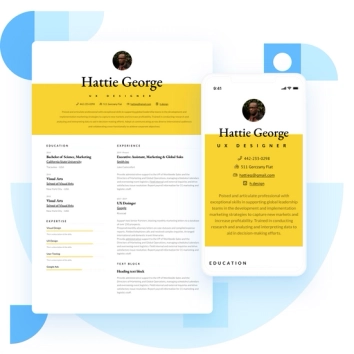
Discover the best resume formats for 2026 with examples for every job and experience level, plus expert tips to format your resume and get hired faster.
August 7, 2025
Read post

Resume Expert & VP Marketing
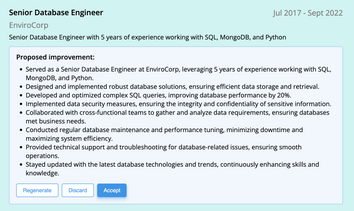
AI can change the way you write, and your resume is no exception.
November 27, 2023
Read post

Community Success Manager & Resume Writing Expert

Learning how to write a resume in 2025 is an important step in everyone's career. This step-by-step guide with resume examples will help you get started.
February 7, 2025
Read post
Community Success Manager & Resume Writing Expert