A strong freelance resume should turn a varied collection of projects, contracts, and short-term assignments into a clear professional story. Employers and clients need to understand what services you provide, which industries you know, and what results you have delivered.
With more than 7 million users in over 125 countries, VisualCV has seen that the strongest resumes make every element serve a clear purpose. For freelancers, that means presenting client work, project scope, skills, and outcomes in a way that feels organized rather than fragmented. Each section should help the reader quickly understand your specialty, credibility, and value.
Unlike a traditional resume, a freelance resume may need to organize work completed for several clients at the same time. The best approach is to group related projects, emphasize measurable outcomes, and make your most relevant skills easy to find.
This guide explains how to choose the right format, write a focused summary, present client work, highlight results, and build a freelance resume that supports both full-time job applications and contract opportunities.
Here are the steps for creating a strong freelance resume:
A well-structured freelance resume should make varied projects, clients, and contracts easy to understand. Each section should help the reader quickly identify your specialty, the type of work you have completed, and the results you have delivered.
| Resume Section | What to Include | Best Practice | Key Outcome |
|---|---|---|---|
| Header | Full name, phone number, professional email, location, portfolio, and LinkedIn profile | Include links that support your target role or service | Easy access to your contact details and work samples |
| Professional Summary | Freelance specialty, years of experience, client focus, and strongest results | Tailor the summary to the opportunity | Clear professional positioning |
| Freelance Experience | Business name, self-employed status, clients, projects, dates, and responsibilities | Group related work in a consistent format | A coherent work history |
| Selected Projects | Project scope, deliverables, tools, and outcomes | Prioritize relevant and high-impact work | Proof of practical experience |
| Skills | Service-specific, technical, client management, and project management skills | Match skills to the job description or contract brief | Stronger relevance and keyword alignment |
| Achievements | Revenue, growth, time saved, projects completed, ratings, or client retention | Use specific and credible metrics | Evidence of measurable impact |
| Education and Certifications | Degrees, licenses, courses, and professional credentials | List the most relevant qualifications first | Added credibility |
| Technical Tools | Software, platforms, and collaboration tools | Include only tools you can use confidently | Evidence of practical capability |
Most freelancers should use either a reverse chronological or hybrid resume format. A reverse chronological format works well when your freelance work shows steady progression, while a hybrid format can help when you need to emphasize skills and selected projects alongside your work history.
Choose a structure that makes your timeline easy to follow. You can list freelance work under your business name, use “Self-Employed” as the employer, or create one umbrella entry that groups related clients and projects1. Major long-term clients may deserve separate entries when the work is highly relevant to the opportunity.
Keep the layout simple, consistent, and easy to scan. Use standard section headings, clear dates, and a professional font. Avoid complex graphics, text boxes, and layouts that may distract readers or create problems for applicant tracking systems.
| What to Do | Why It Matters |
|---|---|
| Choose reverse chronological or hybrid formatting | Helps present both experience and skills clearly |
| Group related freelance work | Prevents your work history from appearing fragmented |
| Use consistent dates | Makes overlapping projects easier to understand |
| List major clients separately when relevant | Gives important work greater visibility |
| Include a portfolio link | Lets employers and clients review your work |
| Use standard section headings | Improves readability and ATS compatibility |
| Keep the resume to one or two pages | Maintains focus while allowing enough detail |
| Use a professional file name | Makes the document easy to identify and organize |
Your professional summary should quickly explain what type of freelance work you do, how much experience you have, and what value you bring to clients or employers. Keep it to three or four lines and tailor it to the specific role, contract, or industry you are targeting.
Start with your professional title or specialty, then add your years of experience, core services, and the types of clients or industries you support. End with a measurable result or a clear statement of the outcome you help clients achieve.
Avoid vague phrases such as “hardworking freelancer” or “creative professional” unless you support them with evidence. A strong summary should make your positioning clear and give the reader a reason to continue.
| Summary Element | What to Include | Example |
|---|---|---|
| Professional identity | Freelance title or specialty | Freelance Graphic Designer |
| Experience level | Years of relevant experience | 6 years of experience |
| Client or industry focus | Main client type or sector | SaaS and ecommerce brands |
| Core services | Most relevant capabilities | Brand design, campaign assets, and digital content |
| Measurable result | A specific client outcome | Increased campaign engagement by 35% |
Freelance Graphic Designer with 6 years of experience creating brand identities, digital campaigns, and social media assets for SaaS and ecommerce clients. Skilled in Adobe Creative Cloud, Figma, and cross-functional collaboration. Delivered more than 150 campaign assets and helped increase client engagement by up to 35%.
Your experience section should make freelance work feel organized, credible, and easy to evaluate5. Instead of listing every short assignment separately, group related projects under one freelance role when they involve similar services, industries, or responsibilities.
You can list your own business name, use “Self-Employed,” or use a title such as “Freelance Writer” or “Independent Consultant.4” Include dates, project scope, client type, deliverables, tools, and results. For confidential work, describe the client by industry or company size rather than naming the organization.
Major long-term clients can be listed separately when the work is especially relevant to the target role. Shorter projects can sit beneath one umbrella entry with selected bullets that show variety, scale, and outcomes.
| Situation | Recommended Format |
|---|---|
| Many short-term clients | Create one combined freelance entry |
| One major long-term client | List the client as a separate experience entry |
| Several projects in one specialty | Group them under one freelance title |
| Confidential client work | Describe the industry and project without naming the client |
| Freelance business with a brand name | Use the business name as the employer |
| App-based gig work | Group the work under the platform or gig category |
Freelance Content Writer Self-Employed 2021 to Present
A freelance resume should show both the skills needed to perform the work and the business abilities required to manage projects independently. Include service-specific expertise, technical tools, client communication, project management, scheduling, and any other capabilities that are relevant to the target opportunity.
Use the job description or contract brief to identify the most important keywords, then support those skills with evidence in your experience section. A skills list may help with applicant tracking systems, but measurable achievements show employers and clients how effectively you have applied those skills.
Focus on outcomes such as revenue generated, traffic increased, projects completed, deadlines met, costs reduced, ratings earned, or repeat clients retained. When exact figures are confidential, use percentages, ranges, project volume, or other credible indicators of scale.
| Skill Category | Examples |
|---|---|
| Service-specific skills | Writing, graphic design, web development, consulting, photography, and video editing |
| Technical tools | Adobe Creative Cloud, Figma, WordPress, Excel, GitHub, and content management systems |
| Client management | Discovery calls, proposals, reporting, revisions, and stakeholder communication |
| Project management | Scoping, scheduling, budgeting, deadline management, and quality control |
| Business operations | Invoicing, contract negotiation, lead generation, and account management |
| Remote work | Asynchronous communication, collaboration platforms, self-management, and time tracking |
| Weak Bullet | Stronger Bullet |
|---|---|
| Wrote blog posts for clients | Produced 40 SEO articles for B2B clients, contributing to a 28% increase in organic traffic |
| Designed social media graphics | Created more than 150 campaign assets across five client accounts |
| Managed freelance projects | Delivered 25 client projects on schedule while maintaining a 90% repeat-client rate |
| Built websites for small businesses | Designed and launched 12 responsive websites for local service businesses |
| Worked as a delivery driver | Completed more than 1,200 deliveries while maintaining a 4.9 customer rating |
| Helped clients with marketing | Planned and executed digital campaigns that generated more than 500 qualified leads |
Action verb + project or responsibility + measurable result
Example:
Delivered 25 client projects on schedule while maintaining a 90% repeat-client rate through clear communication, accurate scoping, and consistent quality control.
The final sections of a freelance resume should strengthen your credibility without distracting from your client work and results. List your highest and most relevant degree first, followed by certifications, licenses, technical training, or online courses that support the type of work you want to pursue.
You can also include optional sections for selected clients, portfolio projects, publications, awards, testimonials, or professional memberships3. Add these only when they provide useful evidence of your expertise or help distinguish you from other candidates.
Before submitting your resume, review every date, link, project description, and metric for accuracy. Make sure the language reflects the target role or contract, the formatting is consistent, and the file name is professional.
| Section | What to Include | Example |
|---|---|---|
| Education | Degree, field of study, institution, and location | Bachelor of Arts in Communications, State University |
| Certifications | Relevant professional or technical credentials | Google Analytics Certification |
| Technical training | Courses, bootcamps, and software training | UX Design Certificate, Coursera |
| Professional memberships | Relevant industry associations | Freelancers Union |
| Awards and recognition | Honors related to your work | Regional Design Award |
| Publications | Articles, books, or featured work | Contributor, Industry Publication |
| Final Check | What to Review |
|---|---|
| Positioning | The resume clearly communicates your freelance specialty |
| Project clarity | Each entry explains the scope, deliverables, and outcome |
| Keyword alignment | Skills and experience match the target opportunity |
| Metrics | Achievements include specific and credible results |
| Portfolio links | All links work and lead to relevant samples |
| Dates | Project timelines are clear and consistent |
| Formatting | Headings, fonts, spacing, and bullet styles are uniform |
| Accuracy | Client details, results, credentials, and contact information are correct |
| File format | The document is saved in the requested format |
| File name | Use a professional name such as Firstname-Lastname-Freelance-Resume.pdf |
Use this freelance resume template as a starting point, then replace each placeholder with details that reflect your services, clients, projects, and results.
[City, State or Province] | [Phone Number] | [Professional Email] | [LinkedIn URL] | [Portfolio URL]
Freelance [Job Title] with [Number] years of experience providing [Core Services] for [Client Types or Industries]. Skilled in [Skill 1], [Skill 2], and [Skill 3]. Completed [Number] projects and achieved [Measurable Result] through [Relevant Strength or Method].
[Skill 1] | [Skill 2] | [Skill 3] | [Skill 4] | [Skill 5] | [Skill 6]
Freelance [Job Title] [Business Name or Self-Employed] [Start Date] to Present
[Project Name or Client Type] [Month Year] to [Month Year]
[Degree or Diploma] [Institution Name], [Location]
[Tool 1] | [Tool 2] | [Tool 3] | [Tool 4] | [Tool 5]
[Portfolio URL]
A gig worker resume should present platform-based or contract work as professional experience. Focus on reliability, customer service, scheduling, safety, productivity, and measurable performance.
Austin, TX | 555-555-5555 | taylor.morgan@email.com | linkedin.com/in/taylormorgan
Reliable gig worker with 4 years of experience completing delivery, rideshare, and on-demand service assignments. Skilled in route planning, customer service, time management, mobile platforms, and independent problem-solving. Completed more than 3,000 customer transactions while maintaining strong ratings and consistent on-time performance.
Customer Service | Route Planning | Time Management | Mobile Applications | Order Accuracy | Scheduling | Safety Compliance | Problem-Solving
Independent Delivery Driver Self-Employed 2022 to Present
Independent Rideshare Driver Self-Employed 2020 to 2022
High School Diploma Austin Central High School, Austin, TX
Google Maps | Apple Maps | Delivery Platforms | Rideshare Platforms | Mobile Payment Applications | Mileage Tracking Software
A freelance resume should include a professional summary, relevant skills, freelance or contract experience, selected projects, measurable results, education, certifications, and portfolio links. Focus on the work that best supports the role or client opportunity you are targeting.
You can list freelance work under your business name, use “Self-Employed,” or create one combined entry for related projects. Major long-term clients can be listed separately when the work is especially relevant, while smaller assignments can be grouped under one freelance title.
Yes. A freelance resume template can be adapted for gig work by emphasizing customer service, reliability, scheduling, safety, ratings, transaction volume, and platform experience. A gig worker resume should present this work as organized professional experience rather than a list of isolated tasks.
No. Include clients and projects that are relevant, substantial, or useful for demonstrating your skills. You can leave out minor assignments that do not add value, and you can describe confidential clients by industry instead of naming them.
One page is usually enough for early-career freelancers or people with a limited project history. Experienced freelancers may use two pages when they need more space to show major clients, selected projects, technical skills, and measurable results.
A strong freelance resume turns varied projects, client relationships, and independent work into a clear professional story. By choosing the right format, writing a focused summary, organizing freelance experience carefully, and highlighting measurable results, you can make your background easier for employers and clients to understand.
Before submitting your resume, tailor it to the opportunity, confirm that every link and detail is accurate, and remove information that does not support your target role. A well-structured freelance resume should show not only what you delivered, but also how your work created value.
Last updated: October 1, 2026
Internal Revenue Service. “Gig Economy Tax Center.” IRS. https://www.irs.gov/businesses/gig-economy-tax-center
Internal Revenue Service. “Manage Taxes for Your Gig Work.” IRS, June 2026. https://www.irs.gov/businesses/small-businesses-self-employed/manage-taxes-for-your-gig-work
Internal Revenue Service. “Self-Employed Individuals Tax Center.” IRS, May 29, 2026. https://www.irs.gov/businesses/small-businesses-self-employed/self-employed-individuals-tax-center
U.S. Department of Labor. “Fact Sheet 13: Employee or Independent Contractor Classification Under the Fair Labor Standards Act.” Wage and Hour Division, revised March 2024. https://www.dol.gov/agencies/whd/fact-sheets/13-flsa-employment-relationship
U.S. Department of Labor. “Questions and Answers: Employee or Independent Contractor Status Under the FLSA, FMLA, and MSPA.” Wage and Hour Division, February 26, 2026. https://www.dol.gov/agencies/whd/flsa/misclassification/2026rulemaking/faqs

Written by
Madison Norton
Resume Expert & VP Marketing
Madison is the VP Marketing and General Manager at VisualCV. He's a seasoned marketing leader, resume writing and career marketing expert and now helping people grow their own career marketing strategies to build a career they love.
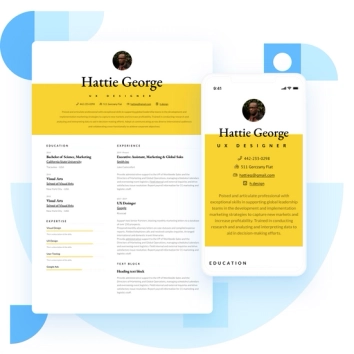
Discover the best resume formats for 2026 with examples for every job and experience level, plus expert tips to format your resume and get hired faster.
August 7, 2025
Read post

Resume Expert & VP Marketing

Learning how to write a resume in 2025 is an important step in everyone's career. This step-by-step guide with resume examples will help you get started.
February 7, 2025
Read post

Community Success Manager & Resume Writing Expert
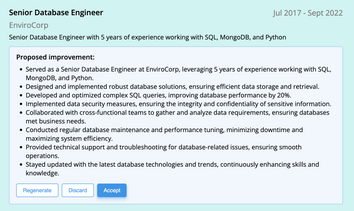
AI can change the way you write, and your resume is no exception.
November 27, 2023
Read post
Community Success Manager & Resume Writing Expert