A combination resume blends the strongest elements of a chronological resume and a functional resume. Instead of relying only on work history or only on skills, it gives you room to highlight both what you can do and where you have applied those abilities.
This format can be especially useful when your most relevant strengths are spread across different roles, when you are changing careers, or when you want to emphasize transferable skills without removing the chronological context employers still expect to see.
With more than 7 million users in over 125 countries, VisualCV has seen that the most effective resume format is the one that makes a candidate’s strongest qualifications easy to understand. For professionals with varied experience, a combination resume can provide that clarity by bringing relevant skills forward while still showing a complete and credible work history.
This guide explains when to use a combination resume, how a hybrid resume differs from other formats, and how to structure one step by step so both your skills and experience support the role you are targeting.
| Step | What to Do | Main Focus | Key Output |
|---|---|---|---|
| 1 | Decide whether the format fits | Career situation and hiring goal | Clear resume format choice |
| 2 | Choose relevant skills | Match your strongest abilities to the target role | Prioritized skill set |
| 3 | Build the skills section | Show evidence that supports each major strength | Strong qualifications section |
| 4 | Add work history | Present roles in reverse chronological order | Clear employment history |
| 5 | Tailor the resume | Adjust emphasis, keywords, and content for each job | Targeted hybrid resume |
A combination resume works best when your skills and work history both add meaningful value to the application. The format should help employers quickly understand what you can do, while still giving them enough chronological context to see where and how you developed that experience.
A combination resume works best when you need to highlight both your skills and your work history1. It gives you more flexibility than a traditional chronological format because you can bring relevant strengths forward without removing the employment context that helps employers understand your background.
This format is often useful for career changers, professionals with transferable skills, and candidates whose strongest qualifications are spread across different roles3. It can also work well when your work history is solid, but the most relevant story is not simply the order of your previous jobs.
A combination resume is not automatically the best choice for every candidate. If your experience already follows a clear, directly relevant progression, a chronological resume may be simpler. If your work history has major gaps or very limited experience, you may need to think more carefully about whether a hybrid resume will actually strengthen the application.
| Situation | Is a Combination Resume a Good Fit? |
|---|---|
| You are changing careers | Often |
| You have strong transferable skills | Often |
| Your relevant experience comes from several different roles | Often |
| You want to emphasize both skills and employment history | Often |
| Your career path is already highly linear and directly relevant | Sometimes |
| You have very limited work experience | Depends |
| You are trying to hide major gaps in employment | Usually not the best reason to use it |
The key question is whether the format helps make your qualifications clearer. If leading with skills gives employers useful context while your work history still supports the story, a combination resume can be a strong choice.
The skills section is one of the most important parts of a combination resume because it appears before the full work history. The goal is to feature the abilities that are most relevant to the target role and that you can support with real examples from your experience.
Start with the job description. Look for skills, tools, and responsibilities that appear repeatedly, then compare them with your own background. Prioritize the areas where there is a clear match instead of trying to list every skill you have.
It is also useful to separate broad strengths from more specific capabilities. For example, project management is more informative when supported by details such as scheduling, stakeholder coordination, budgeting, or delivery.
| Skill Type | Examples |
|---|---|
| Technical skills | CRM software, data analysis, design tools, programming languages |
| Functional skills | Project management, training, customer success, operations |
| Transferable skills | Communication, leadership, problem solving, organization |
| Industry-specific skills | Compliance, curriculum design, financial reporting, healthcare administration |
Choose a small number of high-value skill areas rather than building a long list of generic terms. In a hybrid resume, each featured skill should help explain why your background is relevant to the job you are targeting.
Once you have identified the right skills to feature, the next step is to turn them into a section that shows evidence rather than just listing keywords. In a combination resume, this section should help the reader understand how you have used your strongest skills and what results they produced.
A useful approach is to group related strengths under clear subheadings, then support each one with one or two concise examples. This gives the section more substance than a standard skills list and helps connect your abilities to real experience.
Keep the focus on relevance. The section should not repeat your entire work history. It should highlight the capabilities that matter most for the role and give enough proof to make those claims credible.
| Weak | Strong |
|---|---|
| Project management | Coordinated projects across multiple teams and deadlines |
| Communication | Managed stakeholder updates and resolved issues |
| Leadership | Led teams, initiatives, or training activities |
| Problem solving | Identified process issues and implemented practical solutions |
The strongest qualifications sections make each skill easy to verify. Instead of asking employers to take a claim at face value, show where the skill appeared in your work and what it helped you accomplish.
A combination resume still needs a clear employment history. After the skills or qualifications section, list your roles in reverse chronological order so employers can see where and when you developed the experience highlighted earlier.
Keep the structure conventional. Include your job title, employer, location, and dates, then use concise bullet points to show relevant responsibilities and achievements. Because some of your strongest examples may already appear in the skills section, avoid repeating the same wording unless the detail adds useful context.
The work experience section should support the story created at the top of the resume. Your skills section shows what you can do, while your employment history shows where you did it and how your experience developed over time.
| Section | Main Purpose |
|---|---|
| Summary | Introduces your background and target direction |
| Skills or qualifications | Highlights the capabilities most relevant to the role |
| Work experience | Shows where and when you applied those skills |
| Achievements | Provides evidence of impact and results |
| Education | Adds relevant academic background and credentials |
A strong hybrid resume keeps both sections balanced. The skills section should not replace your work history, and the work history should not make the skills section feel redundant.
A combination resume should be adjusted for each role so the skills and experience you emphasize match what the employer is looking for. Because this format gives extra space to qualifications near the top, tailoring that section can make a significant difference in how quickly your relevance is understood.
Start by reviewing the job description for repeated skills, responsibilities, and terminology4. Then reorder or refine your featured skill areas so the most relevant ones appear first, and update your summary and experience bullets where there is a genuine match.
Keep the structure consistent while changing the emphasis. You do not need to rebuild the resume from scratch for every application, but the strongest combination resumes make it clear that the document was written with a specific role in mind.
| Check | Question to Ask |
|---|---|
| Format choice | Does a combination resume strengthen my application? |
| Summary | Does the opening reflect the role I am targeting? |
| Skills | Are the most relevant qualifications near the top? |
| Evidence | Does each featured skill have clear support? |
| Work history | Is my employment history complete and easy to follow? |
| Keywords | Are relevant terms from the job description used naturally? |
| Relevance | Have I removed details that do not support the target role? |
| ATS compatibility | Are headings and formatting simple and recognizable? |
| Consistency | Are dates, bullets, spacing, and section styles consistent? |
A hybrid resume works best when the skills section and work history reinforce the same message. The final version should show both what you can do and where you have demonstrated those abilities.
A combination resume is a format that highlights relevant skills near the top while still including a clear reverse chronological work history2. It is designed to show both what you can do and where you developed that experience.
Yes. The terms combination resume and hybrid resume are commonly used to describe the same format because it combines a skills-focused approach with a traditional employment history.
A combination resume can work well for career changers, professionals with strong transferable skills, and candidates whose most relevant qualifications come from several different roles. It is most useful when both your skills and your work history strengthen your application.
A functional resume places most of the emphasis on skills and may minimize the chronological work history. A combination resume also highlights skills, but it gives your employment history a more prominent role so employers can still see where and when you gained your experience.
A combination resume can be ATS-friendly when it uses standard section headings, clear formatting, recognizable job titles and dates, and a straightforward reading order. Avoid overly complex layouts that make your skills or work history difficult to interpret.
A combination resume works best when both your skills and your work history are important to the story you want employers to understand. By leading with relevant qualifications and following with a clear chronological employment history, you can show what you can do without losing the context of where you developed those abilities.
The format is especially useful when you are changing careers, drawing on transferable skills, or bringing together experience from different roles. The key is to keep the resume focused, evidence-based, and tailored to the position you are targeting.
VisualCV can help you build a polished combination resume that keeps your skills prominent while presenting your experience in a clear, professional format.
Last updated: October 5, 2026
Indeed Editorial Team. “Combination Resume Tips and Examples.” Indeed, updated June 15, 2026. https://www.indeed.com/career-advice/resumes-cover-letters/combination-resume-tips-and-examples
Northup, Genevieve. “How To Write a Hybrid Resume (With Template and Example).” Indeed, updated June 15, 2026. https://www.indeed.com/career-advice/resumes-cover-letters/hybrid-resume
Indeed Editorial Team. “Combination Resumes: Definition, How To Write One, and Example.” Indeed Canada, updated November 20, 2025. https://ca.indeed.com/career-advice/resumes-cover-letters/combination-resumes
Indeed Editorial Team. “How to Write a Resume.” Indeed Canada, 2025. https://ca.indeed.com/career-advice/resumes-cover-letters/how-to-write-a-resume

Written by
Madison Norton
Resume Expert & VP Marketing
Madison is the VP Marketing and General Manager at VisualCV. He's a seasoned marketing leader, resume writing and career marketing expert and now helping people grow their own career marketing strategies to build a career they love.
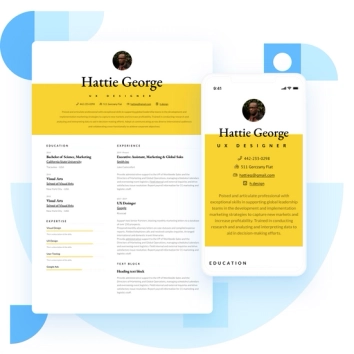
Discover the best resume formats for 2026 with examples for every job and experience level, plus expert tips to format your resume and get hired faster.
August 7, 2025
Read post

Resume Expert & VP Marketing

Learning how to write a resume in 2025 is an important step in everyone's career. This step-by-step guide with resume examples will help you get started.
February 7, 2025
Read post

Community Success Manager & Resume Writing Expert
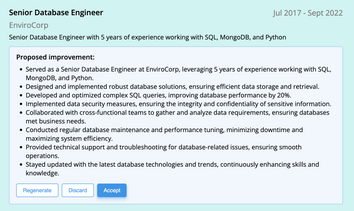
AI can change the way you write, and your resume is no exception.
November 27, 2023
Read post
Community Success Manager & Resume Writing Expert

