An AI resume parser is the technology inside an applicant tracking system (ATS) that reads, ranks, and filters applications before a human reviewer ever opens them. For a growing number of qualified professionals, it’s a big reason even strong resumes are submitted without a single reply. In 2026, how well you understand the way these systems read, score, and sort applications increasingly determines whether your resume ever reaches a recruiter’s desk.
Between January and August 2026, VisualCV's editorial team compiled the benchmarks below on how AI resume parsers are adopted, how they screen, and how recruiters act on their output across U.S. and global hiring markets.
AI and ATS Adoption in Hiring
AI screening is no longer confined to large enterprises. The data below maps adoption by company size and AI's widening role in the 2026 hiring process.
| Metric | Statistic | Source |
|---|---|---|
| Fortune 500 companies using an ATS | 97.8% (2025 audit) | Jobscan, 2026 [1] |
| Organizations that have implemented AI in HR | 39% | SHRM, 2026 [3] |
| Enterprises (5,000+ employees) using AI in HR | 60% | SHRM, 2026 [3] |
| Small organizations (under 100 employees) using AI in HR | 33% | SHRM, 2026 [3] |
| Talent pros who agree AI will change how organizations hire | 73% | LinkedIn, 2025 [4] |
| New hires who encountered AI in hiring (Q2 2026) | 35%, up from 22% two quarters prior | ZipRecruiter, 2026 [5] |
Adoption rates increase with organizational scale, so the screening environment differs by where you apply. A Fortune 500 application almost certainly enters an ATS on submission, while a company under 100 employees presents narrower but rising odds.
For applicants, this means the screening environment is something you can’t predict or control; a resume that parses cleanly across every system is a reliable hedge, regardless of employer size.
The most commonly repeated ATS claim, that 75% of resumes are auto-rejected before a human sees them, has no published methodology and traces back to a 2012 sales pitch from Preptel, a resume-optimization company that shut down in 2013 [2]. What actually happens inside an AI resume parser is more nuanced, and understanding it can help give your applications an edge.
| Mechanism / Behavior | Finding | Source |
|---|---|---|
| ATS platforms that rank and sort rather than auto-reject | 92% | Enhancv, Sep-Oct 2025 [2] |
| Top ATS filter: skills keyword matching | 76.4% of recruiters | CoverSentry 2026 [9] |
| Education filter | 59.7% of recruiters | CoverSentry 2026 [9] |
| Previous job titles filter | 55.3% of recruiters | CoverSentry 2026 [9] |
| Years of experience filter | 44% of recruiters | CoverSentry 2026 [9] |
| DOCX format ATS parsing failure rate | 4% | EDLIGO, 2025 [8] |
| PDF format ATS parsing failure rate | 18% | EDLIGO, 2025 [8] |
A 2025 Enhancv study of 25 U.S. recruiters across more than 10 ATS platforms found that 92% of systems don’t auto-reject based on resume content; they rank and sort instead [2]. The practical effect still resembles rejection: a resume ranked 150th in a pool of 300 never reaches a recruiter. The one true automatic gate is what’s known as a “knockout question,” and it works differently: it screens hard eligibility criteria such as work authorization or required credentials before the resume is read at all, so accurate answers to those questions are what ultimately get you through this step of the hiring process [2].
File format is another variable most candidates overlook. Plain DOCX files fail to parse 4% of the time versus 18% for PDFs, and single-column layouts parse at 93% accuracy versus 86% for two-column designs [8].
The takeaway is unglamorous but decisive: a single-column DOCX with standard headings and no tables or text boxes clears these thresholds, while design-heavy PDFs risk getting sorted out of the pile.
These screening dynamics play out across a funnel that has grown far more competitive since 2021.
| Funnel Stage | Benchmark | Source |
|---|---|---|
| Average applications per hire | 300+ (tripled since 2021) | Ashby, 2026 [6] |
| Applicant-to-interview conversion rate | 3% (about 1 in 33) | CareerPlug, 2025 [7] |
| Interview-to-offer conversion rate | 27% | CareerPlug, 2025 [7] |
| Average time to fill a position (U.S.) | 44 days | SHRM, 2025 [14] |
| Job seekers with zero interviews in the prior month | 44% | Jobscan, 2025 [12] |
The initial screen, not the interview, is where the job is won or lost. Only about 3% of applicants advance past it, but of those who do, 27% go on to be hired [7]. This is due in large part to a tripling of application volume since 2021, driven by easy-apply tools and AI-generated submissions that have expanded the applicant pool at every level [6]. With 52% of recruiters reviewing applications in chronological order [2] and an average 44-day fill time [14], early applicants hold an advantage that often has nothing to do with resume quality.
The table below covers how human reviewers engage once a resume reaches them.
| Behavior / Factor | Statistic | Source |
|---|---|---|
| Average initial resume scan time (AI-assisted review) | 11.2 seconds | InterviewPal, Aug 2025 [11] |
| Recruiters who review applications chronologically | 52% | Enhancv, Sep-Oct 2025 [2] |
| Recruiters who evaluate LinkedIn alongside the resume | 73% | Jobscan, 2025 [12] |
| Interview rate: generic resume | 2.07% | Huntr, Q1 2026 [10] |
| Interview rate: tailored resume | 4.23% | Huntr, Q1 2026 [10] |
These 2025 figures are just as true now in 2026: how recruiters engage once a resume reaches them rewards the candidates most prepared for it. More than half of job seekers send the same generic resume to every role [13], yet across Huntr's Q1 2026 dataset of 139,927 applications, tailored resumes earned interviews at roughly double the rate of generic ones [10]. That gap makes sense when you consider the review process: the initial scan runs about 11.2 seconds [11], 52% of recruiters read applications in the order received [2], and 73% cross-check a candidate's LinkedIn profile before making a decision [12]. A tailored resume submitted early, backed by a matching profile, sets a candidate up for success.
In most cases, no. Research across 25 U.S. recruiters and more than 10 ATS platforms found that 92% of systems rank and sort applications rather than auto-rejecting them [2]. The exception is the knockout question, which screens hard eligibility criteria before any content is read.
As of SHRM's 2026 data, 39% of organizations use AI somewhere in HR, and recruiting is its single most common application [3]. Adoption scales sharply with employer size, from 33% at small organizations to 60% at large enterprises [3]. The underlying screening infrastructure is more widespread still: 97.8% of Fortune 500 companies use an ATS to parse and rank applications before AI or a human evaluates them [1].
Skills keyword matching is the top ATS filter, applied by 76.4% of recruiters [9]. When an actual recruiter opens the file, the initial scan runs about 11.2 seconds [11], so the top third of the page and clean visual structure are the first practical test. Mirror the job posting's language at the top of the page before you submit.
Yes. Huntr's analysis of 139,927 applications put the tailored interview rate at 4.23% versus 2.07% for untailored submissions [10]. Tailoring, combined with highlighting quantified achievements, is the highest-leverage change most candidates can make.
DOCX files fail to parse 4% of the time versus 18% for PDFs, based on 1,000 rejected resumes across Workday, Taleo, and Greenhouse [8], and single-column layouts reach 93% parsing accuracy versus 86% for two-column designs. Submit a clean, single-column DOCX whenever the application allows it.
The 2026 hiring process is automated at the front end, briefly attended by humans, and shaped mostly by decisions candidates make before they hit submit: file format, keyword alignment, tailored language, and quantified results. Clean ATS formatting is the baseline for being seen at all. Tailoring each resume to the role is the performance multiplier. A LinkedIn profile that matches the resume completes the picture for the 73% of recruiters who check [12].
Since 2006, VisualCV has built the tools to help professionals perform inside whatever AI resume parser they encounter. Trusted by more than 7 million professionals across more than 125 countries and available in 17 languages, it pairs an AI-powered resume builder with more than 30 ATS-friendly templates carrying a 90% parsing compatibility rate. For candidates who want expert guidance, VisualCV's certified professional resume writers deliver polished, role-specific resumes in three business days, with clients reporting four times more interview invitations on average.
Build your ATS-optimized resume with VisualCV today and start landing more interviews.

Written by
Madison Norton
Resume Expert & VP Marketing
Madison is the VP Marketing and General Manager at VisualCV. He's a seasoned marketing leader, resume writing and career marketing expert and now helping people grow their own career marketing strategies to build a career they love.
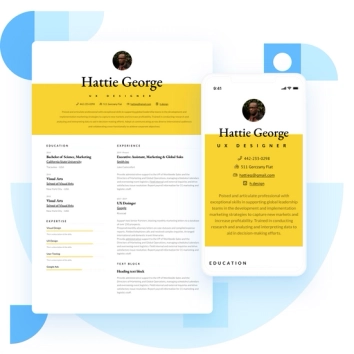
Discover the best resume formats for 2026 with examples for every job and experience level, plus expert tips to format your resume and get hired faster.
August 7, 2025
Read post

Resume Expert & VP Marketing
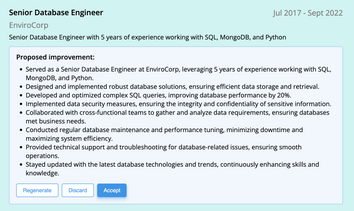
AI can change the way you write, and your resume is no exception.
November 27, 2023
Read post

Community Success Manager & Resume Writing Expert

Learning how to write a resume in 2025 is an important step in everyone's career. This step-by-step guide with resume examples will help you get started.
February 7, 2025
Read post
Community Success Manager & Resume Writing Expert