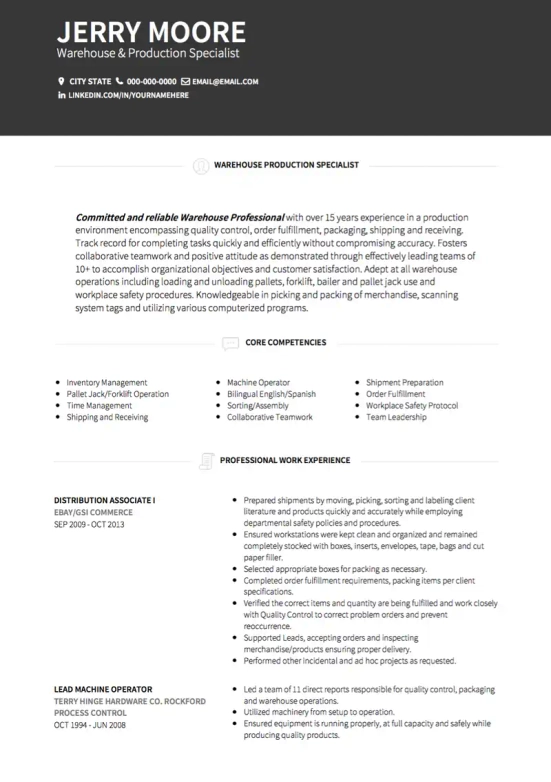
Learn how to effectively list warehouse skills on your resume with real-world examples. Includes top warehouse skills, sample resume phrases, and related skills.

Inventory Management: Efficiently organize, track, and maintain stock levels to minimize losses and ensure timely delivery.
Material Handling Equipment: Operate and maintain various equipment such as forklifts, pallet jacks, and conveyor systems safely and effectively.
Safety Compliance: Adhere to safety regulations, perform routine checks, and promote a safe work environment to prevent accidents.
Order Fulfillment: Accurately pick, pack, and ship orders in a timely manner to meet customer requirements.
Quality Control: Inspect products for defects and ensure adherence to quality standards throughout the warehouse process.
Warehouse Operations: Plan and coordinate daily operations within the warehouse to maximize efficiency and productivity.
Time Management: Prioritize tasks, manage time effectively, and meet deadlines in a fast-paced environment.
Teamwork: Collaborate effectively with team members to achieve common goals and ensure smooth operation of the warehouse.
Communication: Clearly convey information, instructions, and issues to colleagues and supervisors to maintain productivity and resolve problems quickly.
Forklift Operation: Operate forklifts safely, efficiently, and productively, ensuring the safety of yourself and others around you.
Pallet Jack Operation: Efficiently maneuver pallet jacks to transport goods within the warehouse and between different areas.
Loading/Unloading Trucks: Safely and efficiently load and unload goods from delivery trucks to minimize downtime.
Data Entry: Accurately input data related to inventory, orders, and shipping to maintain accurate records.
Problem-Solving: Identify issues quickly and propose effective solutions to minimize delays and disruptions in the warehouse process.
Customer Service: Respond promptly and professionally to customer inquiries and address any concerns related to their orders.
Adaptability: Remain flexible and adaptable to changes in warehouse procedures, technologies, or staffing configurations.
Attention to Detail: Ensure accuracy in all aspects of the warehouse process, including inventory management, order fulfillment, and data entry.
Leadership: Motivate and guide team members to achieve common goals, promote a positive work environment, and resolve conflicts effectively.
Project Management: Plan, organize, and execute warehouse projects efficiently, ensuring that they are completed on time and within budget.
Microsoft Office Suite: Proficiently use Microsoft Word, Excel, PowerPoint, and Outlook to manage data, create reports, and communicate with colleagues.
Organize Skills by Relevance: Prioritize the skills most relevant to the job you are applying for at the top of your resume.
Use Action Verbs: Start each bullet point with a strong action verb that clearly demonstrates the skill being used (e.g., managed, operated, optimized).
Quantify Accomplishments: Include specific numbers or percentages to demonstrate the impact of your skills on past performance (e.g., increased productivity by 20%, reduced errors by 5%).
Tailor Your Resume: Customize your resume for each job application, highlighting the skills most relevant to that specific position.
Use Power Words: Use power words that convey confidence and proficiency in your skillset (e.g., expertly, efficiently, strategically).
Increased warehouse productivity by 20% through efficient inventory management and effective time management skills
Proficiently operated forklifts, pallet jacks, and other warehouse equipment to ensure smooth warehouse operations
Maintained a 99% accuracy rate in order fulfillment and quality control checks
In my previous role as a Warehouse Supervisor at XYZ Corporation, I oversaw daily warehouse operations, ensuring efficient inventory management, order fulfillment, and customer service. I managed a team of 10 employees, providing training and guidance to ensure they were proficient in using various warehouse equipment such as forklifts, pallet jacks, and conveyor systems. I increased productivity by 20% through implementing new time management strategies and streamlining processes. Additionally, I ensured the safety of my team and the warehouse by following all safety regulations and conducting regular safety checks.
Warehouse Operations
Proficiently operated forklifts, pallet jacks, and other warehouse equipment to transport goods efficiently
Increased productivity by implementing new time management strategies
Maintained a 99% accuracy rate in order fulfillment and quality control checks
Inventory Management
Organized and maintained inventory levels to minimize losses and ensure timely delivery
Conducted regular inventory audits to identify discrepancies and resolve issues promptly
Implemented new inventory management software to streamline the process and improve accuracy
Warehouse Manager
Inventory Control Specialist
Material Handler
Warehouse Supervisor
Warehouse Associate
Shipping/Receiving Clerk
Warehouse Coordinator
Forklift Operator
Order Fulfillment Specialist
Warehouse Technician
Supply Chain Management
Logistics and Transportation
Lean Manufacturing Principles
Six Sigma Methodologies
Customer Relationship Management (CRM) Software
Enterprise Resource Planning (ERP) Systems
Database Management
Timekeeping and Attendance Systems
Warehouse Management Systems (WMS)
Forklift Certification and Safety Training
Occupational Health and Safety (OHS) Regulations
Lean Six Sigma Green Belt or Black Belt Certification
Project Management Professional (PMP) Certification
Just-In-Time (JIT) Inventory Management
Total Quality Management (TQM) Principles
SAP ERP Systems
Oracle ERP Systems
Microsoft Dynamics AX
Salesforce CRM
Warehouse Inspection and Maintenance Procedures
Address gaps by providing explanations for extended periods of time away from the warehouse profession, such as long-term illness, family obligations, or temporary layoffs. Highlight any related skills you may have acquired during this time and emphasize your readiness to return to work and contribute to a warehouse team.
Create a dedicated section for self-taught skills, outlining relevant training programs, online courses, or hands-on experience. Quantify your achievements and provide specific examples of how you have applied these skills in practice. This demonstrates proficiency and dedication to the warehouse profession.
Regularly update your resume to reflect current warehouse techniques, technologies, or best practices. If an outdated skill is still relevant, briefly mention it and focus on more recent skills. Highlight how newer skills complement and build upon existing knowledge.
Aim for a one-page resume if possible. Focus on the most relevant information and eliminate unnecessary details. Customize your resume to the specific warehouse position you are applying for, highlighting important skills and experiences.
List certifications under a separate section, clearly indicating their status. Provide brief explanations of why you chose this certification and its potential benefits for both yourself and employers. Include relevant courses or training completed thus far, along with the expected completion date.
Focus on transferable skills from other industries or roles that are applicable to warehouse work. Highlight relevant experiences such as logistics, inventory management, or teamwork. Emphasize your eagerness to learn and grow within the warehouse profession, and include any certifications you're pursuing to demonstrate your commitment.
Quantify achievements and provide specific examples of past roles where you have excelled. Emphasize problem-solving abilities, adaptability, and the ability to learn new systems quickly. Highlight specialized skills or certifications that set you apart from other candidates. Showcase a positive attitude and work ethic to demonstrate potential as a valuable team member.
Update your resume whenever you acquire new warehouse skills, certifications, or experiences. Review regularly to ensure it remains current and reflects professional growth.
Include relevant side projects or volunteer experiences that demonstrate dedication to the warehouse profession and the ability to apply skills in different contexts.
Update your warehouse skills regularly to remain current and competitive in the job market. Attend industry workshops, webinars, or training sessions, participate in continuing education programs, read relevant publications, and network with professionals in the field to stay informed about trends, technologies, and best practices.
Copyright ©2025 Workstory Inc.