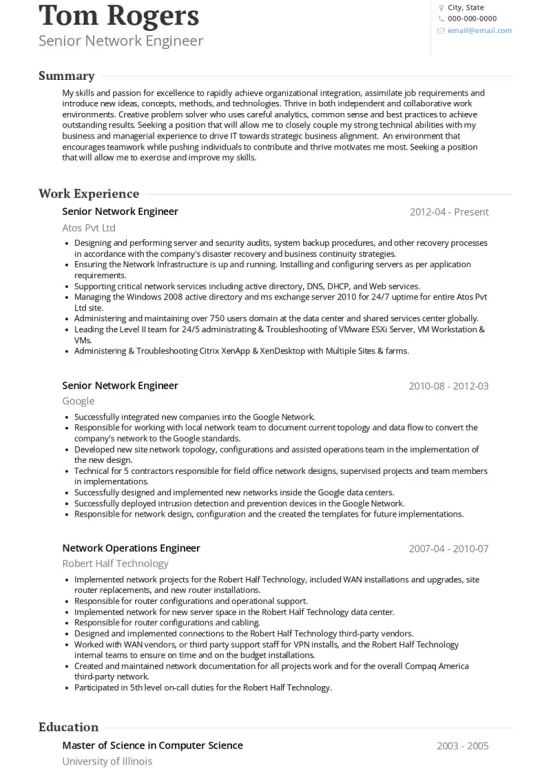
Top Network Engineer Skills For Resume

Learn how to effectively list network engineer skills on your resume with real-world examples. Includes top network engineer skills, sample resume phrases, and related skills.

network engineer resume skills

Top 20 Network Engineer Skills for Resume

  1. Network Design: Ability to design and implement scalable, secure, and efficient network architectures.

  2. Routing & Switching: Proficiency in configuring and managing routers, switches, and associated protocols (OSPF, BGP, EIGRP).

  3. Wireless Networking: Expertise in setting up, maintaining, and troubleshooting wireless networks (Wi-Fi, LTE, 5G).

  4. Network Security: Knowledge of security principles, protocols (TCP/IP, SSL), firewalls, VPNs, and intrusion detection systems.

  5. Cloud Computing: Experience with cloud platforms (Amazon Web Services, Microsoft Azure) for network deployment and management.

  6. IP Address Management: Skills in managing, tracking, and optimizing the use of IP addresses within a network.

  7. Network Troubleshooting: Ability to diagnose and resolve complex network issues swiftly and effectively.

  8. Quality of Service (QoS): Knowledge of QoS mechanisms for ensuring optimal performance of network traffic.

  9. Network Monitoring & Management Tools: Familiarity with network monitoring tools such as Nagios, SolarWinds, or Zabbix.

  10. Virtualization Technologies: Proficiency in virtualized environments like VMware ESXi and Microsoft Hyper-V.

  11. Network Optics: Understanding of optical networking principles (DWDM, CWDM) for high-speed data transmission.

  12. Power over Ethernet (PoE): Experience with PoE technology for powering devices across a network.

  13. Fiber Optic Installation & Maintenance: Skills in installing, maintaining, and troubleshooting fiber optic cabling.

  14. Network Documentation: Ability to create and maintain clear, concise network documentation for easy management.

  15. Project Management: Skills in managing projects from inception to completion, including budgeting, resource allocation, and timeline adherence.

  16. Data Center Infrastructure Management (DCIM): Knowledge of DCIM software for monitoring, automating, and optimizing data center operations.

  17. Scripting & Automation: Proficiency in scripting languages like Python or PowerShell for network automation tasks.

  18. Network Protocols: Understanding of various networking protocols (HTTP, FTP, SMTP, DNS).

  19. Network Virtualization: Experience with network virtualization technologies (NV overlay, SDN) for creating software-defined networks.

  20. Cisco Certifications: Possession of relevant Cisco certifications such as CCNA or CCNP demonstrates expertise in network engineering.

How to List Network Engineer Skills on Resume

  1. Relevant section titles: Clearly label the section with a title like "Technical Skills" or "Professional Expertise."

  2. Phrasing: Use action verbs when describing your skills, such as "Configured," "Managed," "Optimized," and "Troubleshooted."

  3. Organization: Arrange skills in a logical order, prioritizing the most relevant or important ones first.

  4. Quantifiable achievements: Include specific examples of how you have applied your skills to solve problems, improve processes, or achieve objectives.

  5. Keywords: Use industry-specific keywords and phrases throughout your resume to increase visibility during applicant tracking system (ATS) scans.

Examples of How to List Network Engineer Skills on Resume

Example 1

  • Network Design & Implementation

  • Designed and implemented a scalable, secure network infrastructure for an organization with over 200 users

  • Deployed Cisco routers and switches using OSPF and EIGRP routing protocols

Example 2

In the "Professional Experience" section:

  • Network Administrator at XYZ Corporation (January 2018 - Present)

  • Managed and maintained a network infrastructure of over 500 users, ensuring high availability and performance

  • Troubleshot complex network issues using network monitoring tools like Nagios and SolarWinds

  • Configured and optimized wireless networks for efficient data transmission

Example 3

In the "Skills" section:

  • Technical Skills

  • Network Design & Implementation

  • Cisco Routers and Switches (OSPF, EIGRP)

  • Wireless Networking (Wi-Fi, LTE, 5G)

  • Security
  • Firewalls

  • Intrusion Detection Systems

  • Cloud Computing (Amazon Web Services, Microsoft Azure)

  • Soft Skills

  • Project Management

  • Communication & Collaboration

  • Problem-Solving & Critical Thinking

Jobs that Demand Network Engineer Skills

  1. Network Architect

  2. Senior Network Engineer

  3. Network Administrator

  4. Wireless Network Engineer

  5. IT Manager

  6. Data Center Manager

  7. Systems Engineer

  8. Cloud Solutions Architect

  9. Cybersecurity Analyst

  10. IT Project Manager

  1. DevOps Practices: Familiarity with continuous integration/continuous deployment (CI/CD) and infrastructure as code (IaC).

  2. Scripting & Automation Languages: Knowledge of additional scripting languages like Perl, PHP, or Ruby.

  3. Database Management Systems: Experience with SQL databases (MySQL, Oracle, MSSQL Server).

  4. Network Forensics: Skills in investigating and analyzing security incidents and network breaches.

  5. IT Service Management: Knowledge of ITIL best practices for service management and support.

  6. Operating Systems & Servers: Proficiency in managing and troubleshooting various operating systems (Windows Server, Linux).

  7. Containerization Technologies: Experience with containerization platforms like Docker or Kubernetes.

  8. Network Virtual Private Servers (VPS): Knowledge of VPS providers and their management interfaces.

  9. Low-Level Protocols & Frameworks: Understanding of lower-level networking protocols (TCP/IP, UDP) and web frameworks (Flask, Django).

  10. Network Simulation Tools: Familiarity with network simulation software like Wireshark or OmniPeak for network analysis.

How to Address Gaps in Network Engineer Experience on a Resume?

Provide concise explanations for any employment gaps, emphasizing activities such as self-study, certifications, or training related to network engineering. Highlight skills and projects developed during this period that are applicable to the position. If possible, offer examples of work done during the gap period to demonstrate your continued engagement with the field.

How to Showcase Self-taught Network Engineer Skills Without Formal Education?

Offer concrete examples of self-directed projects or challenges where you successfully applied your self-taught skills in network engineering. Include any relevant certifications earned, online courses, bootcamps, or workshops completed to build these skills. Emphasize achievements that demonstrate problem-solving abilities and technical expertise within the field of network engineering.

How to Handle Outdated Network Engineer Skills on a Resume?

If the outdated skill is no longer relevant to the position you're applying for, exclude it from your resume. If it could still be valuable or transferable, include it but emphasize recent skills and experiences more prominently. Showcase participation in online communities, attending conferences, or pursuing additional certifications that reflect your efforts to stay current with industry trends and technologies.

How Long Should a Network Engineer Professional's Resume Be?

A one-page resume should focus on most relevant experience and skills. If necessary, use a two-page resume, but ensure each page is concise and well-organized, prioritizing sections such as work experience, certifications, and technical skills important to network engineering roles.

How to Address Network Engineer Certifications that are in Progress?

List completed certifications first, followed by those in progress with the issuing organization and expected completion date if applicable. This demonstrates your commitment to continuous learning and staying current with industry standards.

What to Do If You Have Limited Network Engineer Experience but Want to Enter the Field?

Focus on showcasing any relevant skills or experiences, such as internships, volunteering, or personal projects. Emphasize your eagerness to learn and grow in the field by including certifications earned, online courses completed, and networking events attended.

How to Compete with More Experienced Network Engineer Professionals?

Highlight unique strengths and experiences that set you apart from other candidates, such as exceptional problem-solving abilities, a strong understanding of the latest technologies, or extensive background in related fields like IT or telecommunications. Focus on achievements that demonstrate your technical expertise, adaptability, and ability to drive results.

How Frequently to Update Network Engineer Skills on Your Resume?

Update your resume regularly as you gain new experience, skills, and certifications to ensure it reflects your current abilities and remains relevant to the roles you're applying for.

Whether to Include Network Engineer Side Projects or Volunteer Work on a Resume?

Include side projects and volunteer work as they can demonstrate your passion for network engineering, ability to work independently, and willingness to go above and beyond in your career. Highlight achievements made during these activities.

How to Effectively Organize a Network Engineer Resume?

Organize your resume with a clear, easy-to-read format focusing on important information first. Use bullet points and headings to make it quick and easy for recruiters to scan your resume and find relevant experience and skills. Group related sections together, such as work experience, certifications, and technical skills, to help showcase your expertise in network engineering.

Copyright ©2025 Workstory Inc.