Business Analyst Resume Objective Examples
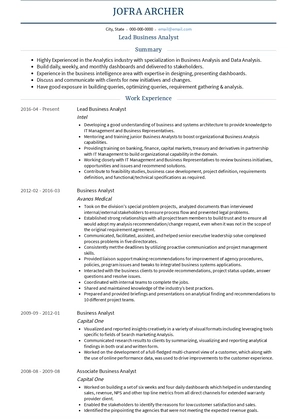
To write a Business Analyst resume objective that stands out, consider these tips:
• Emphasize mastery of SQL, Python, and data modeling for actionable insights • Highlight experience conducting stakeholder interviews, workshops, and requirement gathering sessions • Quantify past achievements with metrics such as cost savings, process efficiency gains, or KPI improvements • Incorporate industry terms like process improvement, KPI, predictive modeling, and Agile or Scrum frameworks • Focus on the value you bring to the organization—how your analysis drives decision‑making and business growth
Below are some Business Analyst resume objective examples that stand out:
Business Analyst Resume Objective Examples
Passionate Business Analyst with 7.5 years of experience increasing revenue in the retail industry. Scrum master with years of experience using agile methodologies and practices to establish efficient and well organized development life cycles. My goal is to find a growth-oriented position in a fast paced environment.
Business Analyst with 9 years of professional experience in the eSports Industry.
An experienced healthcare Business Analyst with extensive knowledge of hospital workflows and more than 8 years of healthcare business experience.
Business Analyst with a track record of success in creatively developing and driving initiatives to meet the business needs; establish efficient and effective business workflows; achieve best practice often within tight time frames and limited budgets.
Results-driven Business Analyst committed to re-engineering and delivering consistent and strategic end-to-end business process solutions. Analytical professional well versed in coordinating and prioritizing project tasks, managing timelines, and maintaining project plans to communicate status to clients and senior management.
Highly Experienced in the Analytics industry with specialization in Business Analysis and Data Analysis. Build daily, weekly, and monthly dashboards and deliver them to stakeholders. Discuss and communicate with clients for new initiatives and changes.
A highly experienced Senior Business Analyst with profound experience of making significant contributions to critical, data-focused Technology Projects within Top-Tier healthcare companies. Data Management skills include Conceptual and Physical Data Modeling, Business Data Architecture, Technical Data Architecture, Data Sourcing, and Data Quality Assessment.
Business Analyst with over 11 years experience in leading teams on a variety of projects. Excellent team player committed to forming strong productive teams. Versatile in the use of various softwares to promote efficiency, achieve results and meet deadlines. I am a fast learner.
A data‑driven Business Analyst with 5+ years of experience in financial services, specializing in SQL, Tableau, and advanced Excel modeling. Leveraging a proven track record of translating complex datasets into actionable insights, I excel at bridging the gap between technical teams and business stakeholders to accelerate decision‑making. I am eager to join a forward‑thinking organization where I can help optimize profitability and drive strategic growth.
Results‑oriented Business Analyst experienced in Agile project environments, with 4 years of success leading cross‑functional teams to deliver process improvements that cut cycle time by 30%. Skilled in requirements gathering, use‑case development, and continuous‑improvement methodologies, I thrive on transforming business challenges into streamlined workflows. Seeking a role where I can apply my expertise to boost operational efficiency and deliver measurable ROI.
Business Analyst with 3 years of domain expertise in healthcare administration, adept at mapping regulatory requirements to technology solutions and facilitating stakeholder alignment. Proficient in BPMN, stakeholder interviews, and root‑cause analysis, I have consistently delivered projects that improve patient outcomes and reduce costs. I aim to contribute my analytical rigor and industry knowledge to a progressive organization focused on digital transformation and patient‑centric care.